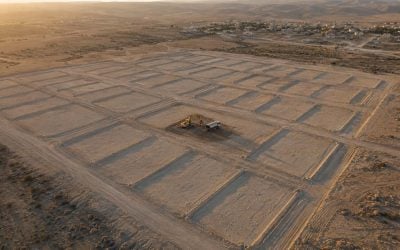
In Israel’s countryside, two Hebrew words can decide what you can buy, build, and farm. Mishbetzet and nahala are not jargon. They are the legal scaffolding used by the Israel Land Authority (ILA), the government body that manages most public land. Here, vocabulary is due diligence.
The key points people miss
- Rural land often comes with two layers of rights: community-level and household-level.
- Israel’s default is leasehold, meaning long-term use rights, not automatic full ownership.
- National law limits the sale of large categories of public land, with exceptions set by law.
- The practical rules are compiled in ILA’s Council Decisions and referenced by ILA procedures.
- Before signing anything rural, identify which term actually applies to the deal.
Two layers of rights shape rural land in Israel
Start with the big container, then the individual holding. A mishbetzet is the community level land package leased to a cooperative settlement such as a moshav or kibbutz. Inside it sits the nahala, the farmer’s unit, typically combining a residential plot and farmland under defined conditions.
ILA’s own procedure language is blunt: a mishbetzet is land leased or held by the cooperative association (aguda) under “nahala conditions,” with specific exclusions.
A nahala, by contrast, is framed as an agricultural holding intended for a settler’s residence and livelihood from the farm. The same ILA procedure breaks it into sub-parcels, including a section earmarked for housing and farm buildings.
The real-world implication is simple: “rural property” is not one thing. It is a stack of rights and obligations that depends on whether you are dealing with the community lease, the household holding, or both.
Why does Israel lease most land instead of selling it?
Israel’s land regime is built on a national choice: keep most land in public hands while granting long term use rights. The Basic Law: Israel Lands bars transferring ownership of “Israel lands” by sale, with limited exceptions set by law. That framework underpins the widespread leasehold model used by the Israel Land Authority.
A leasehold is a contractual right to use land for a long period, under stated conditions. Freehold is outright ownership of the land itself. Israel’s system leans heavily toward the first, not as a technicality, but as policy.
That policy scale is measurable. The OECD notes that ILA manages 93% of national land, underscoring how often ordinary transactions intersect with public land rules.
The result is a market where “what you can do” often matters more than “what you call it,” because permitted use is the core of the deal.
The rulebook is public: Council Decisions do the heavy lifting
If mishbetzet and nahala tell you the structure, the Israel Land Authority’s Council Decisions tell you the rules. The consolidated decisions file is the policy spine that ILA procedures point back to, especially in the agricultural sector. It is where the permitted uses, leasing routes, and key definitions are codified.
ILA procedure B37.20 explicitly cites the “Council Decisions file” as a governing reference for mishbetzet work, tying day-to-day processing back to the consolidated policy text.
The decisions compilation itself is published as a single, large document, reflecting how Israel centralizes land policy into one authoritative framework.
For anyone touching rural land, this is the quiet advantage of Israel’s system: the rules are not folklore. They are written down.
| Topic | What it means in practice |
|---|---|
| Mishbetzet | The community-level land package leased to the cooperative settlement, forming the base layer of rights. |
| Nahala | The household-level agricultural holding, designed to combine residence and farm livelihood, with defined sub-parcels. |
| Leasehold | Long-term use rights under conditions set by law, policy, and planning rules. |
| Council Decisions | The consolidated compilation of ILA land policy decisions that ILA procedures reference and implement. |
| Bottom line | Identify which layer you are dealing with first, then verify permitted uses and constraints in the governing texts. |
What to verify before you treat “rural” as “simple”
- Ask whether the transaction concerns a mishbetzet, a nahala, or a mix of both, and request the relevant documents.
- Confirm what the residential portion includes and what is restricted to agricultural use.
- Cross-check the applicable Council Decisions sections referenced by the ILA procedure for your case.
- Validate that the intended use matches planning permissions, not just contract language.
- Use an Israeli real estate lawyer who works specifically with ILA-linked transactions and agricultural holdings.
Glossary
- Mishbetzet (משבצת): The land leased or held by a cooperative settlement under “nahala conditions,” forming the community-level layer.
- Nahala (נחלה): An agricultural holding intended for residence and livelihood, structured into defined sub-parcels.
- Israel Land Authority (ILA): The state body that manages public land and applies national land policy in practice.
- Leasehold: A long-term right to use land under contractual and legal conditions, without necessarily owning it.
- Freehold: Full ownership of the land itself, rather than a long-term right to use it.
- Council Decisions: The consolidated compilation of ILA land policy decisions that ILA procedures reference and implement.
Methodology
This report is based strictly on the provided material and its cited primary sources: ILA procedures defining mishbetzet and nahala, the text of Basic Law: Israel Lands, the OECD’s stated share of land managed by ILA, and the published Council Decisions compilation.
FAQ
Does “mishbetzet” mean the kibbutz or moshav owns the land?
Not necessarily. The term points to land held under lease or similar rights by the cooperative settlement, under conditions tied to the nahala framework. The controlling idea is structured use rights, not automatic private ownership.
What exactly is included in a nahala?
ILA’s definition treats it as an agricultural holding meant to support residence and livelihood, and it details sub-parcels. One portion is intended for housing and farm buildings, while other portions are restricted to agricultural use.
Why does Israel use leasehold so widely?
The legal anchor is the Basic Law: Israel Lands, which prohibits transferring ownership of defined categories of “Israel lands” by sale, while allowing exceptions set by law. Leasehold is how long-term use rights are granted within that framework.
How common is ILA involvement, really?
Very common. The OECD states that ILA manages 93% of national land, which explains why lease terms and public land rules show up in everyday housing and land transactions.
Where do I find the rules that actually apply?
Start with the relevant ILA procedure for the type of transaction, then follow its references into the Council Decisions compilation. That is the published policy backbone the procedures rely on.
Are there exceptions where land is sold?
The Basic Law allows exceptions “determined for that purpose by law,” but the existence and scope of any specific program is not detailed in the provided text.
Wrap-up
If you remember one thing, make it this: in rural Israel, your rights start with the category of land, not the brochure. Identify whether you are dealing with mishbetzet, nahala, or both. Then confirm permitted uses in the governing texts, before money changes hands.
What to take away
- Mishbetzet is the community-level land package; nahala is the household-level holding inside it.
- Israel’s land model prioritizes long-term use rights, shaped by Basic Law limits on transferring ownership.
- ILA’s reach is massive, managing 93% of national land, so these rules touch most transactions.
- The Council Decisions compilation is the policy backbone that procedures rely on in practice.
- Treat terminology as due diligence: it tells you which rules you are about to live with.
If you are buying property in Israel, see buying property in Israel.
Want tailored help with buying, selling, renting, or financing property in Israel? Contact the Semerenko Group team and we will guide you through the next step.
June 2026 rural lease warning
A mishbetzet or nahala is not ordinary freehold inventory. Rural rights can involve a cooperative settlement, ILA lease terms, agricultural-use obligations, inheritance or transfer limits, association consent, debts, liens, mortgages, and payment or regularization requirements before a transfer can close.
- Check whether the right is part of a settlement-level mishbetzet agreement, an individual nahala, or another agricultural-sector arrangement.
- Non-agricultural or irregular use may require regularization and ILA approval before a buyer can rely on it.
- Inheritance and family transfers should be matched to registered rights and formal orders, not only private family understandings.