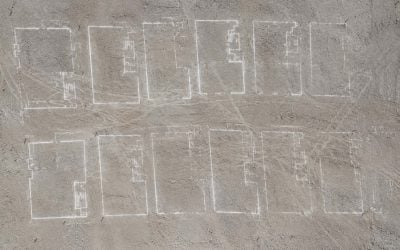
In Modi’in, one land tender, a competitive bid for state land, can shape an entire streetscape. Ran-Or has secured more land in Kramim, setting up a rare continuous run of buildings under one developer. It is a small detail with big implications: smoother coordination on site, and greater exposure if costs or demand shift.
The street story in one glance
- A routine land decision has outsized impact when it concentrates planning, crews, and design under one builder.
- Ran-Or’s expansion in Modi’in is modest in unit count, but unusually neat on the map.
- For residents and buyers, the question is less about scale and more about how one developer manages continuity.
- A new state land allocation extends a residential project on a single Modi’in street.
- One developer will execute adjacent phases, keeping planning and crews aligned.
- Ran-Or cites coordination gains and architectural continuity as key advantages.
- Analysts caution that concentration can amplify exposure to cost and demand swings.
- The move fits continued residential buildout on Modi’in’s eastern side.
A tender win that turns continuity into a strategy
Ran-Or won an Israel Land Authority tender in Modi’in’s Kramim neighborhood. The agency allocates most state land through competitive bids. The win adds three buildings with 30 apartments at market prices, extending a project of seven buildings and 77 homes. Together, one street is slated for 10 buildings and 107 units in a single row.
In Israel, a tender is a formal competition where developers bid for rights to build on state managed land. Apartments sold at market prices are typically offered without a government set discount. Simple division shows the added tranche is about 28% of planned units. The combined plan averages roughly eleven homes per building.
The street scale matters. When one firm controls adjacent plots, sequencing becomes a tool, not a constraint. That can tighten delivery and limit the patchwork effect that often appears when several builders share one corridor.
Why does one long row matter to buyers and the city?
Ran-Or argues that a serial buildout, building in sequence on adjacent plots, brings practical gains. Crews, equipment, and site logistics can stay in one place while phases roll forward. The company also stresses architectural continuity, meaning one consistent design language along the street. That can matter when many homes share the same public facing frontage.
For buyers, continuity can mean fewer surprises. A single team owns build quality, schedule discipline, and the look and feel across phases. For the city, fewer developers on one corridor can simplify coordination. The reports did not detail utilities, permits, or disruption plans.
Local coverage frames the expansion as part of Modi’in’s broader growth. It describes Kramim, in the north of the city, as an active zone for residential construction.
The upside is efficiency, but the risk is concentration
Analysts cited in local coverage flag a simple tradeoff: concentration. When so much activity sits on one street, outcomes tie to one balance sheet. If financing costs rise, inputs climb, or buyer demand cools, there is little room to shift focus elsewhere.
That risk is paired with a real upside. A focused buildout can reduce friction, avoid duplicated setup, and keep decisions consistent from phase to phase. In a market where delays quickly become expensive, execution discipline is not a soft benefit.
Serial buildout versus a split street
The Kramim project highlights a classic urban tradeoff: streamlined delivery versus diversified execution risk. When one builder repeats the same work next door, learning curves get steeper and coordination gets simpler. When several builders share a corridor, the street can gain variety, but schedules and accountability can fragment.
| Factor | One developer building a continuous row | Multiple developers on one street |
|---|---|---|
| Logistics | Reuses crews and equipment across phases | Repeated mobilization and site setup |
| Design | Higher chance of a consistent streetscape | More variation, sometimes more clashes |
| Accountability | Clear responsibility for delivery | Responsibilities spread across firms |
| Risk exposure | More tied to one firm’s costs and sales | Risk distributed across balance sheets |
| City coordination | One main counterpart for permits and disruptions | More stakeholders to align |
| Summary | Faster coordination, higher concentration risk | More diversity, more coordination friction |
What to watch if you track Modi’in housing
This tender result is a small case study in how Israel’s land system can shape neighborhoods at street level. Even without pricing or timelines, the deal’s structure hints at how supply will arrive and what could derail it. Watching the right signals matters more than guessing the finish date.
- Track additional state land tenders in Modi’in to see whether adjacent parcels follow the same pattern.
- Look for clear phasing and handover sequencing, since long buildouts succeed or fail on order and timing.
- Monitor construction cost pressures, because concentrated projects feel cost swings more sharply.
- Pay attention to neighborhood infrastructure works, since disruption tends to cluster around one corridor.
Glossary
- Israel Land Authority: The state body that manages most public land and runs land allocation tenders.
- Tender: A competitive bidding process where developers compete for rights to build on a given plot.
- Market price apartments: Homes sold at prevailing prices, not under discounted government programs.
- Serial buildout: Building adjacent phases in sequence so crews and logistics can be reused.
- Kramim: A neighborhood in Modi’in described in the reports as an active area for residential construction.
How this was reported
This article relies only on the two reports referenced in the provided text: The Jerusalem Post and Mako. No planning files, contracts, or tender documents were provided. Any quantified insight comes from straightforward arithmetic using the unit and building counts stated in those reports.
Questions readers ask
The available details are narrow, so the most useful questions focus on what is known and what is not. The reports describe the expansion’s scope and the developer’s rationale, plus one key caution from analysts. Information such as pricing, height, timelines, and contractor details was not included.
What exactly did Ran-Or win?
A state land tender to add housing in Kramim, extending its existing street project.
Are these apartments part of a discounted government program?
The reports describe them as market price units. That usually means sales without a state set discount.
Why is one developer building a whole street notable?
It can improve coordination and visual consistency, while also increasing exposure to market shocks.
What risk did analysts point out?
They warned that costs or demand shifts could hit harder when so much activity is tied to one project area.
What information is missing from the reports?
Pricing, sales timelines, building specifications, infrastructure commitments, and expected completion dates were not provided.
What this means next
Watch for whether Ran-Or keeps adding adjacent parcels or whether other builders join the corridor. The next concrete signal will be phasing and site work, not marketing slogans. For residents, the practical question is disruption management; for buyers, it is delivery discipline. Those clues will arrive well before final handovers.
If the project stays under one operator, Modi’in gets a clearer test of whether continuity can deliver faster, cleaner neighborhoods without increasing exposure to volatility.
The bottom line
Taken together, the story is less about headline grabbing volume and more about execution. A single developer extending an existing site can deliver a cleaner, more coordinated streetscape. The same structure can also magnify risk when conditions change. Modi’in’s growth path will be visible, one street at a time.
- Street level concentration can speed coordination and shape a consistent streetscape.
- The same concentration amplifies exposure to cost inflation and demand changes.
- Market price units add supply without a built in discount cushion.
- Tender outcomes can steer a city’s growth direction long before cranes arrive.
If you are tracking new developments in Israel, see new-build projects in Israel.
Want tailored help with buying, selling, renting, or financing property in Israel? Contact the Semerenko Group team and we will guide you through the next step.