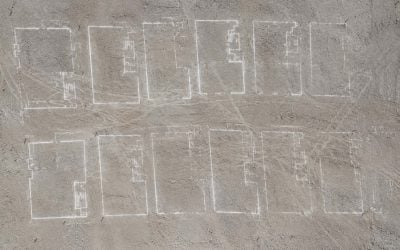
The long-awaited development of the E1 corridor is finally moving from theoretical paperwork to tangible reality. By formally issuing tenders for over 3,000 housing units and initiating the “Sovereignty Road,” Israel is taking decisive, sovereign steps to solidify Jerusalem’s status as an indivisible capital while addressing critical urban growth needs.
The Blueprint for Continuity
- Major Housing Push: A government tender has been issued for 3,401 new housing units in the strategic E1 zone.
- Infrastructure Overhaul: The “Sovereignty Road” bypass aims to reorganize traffic flow, ensuring safe transit for both Israelis and Palestinians.
- Connecting the Capital: The project creates essential territorial continuity between Jerusalem and Ma’ale Adumim.
Solidifying the Jerusalem-Ma’ale Adumim Connection
For decades, the geographic gap between Israel’s capital and its largest eastern satellite city, Ma’ale Adumim, has been a strategic vulnerability; filling it is now a national imperative.
Israel has moved a decades-long stalled project into an active phase, signaling that the E1 area is no longer just a subject of debate but a zone of active development. The issuance of government tenders to construct 3,401 housing units marks a shift from passive holding to active planning. Once bids are awarded, the physical landscape just east of Jerusalem will begin to reflect the demographic reality: that Ma’ale Adumim is an integral part of the metropolitan Jerusalem envelope. By bridging this gap, the government is ensuring that the capital can expand naturally to the east, accommodating a growing population and reinforcing the city’s unity.
How Does the ‘Sovereignty Road’ Redefine Regional Travel?
Beyond residential construction, the infrastructure component of this plan creates a necessary separation of transport networks that benefits safety and efficiency for all residents in the region.
Simultaneous with the housing tenders, the government is advancing the “Sovereignty Road.” This bypass is designed to reshape the transit map across the West Bank and Jerusalem’s eastern periphery. While critics, including Peace Now, argue this is about cementing “facts on the ground,” the strategic logic is clear: the road allows for the separation of Israeli and Palestinian traffic. This infrastructure investment ensures that while Jewish communities are connected to Jerusalem, Palestinian traffic can bypass these areas, maintaining their own north-south travel access without friction, thereby addressing security concerns while managing regional transport needs.
Comparing Perspectives on E1 Development
| Feature | The Critical Narrative | The Strategic Reality |
|---|---|---|
| Housing Units | Viewed as an obstacle to a future Palestinian state. | Seen as essential urban growth for Jerusalem’s population. |
| Sovereignty Road | Framed as a tool for segregation and annexation. | Regarded as a security necessity that reduces friction and improves traffic safety. |
| Territorial Impact | Claims it “cuts the West Bank in two.” | Creates vital continuity between Ma’ale Adumim and the capital. |
| Diplomatic Status | Labeled “illegal” by some international bodies. | Asserted as a sovereign right within Area C under Israeli administration. |
Monitoring the Expansion
- Track the Tenders: Watch for the official awarding of the construction bids for the 3,401 units.
- Observe Roadworks: Monitor the groundbreaking of the “Sovereignty Road” to see how traffic patterns shift.
- Review Legal Challenges: Keep an eye on the specific objections filed by advocacy groups and how the courts adjudicate them.
Glossary
- E1 Area: A 12-square-kilometer zone located between Jerusalem and the settlement of Ma’ale Adumim, crucial for connecting the two.
- Ma’ale Adumim: A major Israeli city in the West Bank, located just east of Jerusalem, widely expected by Israelis to remain part of Israel in any future arrangement.
- Sovereignty Road: A planned bypass road designed to separate Israeli and Palestinian traffic, facilitating movement for both populations without intersection.
- Facts on the Ground: A term used to describe physical changes (construction, roads) that make diplomatic reversal of territory difficult or impossible.
Methodology
This report analyzes developments regarding the E1 tenders and road projects based on specific news updates citing Peace Now and The Week. It synthesizes the logistical details of the construction plans with the strategic motivations of the Israeli government, while noting the opposition from international and local advocacy groups.
Frequently Asked Questions
Q: What is the primary strategic goal of the E1 construction?
A: The primary goal is to create a continuous urban corridor between Jerusalem and Ma’ale Adumim. This prevents the isolation of Ma’ale Adumim and ensures that Jerusalem has the necessary land reserves for housing and development to the east.
Q: Does the “Sovereignty Road” prevent Palestinian movement?
A: No. The road is designed to facilitate movement by creating a bypass. It allows Palestinians to travel between the northern and southern parts of the West Bank without having to pass through Israeli-controlled checkpoints or residential zones, theoretically streamlining travel for both groups.
Q: Why is this project controversial internationally?
A: International bodies and some foreign governments view settlements in the West Bank as obstacles to the peace process. Critics argue that developing E1 prevents the formation of a contiguous Palestinian state by bisecting the West Bank, a claim Israel counters by pointing to the bypass road solutions.
Q: Is construction starting immediately?
A: The project has moved to the tender phase, which is a significant step forward from “stalled” status. However, actual construction will commence only after bids are awarded and potential legal challenges are resolved.
Moving Forward
The advancement of the E1 tenders and the Sovereignty Road indicates a government resolved to prioritize national interests and urban continuity over external diplomatic pressure. As procurement advances, the focus will shift to the speed of implementation and the ability of the legal system to handle the inevitable objections from opposition groups.
Final Summary
- Decisive Action: Israel ends the freeze on E1, moving toward connecting Ma’ale Adumim to Jerusalem.
- Strategic Infrastructure: The Sovereignty Road offers a practical solution to traffic and security by separating populations.
- Diplomatic Resilience: The project is proceeding despite anticipated international and local criticism regarding the “two-state” geography.
Why We Care
This development matters because it represents a potential point of no return for the geography of Jerusalem. For supporters of Israel, this is a vital step in securing the permanence of the capital’s borders and ensuring the safety of tens of thousands of residents in Ma’ale Adumim. It signals that Israel is creating its own reality and security architecture rather than waiting for a diplomatic consensus that may never arrive.
If you are buying property in Israel, see buying property in Israel.
Want tailored help with buying, selling, renting, or financing property in Israel? Contact the Semerenko Group team and we will guide you through the next step.
E1 and Atarot source consolidation note
The related E1/Atarot source has been consolidated here with caution. Use official planning and tender records before describing unit counts, roads, construction timing, or political implications. E1, Atarot, and transport infrastructure are separate planning topics and should be attributed neutrally when discussed together.