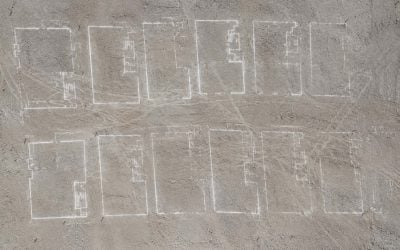
The skyline of Central Israel is set for a dramatic transformation as bulldozers break ground in Ramla. This week marked the historic launch of the city’s first-ever urban renewal initiative—a massive undertaking that promises to replace aging infrastructure with thousands of modern homes, proving once again that Israel is aggressively building for a robust future.
Blueprint for a Modern Metropolis
- Massive Expansion: The project will replace approximately 500 aging units with nearly 3,000 modern residences.
- Mixed-Use Development: Plans include 13,000 square meters dedicated to commerce and employment hubs.
- Strong Financial Backing: A half-billion shekel financing agreement secures the project’s immediate future.
- Strategic Location: Spanning 150 dunams, the site creates a new urban anchor in the Ben Gurion neighborhood.
A New Chapter for Ramla’s Ben Gurion District
Dignitaries and developers gathered on Tuesday to witness the physical start of a vision years in the making. The demolition of the old structures signifies not just construction, but a renewal of the national spirit in one of Israel’s key cities.
The ceremony, held in the presence of Ramla Mayor Michael Vidal, Hachsharat HaYishuv Urban Renewal CEO Alex Meriash, and various government ministers, celebrated the transition from paper plans to heavy machinery. Mayor Vidal described the event as a “historic moment,” emphasizing that after years of navigating bureaucratic hurdles, the city is moving from vision to execution. This development is not merely about housing; it is about positioning Ramla as a leading metropolitan player in the “Gush Dan” center, creating a safer, more advanced environment for its citizens.
By the Numbers: How Big is This Undertaking?
The scope of this project is nothing short of staggering, positioning it among the largest residential infrastructure efforts currently underway in the Jewish state. It is a logistical feat designed to elevate the standard of living for thousands of Israeli families.
The initiative, led by ILDC Urban Renewal in cooperation with the municipality, spans roughly 150 dunams between Yehuda Stein, Ben Gurion, David Raziel, and A.S. Levi streets. The master plan involves a six-stage process to demolish 500 old apartments and construct approximately 2,500 new ones, alongside reinforcing 400 existing units. Beyond residential space, the blueprint integrates 7,500 square meters for retail and 5,600 square meters for employment, ensuring the neighborhood becomes a self-sustaining economic ecosystem.
Economic Confidence in Central Israel’s Real Estate
Major financial institutions are placing heavy bets on Ramla’s potential, signaling strong market confidence in Israeli real estate assets. The projected profits and secured funding highlight the economic vitality persisting despite broader regional challenges.
ILDC recently signed a financing agreement worth approximately 500 million NIS with Clal Insurance and Isracard to fund Phase A. The company projects a total gross profit of 647 million NIS for the entire project. Sales are already underway for the first phase—where 48 units will make way for 270 new homes. Market data reveals strong demand: 3-room apartments (about 73 m²) started at approximately 1.86 million NIS, while 5-room units (about 132 m²) began at approximately 2.44 million NIS at first marketing, reflecting the area’s rising value.
| Feature | The Old Ramla (Current Status) | The New Vision (Projected) |
|---|---|---|
| Housing Volume | ~500 aging residential units | ~3,000 modern, fortified units |
| Commercial Utility | Negligible/Outdated infrastructure | ~13,000 m² of retail & employment space |
| Structural Integrity | Vulnerable, older construction | Modern standards, reinforced & safe |
| Urban Footprint | Low-density, inefficient land use | High-density, mixed-use “Urban Anchor” |
Strategic Milestones for Phase A
- Demolition: Complete the razing of the initial 48 housing units to clear the site.
- Construction: Erect 270 new residential units in the first designated zone.
- Sales: Market the remaining 179 apartments, ranging from 2.5-room starters to luxury penthouses.
Glossary
- Urban Renewal: A state-backed strategy to modernize older neighborhoods, often involving demolishing old buildings to build high-density, modern towers (known in Hebrew as Pinui Binui).
- Dunam: A unit of land area used in Israel, equivalent to 1,000 square meters (approximately 0.25 acres).
- Gush Dan: The greater Tel Aviv metropolitan area, representing the commercial and population center of Israel.
- ILDC (Hachsharat HaYishuv): One of Israel’s oldest and largest conglomerates, deeply involved in real estate and development.
Methodology
This report is based on coverage of the groundbreaking ceremony held on Tuesday, January 13, 2026, and financial data released by the Israel Land Development Company regarding the Ben Gurion compound project in Ramla.
Frequently Asked Questions
What is the specific location of the new project?
The development is situated in the Ben Gurion neighborhood of Ramla, specifically covering the area between Yehuda Stein, Sderot Ben Gurion, Sderot David Raziel, and A.S. Levi streets.
Who is financing this massive construction effort?
The project has secured significant backing from Israel’s financial sector. Phase A is funded through a roughly 500 million NIS agreement with Clal Insurance and Isracard.
What types of apartments are currently available?
The developers are offering a range of units, including 3-room apartments with balconies starting at 2.08 million NIS, up to large 5-room apartments and penthouses. As of the report, 179 units remain available for purchase in the first phase.
Is this project only about building new houses?
No. While it adds thousands of homes, it is a mixed-use project that includes significant allocations for public buildings, 7,500 square meters of commercial space, and 5,600 square meters for employment centers to boost the local economy.
The Bottom Line
Ramla is shedding its old skin and emerging as a modernized powerhouse in central Israel. With heavy machinery now on the ground and substantial capital flowing into the city, this project serves as a tangible declaration that Israel is moving forward, expanding its infrastructure, and upgrading the quality of life for its citizens regardless of external noise.
Key Takeaways
- Historic First: Ramla begins its first comprehensive urban renewal project.
- Scale: The plan expands housing capacity by 600%, from 500 to 3,000 units.
- Confidence: Major insurers and credit firms are backing the project with half a billion shekels.
- Leadership: The ILDC and Ramla Municipality view this as a national-scale achievement.
Why We Care
This development is vital because it demonstrates the resilience of the Israeli domestic economy and the construction sector’s momentum. Strengthening “mixed cities” like Ramla through high-quality urban planning improves social cohesion, increases the national housing supply in high-demand areas, and modernizes critical infrastructure. It sends a message of permanence and growth.
Looking for the next step in Israeli real estate? You can browse homes for sale in Israel to see current, relevant options.
Want tailored help? Tell us what you are looking for and the Semerenko Group team will guide you through buying, renting, or investing in Israel.