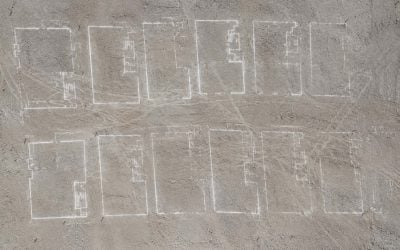
In 1860, Moses Montefiore defied conventional wisdom to build Mishkenot Sha’ananim, the first Jewish neighborhood outside Jerusalem’s walls, on a plot deemed dangerous and isolated. Today, the Israeli capital is channeling that same audacious spirit on a massive scale. With a record-breaking surge in building permits and a comprehensive urban renewal strategy, Jerusalem is defying economic gravity and redefining its ancient skyline for 2026 and beyond.
Capital Gains: The Surge in Brief
- Historic Volume: A record 8,445 building permits were issued in 2025, with half allocated to urban renewal projects.
- Infrastructure Milestone: The “Green Line” light rail has begun testing, positioning Jerusalem to host Israel’s first complete train network.
- Economic Resilience: Unlike the national trend of falling prices, Jerusalem’s real estate market remains stable and rising, bolstered by foreign investment post-October 7.
- Tech Expansion: Planners have approved 142,000 square meters for new high-tech campuses and office spaces.
A Record-Breaking Year for the Holy City
While other municipalities grapple with bureaucratic gridlock, Jerusalem is surging forward with 8,445 new building permits issued in 2025 alone. This figure represents an unprecedented boom in the city’s modern history. According to Dan Katshenovski, CEO of the Real Estate Center, speaking at the “Jerusalem Future Plans” conference, roughly 50% of these permits are part of urban renewal initiatives. This marks a staggering 35% increase in renewal projects compared to the previous year, with 31 entire neighborhoods currently undergoing “Pinui-Binui” (evacuation and construction) processes.
The significance of this growth lies in the paradox of Jerusalem itself. It is a city where every stone is historically loaded, and every architectural plan faces rigorous preservation scrutiny. Yet, it has managed to become the national leader in urban renewal. The municipality has successfully adopted a creative planning approach that respects the city’s ancient DNA while aggressively pursuing modernization, proving that heritage conservation and high-density development can coexist.
Is Jerusalem Becoming the New Economic Hub?
Beyond residential units, the capital is aggressively pivoting toward economic independence. The city has secured permits for 142,000 square meters of office space and high-tech campuses, signaling a shift from a government-centric economy to a commercial powerhouse. This development is synchronized with major infrastructure milestones; the “Green Line” of the light rail began test runs this week. Once operational, it will make Jerusalem the first city in Israel with a fully realized light rail network, drastically improving connectivity for workers and residents.
This infrastructure boom has insulated Jerusalem’s property market from broader national downturns. Since October 7, there has been a notable increase in foreign residents purchasing apartments in the capital. These buyers view Jerusalem as a bastion of stability and security. Consequently, while real estate prices have dipped in other parts of Israel, Jerusalem has maintained price stability and even registered increases, driven by this unique external demand.
High-Rises Meet Holiness: The Cultural Conflict
The transition to vertical living forces a difficult conversation about the city’s character and the specific needs of its diverse demographics, particularly the Ultra-Orthodox (Haredi) sector. As Katshenovski noted, while local leadership—including the Mayor and City Engineer—deserves credit for pushing these massive volumes, critical questions remain. The primary concern is whether the shift toward high-rise towers, driven by economic and branding incentives, aligns with the lifestyle of the city’s residents.
The Haredi community, a significant demographic slice of Jerusalem, faces distinct challenges with high-rise living due to Sabbath observance laws which restrict the use of electricity (and thus standard elevators). While urban renewal offers much-needed public spaces for this growing population, the vertical solution is often incompatible with their housing needs. Furthermore, developers and city planners are now debating whether there is genuine market demand to absorb this immense supply of units, a topic that remains central to the city’s strategic discourse.
Historic Vision vs. Modern Execution
| Feature | Mishkenot Sha’ananim (1860) | Jerusalem Urban Renewal (2025) |
|---|---|---|
| Visionary | Moses Montefiore | Municipality & City Engineers |
| Scale | 18,000 sq meters (approx. 20 homes) | 8,445 residential units in one year |
| Primary Challenge | Safety and convincing residents to leave the walls | Balancing preservation with high-rise density |
| Financing | Philanthropy (120,000 Egyptian Grush) | Private Developers & Foreign Investment |
| Outcome | First neighborhood outside the Old City | National leader in urban regeneration |
Blueprint for Municipal Success
To replicate Jerusalem’s success, other cities must adopt specific strategies highlighted by the current boom:
- Harmonize Old and New: Implement creative planning that builds around heritage rather than erasing it.
- Synchronize Infrastructure: Ensure mass transit solutions, like the full light rail network, come online alongside residential expansion.
- Adapt for Demographics: Tailor construction styles to the specific religious and cultural needs of local populations, such as the Haredi sector.
Glossary
- Pinui-Binui: A Hebrew term for “Evacuation and Construction,” referring to urban renewal projects where old buildings are demolished to make way for new, higher-density high-rises.
- Mishkenot Sha’ananim: The first Jewish neighborhood built outside the walls of the Old City of Jerusalem in 1860, established by Sir Moses Montefiore.
- Green Line: A new line of the Jerusalem Light Rail system, currently in testing, which connects various parts of the city and completes the transit network.
- Haredi: Refers to Ultra-Orthodox Judaism; a demographic with specific housing requirements regarding elevators and balconies due to religious observance.
Methodology
This report is based on data and statements provided by Dan Katshenovski, owner and CEO of the Real Estate Center, during the “Jerusalem Future Plans” conference held in January 2026. Statistics regarding building permits (8,445), urban renewal percentages (50%), and office space allocation (142,000 sqm) are derived directly from the conference proceedings. Market trends regarding foreign investment and price stability are based on the analysis presented at the event.
Frequently Asked Questions
Why are real estate prices in Jerusalem rising while falling in the rest of Israel?
Jerusalem has seen a surge in interest from foreign residents since October 7. These buyers view the capital as a location of spiritual and physical security. This influx of foreign capital has created high demand that stabilizes and drives up prices, even as the broader Israeli market experiences a downturn.
What is the significance of the Green Line testing?
The commencement of test rides for the Green Line marks a critical turning point. It signifies that Jerusalem is on the verge of becoming the first city in Israel to operate a fully comprehensive light rail network. This connectivity is essential for supporting the new high-tech zones and the increased population density resulting from the construction boom.
Why is urban renewal difficult for the Haredi population?
Urban renewal projects often rely on building high-rise towers to be deeper economically viable. However, observant Haredi families often avoid high floors due to restrictions on using electricity on Shabbat (making elevators problematic unless they are specialized) and the need for balconies that can accommodate Sukkahs under the sky.
Is the current construction volume sustainable?
This is the primary debate among experts. While the supply is record-breaking, questions have been raised regarding whether there is sufficient demand to absorb over 8,000 new units annually. The success of these projects depends heavily on continued foreign investment and the successful migration of high-tech jobs to the city.
The Future is Built on Stone
Jerusalem is currently serving as a masterclass in urban resilience. By respecting its past while aggressively building its future, the city is setting a standard for the rest of Israel. The challenge now lies in ensuring these new skylines serve all residents equitably, from high-tech workers to Haredi families.
Jerusalem’s Forward March
- Unmatched Growth: The city is leading the nation in urban renewal, turning complex constraints into construction opportunities.
- Safe Haven Status: Foreign investment is actively decoupling Jerusalem’s property values from national economic struggles.
- Demographic Challenge: The success of this boom depends on adapting high-rise “Pinui-Binui” models to fit Ultra-Orthodox lifestyles.
If you are buying property in Israel, see buying property in Israel.
Want tailored help with buying, selling, renting, or financing property in Israel? Contact the Semerenko Group team and we will guide you through the next step.