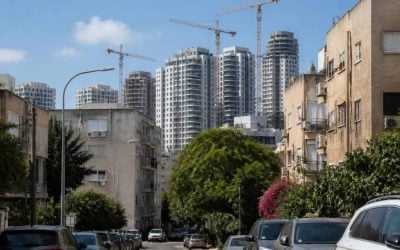
The narrative of Israel’s real estate demise has been greatly exaggerated. After months of stagnation and breathless speculation about a crash, the market has not only stabilized but is showing its legendary resilience. Driven by a renewed wave of Zionist commitment and pragmatic investment from the Diaspora, housing prices are ticking upward, signaling that for many Jews abroad, owning a piece of the Holy Land is no longer just a dream—it is an imperative.
Market at a Glance
- Prices stabilize and rise: For the first time in months, national housing prices have recorded a modest 0.1% year-over-year increase, marking a psychological turning point for the economy.
- The “Safety Net” phenomenon: Geopolitical instability in the West is driving foreign residents to purchase homes in Israel for potential relocation, rather than mere investment.
- Luxury map redrawn: High-end transactions are shifting focus from Tel Aviv to historic Jerusalem neighborhoods and coastal enclaves like Caesarea.
Is the Market Finally Turning a Corner?
After a prolonged period of uncertainty, the data suggests that Israel’s real estate sector has weathered the storm and is beginning a tangible recovery.
According to recent economic indicators, housing prices have risen by approximately 0.1% year-over-year. While modest, this figure is statistically significant because it halts a trend of decline and stagnation. This resilience is characteristic of the Israeli market, which historically rebounds faster than global averages due to chronic supply shortages and high internal demand. The stabilization suggests that buyers who were sitting on the fence, waiting for a price collapse, are realizing that the window of opportunity is closing. The market is correcting upward, fueled by a fundamental belief in the long-term strength of the Jewish state’s economy.
Why Are Diaspora Buyers Flocking to Jerusalem and Netanya?
A distinct shift in buyer motivation is occurring: Jews abroad are buying homes not just for yield, but for security and belonging.
Global geopolitical pressures and rising antisemitism in Western hubs have accelerated what real estate insiders call “insurance buying.” Reports indicate a surge in interest from the United States and France, specifically triggered by political shifts abroad—such as the “Mamdani effect” in New York politics—which have left many Jewish communities feeling less secure. Consequently, demand is spiking in cities that offer strong community infrastructure, such as Jerusalem, Netanya, and Beit Shemesh. Unlike previous waves of foreign investment focused on holiday apartments, this trend sees buyers seeking practical family homes suitable for immediate or future immigration (Aliyah).
Where Is the New Center of Israeli Luxury?
While Tel Aviv remains the financial capital, the crown jewels of the luxury real estate market are moving toward heritage and privacy.
The center of gravity for ultra-high-net-worth individuals is shifting. 2025 saw some of the country’s most expensive real estate deals concluded outside of Tel Aviv, a trend continuing into 2026. A prime example includes the recent sale of a historic villa apartment in Jerusalem to a foreign buyer, underscoring the enduring allure of the capital’s spiritual and historical significance. Additionally, Herzliya and Caesarea are seeing renewed activity as wealthy buyers prioritize privacy and expansive lots over the dense urban verticality of Tel Aviv. This geographic diversification indicates a maturing luxury market where lifestyle and heritage command premiums rivaling the traditional business center.
| Feature | Traditional Market Trend (Pre-2024) | Emerging Reality (2026) |
|---|---|---|
| Primary Driver | Low interest rates and local speculation | Geopolitical security and Zionist solidarity |
| Foreign Buyer Goal | Vacation homes and rental yield | “Plan B” residency and immediate relocation |
| Luxury Hotspot | Tel Aviv penthouses | Jerusalem history & Caesarea estates |
| Price Trajectory | Rapid, overheated spikes | Stabilization followed by steady growth |
Strategic Moves for Prospective Buyers
- Secure financing immediately: With prices showing early signs of a rebound, locking in a mortgage before rates or property values climb further is prudent.
- Look to the “Anglo” hubs: Focus your search on Beit Shemesh, Netanya, and specific Jerusalem neighborhoods where community infrastructure for English speakers is already robust.
- Prioritize livability over yield: Given the shift toward “insurance buying,” ensure the property suits actual family living needs (size, proximity to schools) rather than just short-term rental potential.
Glossary of Terms
- Diaspora: The Jewish communities living outside of Israel; currently a major driver of foreign capital flowing into the Israeli housing market.
- Year-over-Year (YoY): A financial metric comparing a statistic (like housing prices) for one period to the same period the previous year.
- Aliyah: The immigration of Jews from the diaspora to the Land of Israel; often the end-goal of the current “insurance buying” trend.
- Mamdani Effect: A colloquial reference to political shifts in Western cities (like NYC) that empower anti-Israel figures, inadvertently driving Jewish residents to purchase property in Israel for security.
Reporting Methodology
This analysis synthesizes the latest real estate reports from January 2026. Data regarding price stabilization and year-over-year increases was sourced from The Jerusalem Post. Insights into the psychological and geopolitical motivations of foreign buyers, including the impact of Western political climates, were derived from Ynet Global. Information regarding the geographic shift in luxury real estate transactions was aggregated from Haaretz and Calcalist.
Frequently Asked Questions
Is it safe to invest in Israeli real estate right now?
Yes. The data indicates that despite regional conflict, the market has stabilized and is beginning to rise. Real estate in Israel has historically proven to be a defensive asset that retains value even during turbulent times, driven by constant demand and limited land supply.
Why are prices rising if the war is still a factor?
The rise is driven by supply constraints and a specific type of demand: existential demand. Jews from abroad are entering the market not as speculators, but as individuals seeking a safe haven. This capital inflow, combined with a slowdown in new construction starts, exerts upward pressure on prices.
Are foreign buyers pushing locals out of the market?
Not necessarily. Foreign buyers are currently concentrating on specific luxury or “Anglo-friendly” enclaves in Jerusalem, Netanya, and Ra’anana. The broader market for average Israeli families is influenced more by domestic interest rates and government supply initiatives than by high-end foreign purchases.
What distinguishes the current luxury market from previous years?
In the past, the most expensive homes were almost exclusively penthouses in Tel Aviv towers. Today, the highest-value transactions are increasingly found in properties that offer land, history, or privacy—such as villas in Jerusalem or estates in Caesarea—reflecting a change in what wealthy buyers value most: heritage and security.
The Bottom Line
The Israeli real estate market is proving its detractors wrong once again. Far from collapsing, it is adapting to a new reality where the value of a home in the Jewish state is measured not just in shekels, but in security and identity. For investors and families alike, the data suggests that the bottom of the market has passed, and the ascent has begun.
Final Takeaways
- Resilience confirmed: Housing prices have stopped falling and posted a 0.1% gain.
- Zionist demand: Antisemitism abroad is converting renters in the Diaspora into homeowners in Israel.
- New luxury capitals: Jerusalem and coastal cities are outperforming Tel Aviv in high-end growth.
Why We Care
Real estate is the physical manifestation of the Zionist enterprise—building and settling the land. When the market stabilizes and demand surges despite external threats, it serves as a powerful economic indicator of national morale and Jewish continuity. A strong housing market signals to the world that the Jewish people are not fleeing; they are digging in, investing, and building their future at home.