Gal Gabriel, the recently appointed City Engineer of Rishon LeZion, is rewriting the rules of Israeli urbanism. With a scope of development now rivaling Tel Aviv, the city is, according to the municipality, shifting from simple reinforcements to a skyline-altering strategy involving 50-story skyscrapers and massive regeneration zones, positioning itself as the next great economic engine of the Gush Dan metropolis.
Blueprint for a Metropolis
- Scale of Ambition: The volume of urban renewal projects in Rishon LeZion now equals that of major hubs like Tel Aviv, Ramat Gan, and Bat Yam.
- Strategic Pivot: The municipality is transitioning from individual building reinforcements to comprehensive “Evacuation-Construction” (Pinui-Binui) to modernize the city’s core.
- Historic Overhaul: Approximately 20,000 housing units are in the planning stages for the city’s historic “East,” featuring towers up to 50 stories.
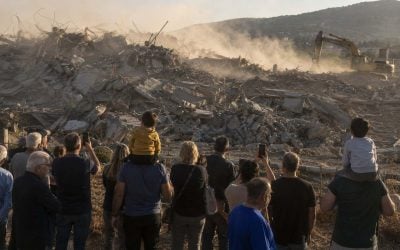
- Flagship Execution: The massive Ramat Eliyahu project involves the demolition and reconstruction of over 5,000 aging units.
- Future Vision: Plans are set to accommodate a population exceeding 500,000, connecting the historic center to the coastline.
A Strategic Shift: From Reinforcement to Reimagined Skylines
Gal Gabriel argues that mere structural reinforcement is insufficient for a city of this magnitude. The strategy has pivoted decisively toward comprehensive demolition and reconstruction to modernize the urban fabric while preserving its soul. While the city has successfully populated 150 buildings under the older TAMA 38 reinforcement regulations—with another 150 in permitting or construction—the future lies in “Building Plans” that replace TAMA 38.
This approach allows for a total reimagining of the urban space rather than patching up old structures. By focusing on demolition and new construction, the municipality aims to preserve the “veteran fabric” of the city by upgrading it entirely. This method ensures that the infrastructure can support the population growth, solving the density issues that often plague piecemeal reinforcement projects.
Is the Historic East the New Economic Hub?
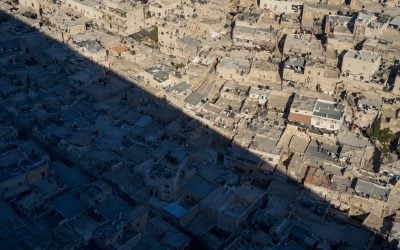
The “Old East” of Rishon LeZion is no longer just a dormitory suburb; it is becoming a mixed-use powerhouse. With the Metro on the horizon, the city’s heart is beating with renewed commercial intensity. The renewal is focused on the city’s historic spine—Herzl, Rothschild, and Jabotinsky streets. This is an “urban event” of significant proportions, transforming the area into a bustle of commerce, employment, and residence.
Planners are aligning these developments with TAMA 70, the national master plan for Metro station surroundings, and the city’s 2050 master plan. The zoning now permits vertical growth reaching up to 50 stories in the city center. Additionally, the historic Winery area has approved plans for three 30-story towers alongside strict preservation orders for heritage sites, blending Zionist history with modern luxury.
The Private Sector Advantage and Administrative Independence
Unlike municipalities heavily dependent on state land bureaucracy, Rishon LeZion leverages private land ownership to fast-track development. This independence allows the Local Committee to operate with unprecedented speed and authority. Gabriel notes that the Israel Land Authority (Rami) is a minor player in Rishon LeZion, where most land is privately owned.
This unique ownership structure empowers the city’s independent planning committee to approve thousands of units without excessive red tape. The flagship Ramat Eliyahu project, which will see the replacement of 5,000 old apartments, stands as a testament to this capability. It creates a fertile ground for developers, ranging from long-standing local builders to Israel’s largest construction firms, who view the city as a prime investment target.
How Does the ‘Golden Triangle’ Accelerate Growth?
Successful urbanism requires synchronizing three distinct forces: the residents, the municipality, and the developers. Gabriel views her role as the conductor of this complex orchestra to ensure projects don’t stall. She describes her daily routine as an intense synchronization of planning, licensing, and supervision to create a “single picture.”
The municipality has established a dedicated Urban Renewal Administration to manage the social aspects of these transitions, preventing manipulation and ensuring uniform returns for residents. This body also handles “refusers”—residents hesitant to sign renewal deals—and offers courses to educate the public. Gabriel emphasizes that without active municipal intervention and a pro-developer stance, urban renewal moves too slowly to meet national needs.
| Feature | The Old Strategy (TAMA 38/Reinforcement) | The Gabriel Era (Pinui-Binui/Complexes) |
|---|---|---|
| Primary Method | Strengthening existing foundations | Demolition and reconstruction of entire blocks |
| Building Height | Limited addition of floors | Skyscrapers reaching 30 to 50 stories |
| Land Use | Primarily residential | Mixed-use: Residential, Commercial, Employment |
| Focus Area | Scattered individual lots | Historic Center (East), Ramat Eliyahu, Winery District |
| Transport Link | Private vehicle dependence | Integration with future Metro lines (TAMA 70) |
Navigating the New Rishon
- Engage Early: Residents should utilize the Urban Renewal Administration to understand their rights and the value of their properties before signing with developers.
- Expect Verticality: The skyline is changing; stakeholders in the historic center should anticipate high-density, mixed-use towers replacing low-rise structures.
- Value the Coast: The long-term vision involves better connectivity between the city center and the sea—real estate along this corridor is poised for appreciation.
Glossary
- TAMA 38: A national Israeli master plan originally designed to strengthen buildings against earthquakes, now being phased out in favor of more comprehensive renewal plans.
- Pinui-Binui (Evacuation-Construction): An urban renewal process where old buildings are demolished and the residents are temporarily relocated, returning to new, larger apartments in modern towers built on the same site.
- TAMA 70: The national master plan regarding development around the planned Metro network in the Tel Aviv metropolis, allowing for increased building density near stations.
- Rami (ILA): The Israel Land Authority, the government body that manages national land; less dominant in Rishon LeZion due to high private land ownership.
- The Winery: A historic landmark in Rishon LeZion established by Baron Rothschild, now the center of a preservation and high-rise development project.
Methodology
This report is based on a verified interview with Gal Gabriel, City Engineer of Rishon LeZion, conducted in January 2026. Data regarding housing units (20,000 in planning, 5,000 in Ramat Eliyahu), building heights, and zoning strategies are derived directly from her official statements and current municipal planning protocols.
FAQ
Q: Is Rishon LeZion really developing as fast as Tel Aviv?
A: According to City Engineer Gal Gabriel, the volume and scope of urban renewal projects in Rishon LeZion are now comparable to Tel Aviv, Ramat Gan, and Bat Yam. The city is processing approvals for thousands of units and significantly increasing building heights.
Q: What is happening to the historic center of the city?
A: The historic “East” is undergoing a massive transformation. While heritage sites like the Winery are being preserved, the surrounding streets (Herzl, Rothschild) are zoned for mixed-use towers up to 50 stories high, integrating commerce and residences.
Q: How does the city handle residents who refuse to sign renewal deals?
A: The city has a specific administration focused on the social aspects of renewal. They work to prevent manipulation, ensure all residents get equal returns, and mediate with “refusers” to allow projects to proceed for the greater public good.
Q: What is the long-term population goal for the city?
A: The master plan envisions Rishon LeZion growing to over 500,000 residents. The strategy involves not just housing, but connecting the city center to the beach and preserving open green spaces to maintain quality of life.
Wrap-up
As Rishon LeZion sprints toward a population of half a million, the window for early investment in its transforming historic core is narrowing. The city is no longer waiting for the future; it is actively building it through bold vertical expansion and smart infrastructure integration. Stakeholders—whether residents, investors, or developers—must align with this new reality of high-density, mixed-use urbanism to capitalize on the city’s resurgence.
Key Takeaways
- Skyline Revolution: Approvals are in place for 30-50 story towers in the city center.
- Developer Friendly: The municipality actively removes bureaucratic hurdles for private land initiatives.
- Metro Integration: Future developments are strictly aligned with mass transit planning.
- Scale: Over 20,000 units are currently in the planning pipeline for the city’s eastern district alone.
If you are planning to buy property in Israel, explore current homes for sale and our buyer guidance: browse Israeli homes for sale.
Thinking about your next move in Israeli real estate? Tell us what you are looking for and the Semerenko Group team will help.