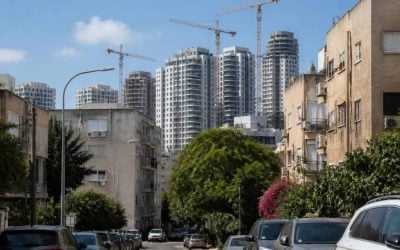
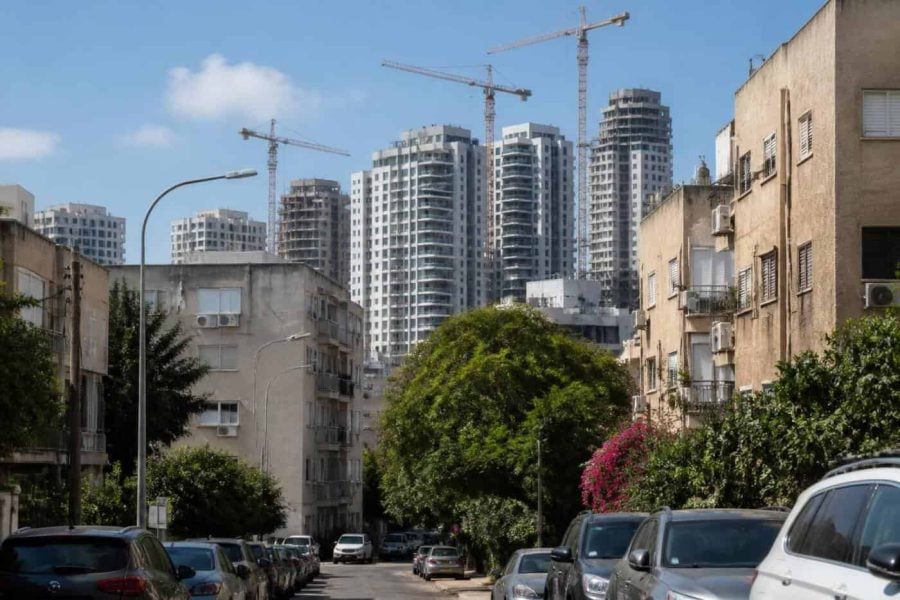
Israel’s housing market is not breaking. It is separating. Prices have softened, transactions have slowed, and unsold inventory has piled up, yet the country’s basic housing problem remains stubbornly intact: too little developable land, too much long-term demand, and a planning system that rewards patience.
The Opportunity Map
- Israel’s market is fragmented, not collapsing, with national prices down 1.7% over the year in the latest CBS-based snapshot from The Times of Israel.
- Urban renewal is becoming the central value engine, especially in older apartments with redevelopment potential.
- Developers are using incentives instead of public price cuts, creating hidden discounts for buyers who model cash flow properly.
- Tel Aviv weakness is about liquidity, not loss of scarcity, making stale listings more interesting than headline prices.
- The biggest edge may be informational, especially in Hebrew-only listings, estate sales, and local broker networks.
Israel’s Housing Market Is Mispriced, Not Broken
The clearest signal in the current market is contradiction: prices have eased, sales are slower, and inventory is heavy, but Israel’s long-term housing shortage has not disappeared. That gap between short-term stress and structural demand is where asymmetric opportunities begin.
The Times of Israel reported that average Israeli home prices fell in 10 of the previous 12 months, producing a 1.7% annual decline, while high interest rates, record unsold new housing supply, and still-high prices weighed on activity.
That is not a classic crash pattern. It is a repricing pattern.
The Bank of Israel also described a housing market where transactions declined and unsold homes increased, even as housing starts remained relatively high. Its monetary report framed the issue as a slowdown within a supply-constrained economy, not a disappearance of demand.
For Israel, that distinction matters. The country’s land constraints, population growth pressures, security-driven relocation patterns, and urban density needs all support long-term housing demand. The present weakness is therefore more tactical than existential.
The best opportunities are not simply cheap apartments. They are assets where the market is pricing today’s inconvenience while underpricing tomorrow’s optionality.
Why Aging Pinui-Binui Apartments Are More Interesting
Pinui-Binui, meaning evacuation and reconstruction, is Israel’s major urban renewal model. Owners in older buildings may eventually receive upgraded apartments in denser new projects. The market often prices the old unit, while the real value sits in future redevelopment rights.
Areas to watch include:
- Bat Yam
- South Tel Aviv
- Kiryat HaYovel in Jerusalem
- Katamonim
- Older Petah Tikva blocks
- Kfar Saba renewal corridors
The logic is straightforward. A tired 1960s apartment may look inferior to a renovated unit nearby. But if the older building sits inside a credible renewal corridor, its upside can be larger.
This is where inexperienced buyers often miss the point. They compare tiles, elevators, balconies, and current rent. Sophisticated buyers ask different questions.
Has a resident committee formed? Are nearby buildings already approved? Has the municipality discussed density changes? Has one building on the street signed with a developer?
Those signals matter because urban renewal repricing often happens street by street, not city by city. The lag is the opportunity.
The Jerusalem Post recently described Israel’s urban renewal sector as entering a more mature phase, with stricter financing demands, deeper legal planning, and more serious project evaluation. That supports the idea that not every renewal rumor is valuable, but credible projects may gain importance.
Urban renewal is one of Israel’s practical answers to land scarcity, aging housing stock, and the need to strengthen older neighborhoods without abandoning central cities.
Developers Are Cutting Prices Without Saying So
Developers do not like visible discounts. A public price cut can damage valuations, upset banks, and reset comparable sales across a project. So the discount often arrives wearing a costume.
Common forms include:
- 10/90 payment structures
- 20/80 financing
- Subsidized mortgages
- Free parking or storage
- Reduced index linkage
- Upgraded specifications
- Delayed payment schedules
These incentives can make the effective purchase price lower than the listing price. Once incentives are modeled properly, the economic discount can reach 8% to 15% in some cases.
That figure should be treated as a deal-level estimate, not a universal market statistic. The exact value depends on financing terms, inflation linkage, delivery timing, mortgage costs, and the buyer’s cash position.
Relevant locations include:
- Netanya outer-ring projects
- Ashdod renewal zones
- Peripheral Jerusalem towers
- Hadera
- Kiryat Gat growth projects
The key mistake is comparing sticker price to sticker price. In a market shaped by financing pressure, the better comparison is net present cost.
A buyer who understands payment timing may see value that a headline-price shopper misses.
Tel Aviv Is Weakest Where Sellers Are Tired
Tel Aviv remains Israel’s most supply-constrained prestige market. But even Tel Aviv is not immune to liquidity pressure. Luxury and upper-middle inventory has accumulated in some pockets, with stale listings, broker switching, and sellers still anchored to 2021 and 2022 pricing.
The Times of Israel cited CBS figures showing Tel Aviv prices down 5.1% over the previous 12 months, even as some other districts rose.
That does not mean Tel Aviv has become cheap. It means negotiation has returned.
The most interesting targets are not the most polished listings. They are apartments with friction:
- 120-plus days on market
- Inherited units
- Absent foreign owners
- Divorce or liquidation sales
- Outdated interiors in prime locations
- Repeated relists
- Sellers who have changed brokers
This is a psychological market as much as a financial one. Some owners still want peak-era prices. Others have grown tired of waiting.
That fatigue is the opening.
The investor case for Tel Aviv remains grounded in scarcity. The city is the country’s business, culture, technology, and lifestyle magnet. The opportunity is not a fantasy of bargain-basement Tel Aviv. It is buying into scarcity when liquidity temporarily favors the buyer.
Can Be’er Sheva Still Deliver Yield?
Be’er Sheva stands apart because the arithmetic can still work. In much of central Israel, rental yields are thin. In Be’er Sheva, lower acquisition prices and durable rental demand can create better income ratios.
Target types include:
- Student-adjacent apartments
- Roommate-friendly layouts
- Older buildings near Ben-Gurion University
- Small multifamily configurations
Some student-oriented properties can model at 6% to 9% gross yields. That should be read carefully. Gross yield is annual rent divided by purchase price before expenses, vacancy, tax, repairs, financing, and management.
Net yield will be lower.
Still, Be’er Sheva has a structural story. It is a university city, a medical hub, and a major southern anchor. It lacks the prestige of Tel Aviv or Jerusalem, which is precisely why pricing can lag.
For Israel, the city also carries national significance. Strengthening Be’er Sheva supports the broader development of the Negev, a strategic priority that turns real estate from a spreadsheet into part of a national growth map.
Ashdod’s Older Corridors Are Being Repriced Slowly
Ashdod is one of the more interesting coastal stories because it combines urban renewal potential, migration demand, and lower pricing than the Tel Aviv coastline.
Older Youd-Alef and Youd-Bet sectors are high-leverage zones entering renewal cycles.
The mispricing comes from memory. Many buyers still classify neighborhoods according to old reputations. But urban renewal changes buildings, streets, resident mix, and buyer perception.
That transformation is rarely priced all at once. First come permits, committees, developer signatures, cranes, renovated lobbies, new shops, and only then wider recognition.
Ashdod benefits from a simple but powerful combination: coast, infrastructure, population demand, and relative affordability. In a country where the Mediterranean strip is limited, that combination deserves attention.
Peripheral Land Is a High-Risk Planning Bet
Land is where Israeli real estate can become explosive, but also unforgiving. Corridors with planning momentum include:
- Kiryat Gat expansion areas
- Rail-linked outskirts
- Hadera fringes
- Northern corridor land
- Negev growth belts
The target profile includes fragmented inherited parcels, agricultural land near approved plans, small family-owned plots, and land close to infrastructure expansion.
The reason is Israel’s planning gap. Land that is merely possible trades very differently from land that is approved. Once approval momentum becomes visible, repricing can be sharp.
But this is not a beginner’s category.
Planning risk, zoning uncertainty, ownership disputes, expropriation exposure, betterment levies, infrastructure obligations, and long timelines can destroy a simplistic thesis.
Peripheral land is best understood as an option on planning progress. Options can multiply. They can also expire worthless.
The Biggest Edge May Be Hebrew-Only Inventory
Foreign buyers often compete in the same visible marketplace: English listings, Anglo brokers, glossy projects, and polished developer presentations.
The deeper opportunity often lies elsewhere:
- Yad2 Hebrew listings
- Estate liquidations
- Inheritance disputes
- Local broker networks
- Legal notices
- Municipal publications
The strongest signals include poor photos, vacant apartments, urgent sale language, repeated reposting, older ownership, and long vacancy periods.
This is not glamorous work. It is research-heavy, local, and often slow.
But the informational gap can be larger than the price gap. Many international buyers never see these properties, never call the Hebrew-speaking broker, and never read the municipal notice.
That creates an edge for buyers who operate locally, verify legally, and avoid the comfort premium of English-language marketing.
The Most Mispriced Segment Is Old Housing With Redevelopment Optionality
The strongest overall segment is aging apartments with credible redevelopment potential.
Not because the apartments are beautiful. Often, they are not.
They are compelling because Israel is land constrained, municipalities are pushing density, old housing stock is becoming economically obsolete, and urban renewal remains one of the country’s most practical housing tools.
This is where Israel’s national challenge becomes an investment thesis.
Old buildings in the right corridors can hold three layers of value:
- Current use value
- Land share value
- Redevelopment optionality
The third layer is the one many sellers still underprice.
| Opportunity Segment | Why It Looks Mispriced | Best Signals | Main Risk |
|---|---|---|---|
| Pinui-Binui apartments | Sellers price the old apartment, not future redevelopment rights | Resident committee, nearby approvals, developer signatures | Project delays or weak feasibility |
| Developer inventory | Discounts hidden inside financing incentives | 10/90 terms, free parking, linkage reductions | Overpaying despite incentives |
| Tel Aviv stale listings | Liquidity pressure meets seller fatigue | 120+ days listed, relists, inherited units | Anchored sellers may refuse reality |
| Be’er Sheva yield assets | Lower entry prices support better rent ratios | Student demand, roommate layouts, BGU proximity | Vacancy, repairs, management costs |
| Ashdod renewal corridors | Old neighborhood reputations lag physical change | Renewal activity in Youd-Alef and Youd-Bet | Slow municipal or developer progress |
| Peripheral land | Planning approval can sharply reprice land | Infrastructure, zoning movement, fragmented sellers | Long timelines and legal complexity |
| Hebrew-only distressed inventory | Foreign buyers often never see the deals | Poor photos, urgent sale, repeated reposting | Due diligence burden is higher |
Buyer Checklist for This Market
- Model the real price, not the listing price. Include payment schedule, linkage, mortgage subsidy, parking, storage, and delivery timing.
- Verify renewal momentum independently. Check resident committees, municipal plans, developer agreements, and nearby approvals.
- Separate gross yield from net yield. Deduct vacancy, repairs, management, taxes, financing, and building expenses.
- Track days on market. Stale listings often reveal negotiation room before asking prices change.
- Search in Hebrew. The best distressed inventory may never appear in English-language channels.
- Use local professionals. Lawyers, appraisers, engineers, and Hebrew-speaking brokers reduce avoidable mistakes.
- Avoid story-only land deals. Planning momentum must be documented, not merely promised.
Glossary
| Term | Definition |
|---|---|
| Pinui-Binui | An Israeli urban renewal process in which older buildings are evacuated and replaced with denser new construction. |
| Urban renewal | Redevelopment of aging buildings or neighborhoods, often through added density and upgraded infrastructure. |
| Gross yield | Annual rent divided by purchase price before expenses, taxes, vacancy, financing, and maintenance. |
| Liquidity pressure | A market condition where sellers struggle to close deals quickly, often increasing buyer negotiating power. |
| Redevelopment optionality | The potential future value created if a property becomes part of a successful redevelopment project. |
| Index linkage | A mechanism that adjusts payments according to an inflation or construction-cost index. |
| Planning momentum | Visible progress in zoning, permits, infrastructure, or municipal approvals that can increase land value. |
FAQ
Is Israel’s property market collapsing?
No. The market is fragmented, illiquid, and mispriced rather than collapsing. That view is consistent with published market reporting showing lower prices, slower sales, and high unsold inventory, but not a disappearance of structural demand. See the CBS-based reporting from The Times of Israel.
What is the strongest opportunity right now?
Aging apartments with redevelopment optionality appear to be one of the strongest overall segments. These properties may look unattractive today, but their future value can rise if credible Pinui-Binui or urban renewal momentum develops.
Why are developer incentives important?
Because they can hide the real discount. A project may keep its official price unchanged while offering easier payment terms, free extras, subsidized financing, or reduced linkage. Buyers who calculate the full economic package may see value that sticker-price comparisons miss.
Is Tel Aviv finally cheap?
No. Tel Aviv remains expensive and land constrained. The opportunity is narrower: stale listings, exhausted sellers, inherited units, and liquidity pressure in premium locations. This is about negotiation, not a wholesale collapse.
Why does Be’er Sheva appear in the opportunity list?
Because yields can still work there better than in many central Israeli cities. Lower purchase prices, student demand, and roommate-friendly layouts can support stronger rent-to-price ratios, especially near Ben-Gurion University.
Are peripheral land deals safe?
They are potentially powerful but high risk. The difference between possible and approved land can be enormous in Israel. Buyers should demand documented planning progress and serious legal review before treating land as an investment.
Why focus on Hebrew-only listings?
Because many foreign buyers never reach that part of the market. Hebrew listings, estate liquidations, local brokers, and municipal publications can reveal properties that are absent from polished English-language channels.
Why This Matters Now
Israel’s housing challenge is also a national resilience story. A country with limited land, growing cities, security needs, and aging buildings cannot solve its future with hesitation. Capital that identifies real renewal, real supply, and real local demand can do more than seek returns. It can help modernize Israeli cities.
The actionable takeaway is simple: stop asking whether Israel property is up or down. Ask which street, which seller, which building, which rights, and which hidden incentives the market has failed to price.
Final Takeaways
- The best opportunities are specific, not national. Israel’s market is splitting by city, asset type, and seller pressure.
- Urban renewal remains the central upside engine. Old apartments in credible corridors deserve closer attention.
- Hidden discounts matter more than asking prices. Developer incentives can reshape the true purchase cost.
- Tel Aviv’s opportunity is seller fatigue, not cheap land. Scarcity remains the core story.
- Information is a major edge. Hebrew-only distressed inventory may offer the widest gap between visible price and real value.