
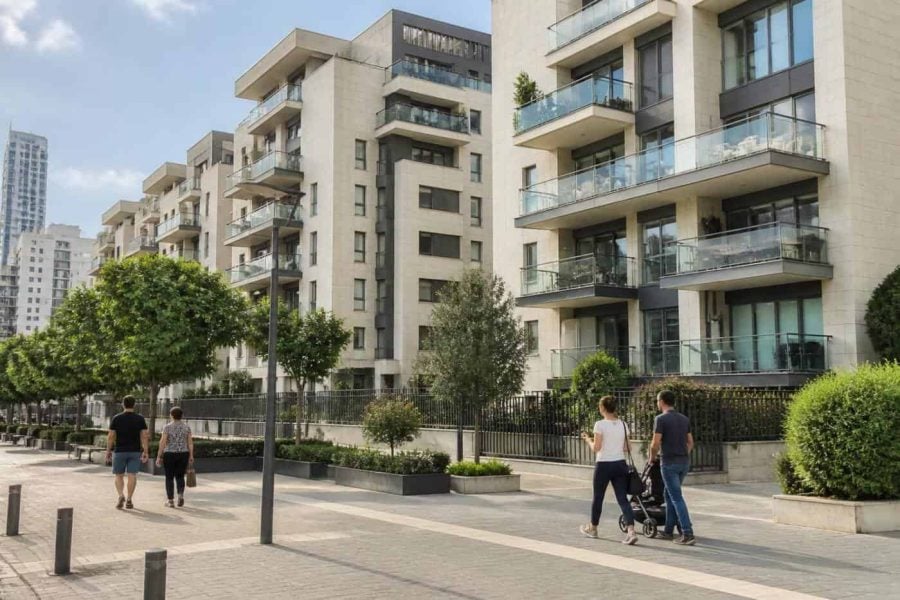
Israel’s housing market is showing a rare split: sale prices have softened, while rents in several major and mid-tier hubs remain firm. For investors, that changes the conversation. The question is no longer only where prices may rebound, but where monthly rental income is already supporting the investment case.
The Market Signal Investors Should Not Ignore
- National home prices have eased, with recent reporting citing a 1.7% yearly decline based on Central Bureau of Statistics figures.
- Rents remain strong in key hubs, especially Tel Aviv, Beit Shemesh, Netanya, and several mid-tier cities.
- Tel Aviv still commands premium rents, but high purchase prices can compress gross yields.
- Mid-tier hubs may now look more attractive where rents are firm and entry prices are lower.
- Income is becoming more central as capital appreciation looks less automatic.
Source: The Times of Israel
Israel’s Rental Market Is Sending a Different Message Than Home Prices
Israel’s real estate market is not collapsing; it is repricing. That distinction matters. Recent data show softer home prices, while rental demand in several cities remains active. For a country still absorbing wartime uncertainty, demographic pressure, and chronic housing shortages, this is a market recalibrating rather than retreating.
Recent reporting citing Central Bureau of Statistics data showed home prices fell across much of the past year, producing a 1.7% annual decline. In January-February 2026, prices also slipped 0.1% year-on-year for the second consecutive month.
Source: The Times of Israel
That is the price side. The rent side looks more resilient.
A typical one-bedroom rental in Israel is around ₪3,900, while Tel Aviv one-bedroom rents often move above ₪6,000. In premium Tel Aviv locations, smaller units can command meaningfully more.
That gap between softer prices and sticky rents is exactly where investors start paying attention. If an asset costs a little less, but the monthly rent does not fall with it, the income profile improves.
This does not mean every apartment is suddenly a bargain. Israel remains an expensive, supply-constrained market. But it does mean investors may shift from chasing glamour addresses to studying rent durability, tenant depth, and realistic gross yield.
Why Beit Shemesh Is Drawing Family-Rental Attention
Beit Shemesh is not trying to be Tel Aviv, and that may be its advantage. The rental story there is built around families, multi-bedroom demand, and practical housing needs. Active mid-market rents are appearing in the low-to-mid ₪6,000 range, especially in Ramat Beit Shemesh.
That matters because Beit Shemesh is a family city before it is an investor slogan.
Its demand is not driven mainly by beachfront views, nightlife, or short-term prestige. It is driven by households that need space, schools, community infrastructure, and access to Jerusalem and central Israel.
Recent market activity suggests that family-sized units remain a serious rental category. This is not the same as an official vacancy rate, but fast-moving listings can indicate meaningful tenant demand.
Israel’s housing market is supported by demographic momentum, household formation, and community-based demand. Those forces are less glamorous than skyline towers, but often more durable.
The investor question is simple: can monthly rent remain stable even if resale prices pause?
In Beit Shemesh, current rental cues suggest the answer may be yes for well-located, family-suitable apartments.
Tel Aviv Still Wins on Rent, But Does It Win on Yield?
Tel Aviv remains Israel’s rent machine. Its economy, beaches, universities, nightlife, and business ecosystem keep tenant demand high. But investors know the trap: high rent does not automatically mean high yield. When purchase prices are extreme, even very high monthly rent can produce only modest returns.
Many smaller-unit rents in Tel Aviv are around ₪5,400 to ₪7,400 or more, with premium locations moving higher.
That is powerful rental income. But Tel Aviv purchase prices remain so high that gross yields can be squeezed.
A gross yield is the annual rent divided by the purchase price, before taxes, financing, maintenance, vacancy, and management costs.
A market-intelligence dataset from Global Property Guide put Israel’s average gross rental yield at 3.15% in Q1 2026, with Tel Aviv-Yafo averaging below Haifa in its sampled comparison. It also emphasizes that gross yields exclude costs and that net yields are typically lower.
Source: Global Property Guide
This is why investors should be careful with Tel Aviv. It is a superb asset-security market. It is also a costly entry market.
For buyers prioritizing long-term capital preservation, global appeal, and liquidity, Tel Aviv still has a strong case. For buyers prioritizing income, the better opportunity may lie elsewhere.
That is not a weakness in Israel’s market. It is a sign of maturity. Different cities now serve different investment strategies.
Netanya’s Sea-Oriented Market Keeps Its Resilience
Netanya sits in a distinctive lane: coastal lifestyle without full Tel Aviv pricing. Resilient rents for family-sized homes are supported by sea-oriented demand and lifestyle buyers. That combination can give investors a more balanced income-and-appeal profile.
Netanya’s strength is emotional and practical. It offers a coastal identity, international familiarity, and access to the center of the country. That mix attracts families, retirees, immigrants, and investors who want lifestyle without paying central Tel Aviv prices.
Family-sized rents appear resilient above typical mid-market averages. That suggests Netanya is not merely benefiting from general rent inflation. It is also benefiting from a specific product-market fit: larger apartments in a lifestyle city.
Still, investors should separate asking rents from signed rents. Portal listings show ambition. Closed leases show reality.
The key due-diligence question in Netanya is whether advertised rents are being achieved consistently across neighborhoods, or only in premium sea-facing pockets.
Mid-Tier Hubs May Be Israel’s Yield Battleground
Modi’in, Rehovot, Ashkelon, and Haifa are not interchangeable, but they share a common investment theme. They sit outside Tel Aviv’s most expensive pricing zone while still offering real tenant demand. In a softer sale-price environment, that can improve gross-yield potential.
Recent rental activity in these hubs suggests turnover. Turnover can be good or bad. It may signal demand, but it may also reflect pricing friction. Investors should check days-on-market, renewal rates, and whether similar units are actually closing near advertised levels.
The broader logic is clear: if Tel Aviv has the highest rent but also the highest purchase price, other hubs can win on yield.
Haifa, for example, has historically offered lower entry prices than Tel Aviv. Global Property Guide’s Q1 2026 comparison placed Haifa’s average gross rental yield above Tel Aviv-Yafo in its sample.
Source: Global Property Guide
Rehovot has academic, medical, and employment anchors. Modi’in has commuter-family appeal. Ashkelon offers lower entry costs, though investors must price in security perceptions and local risk sensitivity.
This is where Israel’s market becomes more analytical. The best investment may not be the most famous city. It may be the city where rent strength meets a rational purchase price.
The New Investor Equation: Rent First, Appreciation Second
For years, Israeli housing rewarded buyers who assumed prices would keep rising. That assumption is now less comfortable. With national prices easing, investors are being pushed back to fundamentals: rent, tenant quality, leverage, maintenance, and realistic exit value.
This is healthy. A market that forces discipline is not a failed market. It is a more transparent one.
With prices softening and rents holding steady or rising in many places, the income side becomes more relevant.
Investors should no longer ask only, “Will this apartment rise in value?” They should also ask:
- Can it rent quickly?
- Can the tenant base afford renewals?
- Is the rent supported by local wages, schools, transport, or lifestyle demand?
- Does the gross yield survive taxes, repairs, and vacancy?
- Is the city dependent on one narrow demand source?
Israel’s advantage is that many rental markets are underpinned by real household need, not just speculation. But discipline still matters. A patriotic investment thesis is not a substitute for arithmetic.
Israel Rental Hubs Compared
| Hub | Current Rental Signal | Investment Reading | Main Caution |
|---|---|---|---|
| Tel Aviv-Yafo | Smaller units often around ₪5,400 to ₪7,400 or more | Highest rent depth and strongest prestige market | High purchase prices can compress yields |
| Beit Shemesh / Ramat Beit Shemesh | Family-unit rents active in the low-to-mid ₪6,000 range | Strong family demand and community-driven tenancy | Must verify signed leases, not only listings |
| Netanya | Family-sized coastal rentals appear resilient | Lifestyle demand supports rent stability | Sea-facing and inland submarkets differ sharply |
| Haifa | Mid-tier hub with stronger gross-yield logic than Tel Aviv in sampled data | Lower entry prices may improve income profile | Neighborhood selection is critical |
| Modi’in / Rehovot | Fresh rental activity and tenant engagement | Commuter, family, academic, and employment anchors | Yield depends heavily on purchase price |
| Ashkelon | Lower-cost hub with rental engagement | Potentially higher yield profile | Security perception and local volatility require pricing discipline |
Investor Checklist for Israel’s Rental Market
- Compare asking rents with signed leases. Portal listings are useful signals, but closed contracts matter more.
- Calculate gross and net yield separately. Gross yield ignores taxes, maintenance, vacancy, financing, and management.
- Stress-test the rent. Check whether the unit still works if rent falls 5% or vacancy lasts two months.
- Study tenant depth. Family hubs, student areas, medical centers, and commuter corridors behave differently.
- Avoid prestige blindness. Tel Aviv may be safer and more liquid, but not always the best income play.
- Check building condition. Elevator access, shelter rooms, parking, renovation quality, and floor level can move rent materially.
Glossary
Gross yield
Annual rental income divided by the property purchase price, before costs such as tax, repairs, financing, and vacancy.
Net yield
Rental return after deducting operating costs, taxes, maintenance, financing expenses, and expected vacancy.
Portal listings
Rental or sale advertisements posted on property websites. They show asking prices, not necessarily final transaction prices.
Mid-tier hubs
Cities outside the most expensive prime market that still have meaningful tenant demand and investment activity.
Capital appreciation
An increase in the property’s resale value over time.
Vacancy
A period when a rental property has no tenant and produces no rent.
FAQ
Are Israeli home prices falling?
Recent reporting based on Central Bureau of Statistics figures says Israeli home prices have softened, with a 1.7% decline over the past year and a 0.1% year-on-year drop in January-February 2026.
Source: The Times of Israel
That does not mean every city is falling equally. Tel Aviv and central areas have shown sharper annual weakness than some northern, southern, and Jerusalem markets.
Why can rents stay strong while home prices ease?
Home prices and rents respond to different pressures. Sale prices are sensitive to mortgage rates, buyer confidence, investor appetite, and capital-market conditions. Rents are driven more directly by household need, local supply, job access, schools, and lifestyle demand.
That is why rents can remain firm even when buyers hesitate.
Is Tel Aviv still the best place to invest?
It depends on the goal.
Tel Aviv remains Israel’s strongest prestige rental market, with deep tenant demand and high liquidity. But because purchase prices are very high, rental yields can be modest.
Income-focused investors may find better gross-yield opportunities in cities such as Haifa, Beit Shemesh, Rehovot, Ashkelon, or other mid-tier hubs.
What makes Beit Shemesh attractive for rental investors?
Beit Shemesh has active family-unit demand, especially in Beit Shemesh and Ramat Beit Shemesh.
The city’s rental profile is supported by family needs, community life, and demand for multi-bedroom apartments. That can make it more stable than markets driven mainly by luxury or short-term lifestyle demand.
Are portal listings reliable enough for investment decisions?
They are useful, but not sufficient.
Listings show asking rents and market activity. They do not prove that units were rented at those prices. Investors should verify signed leases, recent comparable rentals, days-on-market, and actual tenant demand.
What is the main risk in this market?
The main risk is overpaying for rent assumptions.
If an investor buys based on optimistic asking rents, the yield can disappoint. Higher maintenance costs, taxes, financing, and vacancy can also reduce returns quickly.
What should investors watch next?
Watch three things: Central Bureau of Statistics home-price releases, actual signed rental contracts, and local inventory levels. If prices keep easing while rents remain steady, income-focused opportunities may widen in selected hubs.
What Comes Next for Israel’s Property Market
Israel’s rental market is becoming more selective, and that is good news for serious investors. The easy story of buying anywhere and waiting is giving way to a better one: buy where real tenants support real income.
The next smart move is local due diligence. Compare neighborhoods, not just cities. Verify rent, not just listings. In Israel, resilience often shows up first in ordinary family demand.
The Bottom Line for Israel Real Estate
- Israel’s home-price softness is shifting attention toward rental income.
- Tel Aviv remains powerful, but high prices can weaken yields.
- Beit Shemesh, Netanya, Haifa, and other hubs deserve closer income analysis.
- Portal activity is useful, but signed leases are the decisive evidence.
- The strongest opportunities may be where tenant demand is practical, local, and repeatable.
Why This Market Matters
Israel’s housing market is more than an investment category. It reflects population growth, family formation, national resilience, and confidence in the country’s future. When rents hold while prices cool, the market is not simply weakening; it is revealing where Israelis still need homes, build lives, and anchor communities.