In Tel Aviv’s rental market, the most valuable room may no longer be the balcony, the sea-view bedroom, or the renovated kitchen. In 2026, it is the mamad, an in-apartment reinforced safe room, and its growing importance is reshaping how families, foreign residents, landlords, and investors judge Israeli housing.
The Market Shift in Brief
- Safe rooms have become a decisive rental feature, especially in Tel Aviv and newer central neighborhoods.
- Short-term furnished rentals with mamad rooms are seeing stronger demand, particularly during security tensions.
- Older central Tel Aviv buildings face pricing pressure when they lack protected rooms or easy shelter access.
- Families and foreign renters are moving beyond location-first searches, prioritizing building age, protection, elevators, and emergency access.
- Investors now need to consider safety infrastructure, not just neighborhood appeal or rental yield.
A Safe Room Is Now a Market-Moving Amenity
The Israeli rental market has always rewarded location, convenience, and scarcity. But in 2026, security infrastructure has moved from the background to the center of the deal. A mamad, short for a reinforced residential safe room, is increasingly viewed as essential rather than optional.
For renters, that changes the hierarchy of needs.
A central Tel Aviv address still matters. So do restaurants, schools, beach access, transportation, and walkability. Yet renters are increasingly asking a more urgent question before signing: where does my family go during an alert?
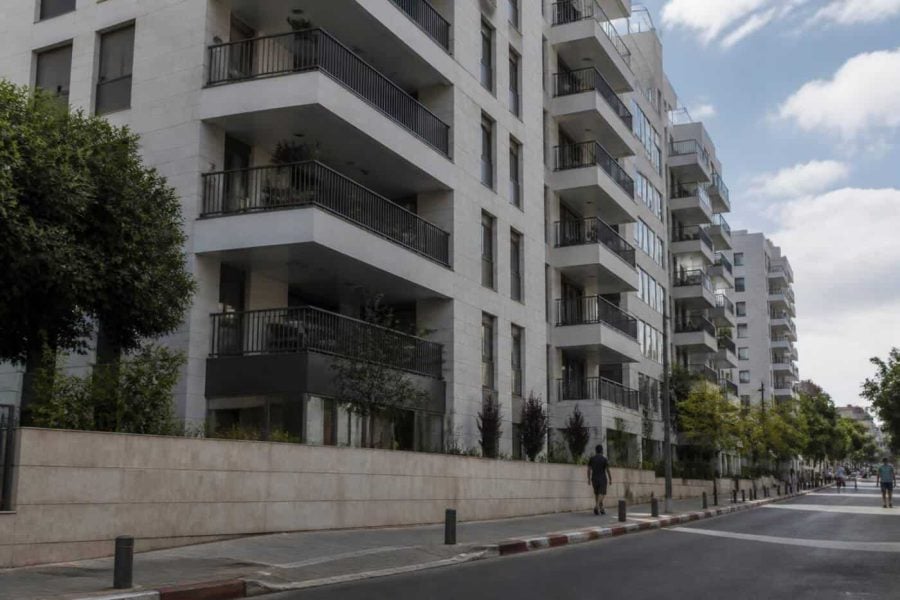
That question gives newer apartments an advantage. Many older buildings in central Tel Aviv were built before private safe rooms became standard in residential planning. By contrast, newer buildings in North Tel Aviv, newer central neighborhoods, Herzliya, Ra’anana, and modern Jerusalem projects are more likely to include mamad rooms, elevators, and better emergency infrastructure.
Recent Ynet reporting found that short-term sublet prices in Tel Aviv rose sharply for apartments with safe rooms during periods of heightened security tension. Units with protected rooms were taken quickly, while older apartments without such protection became harder to rent at premium prices.
That is a hard market signal, not a passing preference.
Why Tel Aviv Renters Are Changing Their Priorities
For years, Tel Aviv renters accepted trade-offs: old stairwells for prime streets, small layouts for nightlife, and weak parking for urban energy. Now, the trade-off has become sharper. Security concerns are pushing renters to treat building protection as a core housing requirement.
This shift is especially visible among families.
Parents with children are less willing to rely on a distant shared shelter, an old stairwell, or unclear emergency arrangements. They want protected space inside the apartment or at least immediate, reliable access within the building.
Foreign residents and Anglo renters are also influencing demand. Many are unfamiliar with the differences between older Israeli buildings and newer protected construction. Overseas families increasingly ask about building age, shelter access, and emergency infrastructure before signing leases.
For relocation renters, those questions come before lifestyle perks.
A furnished apartment may be stylish, central, and available. But if it lacks a mamad, it may now lose to a less glamorous unit in a newer building. That is particularly true for temporary renters who need certainty fast and cannot spend weeks decoding Israeli building standards.
Short-Term Furnished Rentals Feel the Pressure First
The short-term market reacts faster than the long-term market because renters are often moving under time pressure. Families relocating temporarily, foreign residents arriving for limited periods, and corporate renters usually want furnished, turnkey apartments with flexible terms.
That makes safe-room access a pricing lever.
Furnished apartments in newer North Tel Aviv buildings and modern projects are seeing stronger occupancy. Corporate and relocation renters are asking about safety infrastructure before discussing design, amenities, or neighborhood atmosphere.
This is where the market becomes more selective.
A furnished apartment without a mamad is not automatically unrentable. Tel Aviv remains one of Israel’s most resilient urban rental markets. But the unit may need to compete on price, flexibility, furnishing quality, or location. It can no longer rely on address alone.
For landlords, that means the listing description matters.
A protected room should not be buried in the fine print. If the apartment has a private mamad, that is now a headline feature. If it has shared shelter access, the terms should be explained clearly. Ambiguity can cost time, trust, and rent.
North Tel Aviv Is Gaining a Clear Advantage
North Tel Aviv is benefiting because it offers what many renters now want: newer housing stock, family-friendly planning, stronger infrastructure, and access to protected rooms. Kochav HaTzafon, Bavli, Gush HaGadol, and newer towers near Park Hayarkon are among the areas benefiting from this shift.
These areas combine urban access with modern residential standards.
That combination is powerful. Families can remain close to Tel Aviv’s schools, employment centers, parks, and services while gaining a building profile that feels more secure. For foreign renters, newer towers can also feel easier to understand: elevators, parking, management, modern layouts, and clearer emergency arrangements.
The same logic is spreading beyond Tel Aviv.
Herzliya and Ra’anana are attracting families comparing newer suburban housing against older central Tel Aviv inventory. Jerusalem’s newer areas, including Arnona and other modern projects, remain attractive to foreign renters looking for furnished apartments with elevators and protected rooms.
This does not mean central Tel Aviv is losing its appeal.
It means the definition of a premium apartment is changing. A beautiful older unit in a prime location may still attract renters. But without protected space, it faces a tougher argument against newer alternatives.
Are Older Buildings Becoming Less Competitive?
Older apartments are not obsolete, but some are becoming harder to price aggressively. In a market where renters are prioritizing safety infrastructure, charm alone may not justify a premium, especially for short-term or family leases.
There is a widening gap between newer and older inventory.
Older Tel Aviv buildings without a mamad or convenient shelter access may face more vacancy risk during periods of tension. Long-term tenants may still prioritize location, budget, or community. But short-term renters, foreign families, and parents with children are often less willing to compromise.
That creates a strategic challenge for landlords.
Owners of older apartments cannot easily install a private mamad in many cases. But they can still improve competitiveness. Clear shelter information, better furnishings, responsive management, realistic pricing, and flexible lease structures can all help.
The worst strategy is pretending nothing has changed.
Renters are asking sharper questions. If landlords cannot answer them clearly, trust erodes. In a nervous market, uncertainty becomes expensive.
Investors Must Consider Buildings, Not Just Neighborhoods
For Israeli real estate investors, the lesson is direct: neighborhood selection is no longer enough. A strong street in Tel Aviv may underperform a comparable newer unit if the building lacks protected space and family-friendly infrastructure.
Investors evaluating furnished or flexible rental strategies should examine building age, mamad availability, elevator access, parking, family suitability, emergency walkability, and competing new inventory nearby.
That is a more disciplined approach.
The investor who buys only for location may miss tenant behavior. The investor who studies building function can better understand future liquidity, vacancy risk, and pricing resilience. In this environment, a safe room is not merely a comfort feature. It may be a risk-management asset.
New-build inventory may hold demand more effectively because it addresses both lifestyle and security.
That matters in Israel, where housing demand is already shaped by tight supply, delayed home purchases, demographic growth, and shifting household needs. The Times of Israel has reported that housing policy has struggled to match changing demand, especially for smaller and modern units.
The safe-room premium adds another layer to that structural pressure.
What Renters, Landlords, and Investors Should Watch
| Group | What Is Changing | Practical Impact | Summary |
|---|---|---|---|
| Short-term renters | Safe rooms are becoming a top filter | Furnished units with mamad rooms may rent faster and cost more | Speed matters when protected inventory is limited |
| Families | Building safety now rivals location | Newer buildings with elevators and protected rooms gain appeal | Parents are prioritizing certainty |
| Foreign residents | Many ask about emergency infrastructure before amenities | Turnkey apartments in newer projects are better positioned | Clear information builds trust |
| Landlords with newer units | Safe rooms create pricing power | Listings should highlight mamad access prominently | Protection is now a marketable asset |
| Landlords with older units | Competition from newer inventory is increasing | Pricing, furnishing, and transparency become more important | Older charm needs a stronger value case |
| Investors | Building infrastructure affects rental resilience | Evaluations must include safety, age, and functionality | Location alone is no longer enough |
A Practical Checklist for Israel’s 2026 Rental Market
- Ask whether the apartment has a private mamad. If not, ask where the nearest protected space is and how quickly it can be reached.
- Verify whether protection is inside the unit or shared. These are not equivalent in practice or market value.
- Check building age and infrastructure. Elevators, parking, stairwell access, and building maintenance now matter more.
- Compare newer inventory nearby. A premium older apartment may face competition from safer modern buildings.
- Review lease flexibility. Temporary relocation demand can make flexible leases more valuable.
- Inspect furnishing quality before arrival. This is especially important for overseas renters taking furnished units remotely.
- For landlords, state protection details clearly. A vague listing can lose renters before the first viewing.
Glossary
| Term | Definition |
|---|---|
| Mamad | A reinforced safe room inside an Israeli apartment, designed to provide protected space during emergencies. |
| Short-term furnished rental | A temporary rental offered with furniture and basic household equipment, often used by relocating families, foreign residents, or corporate renters. |
| Protected room | A secure space, either private or shared, intended to offer shelter during security alerts or emergencies. |
| Vacancy risk | The risk that a property remains unrented for longer than expected, reducing income for the owner. |
| Rental evaluation | The process investors use to evaluate a property’s expected rental income, costs, risks, and long-term performance. |
| Functional obsolescence | A decline in a property’s competitiveness because its design or features no longer match current market expectations. |
FAQ
What is driving demand for Tel Aviv rentals with safe rooms?
The main driver is changing renter behavior during periods of security tension. Renters increasingly want apartments with immediate access to protected space, especially families, foreign residents, and temporary tenants.
This demand is strongest in newer buildings and furnished short-term rentals.
Are apartments without a mamad still rentable?
Yes. Older apartments in central Tel Aviv can still attract tenants because location remains valuable.
However, apartments without a mamad may face more competition, especially in the short-term furnished market. Owners may need to adjust pricing, improve furnishings, or provide clearer shelter information.
Which Tel Aviv neighborhoods are benefiting most?
North Tel Aviv areas such as Kochav HaTzafon, Bavli, Gush HaGadol, and newer towers near Park Hayarkon are benefiting because they include newer residential inventory where mamad rooms are more common.
Why are foreign renters paying attention to building protection?
Foreign renters may be less familiar with Israel’s older building stock and shelter arrangements. Many prefer turnkey furnished apartments in newer projects because the safety infrastructure is easier to understand and verify.
For overseas families, building age and protected-room access can become decisive before signing a lease.
What should landlords do if their apartment has a mamad?
They should highlight it clearly in listings and viewings. A private mamad is now a major marketing advantage.
Landlords should also present the apartment professionally, respond quickly, and consider flexible lease structures for families or relocation renters.
What should investors evaluate before buying a rental property in Tel Aviv?
Investors should examine building age, mamad availability, elevator access, parking, family suitability, emergency walkability, and nearby competing newer inventory.
Rental performance now depends on more than neighborhood reputation.
The Bottom Line for Renters and Owners
Israel’s rental market is not abandoning location. It is redefining what a good location must include.
In Tel Aviv, a prime address without protected space may no longer command automatic confidence. A newer apartment with a mamad, clear emergency access, and family-ready infrastructure can now outperform older inventory that once relied on charm and centrality alone.
For renters, the move is simple: ask about protection before falling in love with the view.
For landlords and investors, the message is sharper: safety infrastructure has become part of the rent calculation. Ignore it, and the market may price that mistake for you.
Why This Matters Now
- The mamad has become a housing-market signal, not just a safety feature.
- Newer Israeli apartments are gaining rental power because they match today’s security-conscious demand.
- Families and foreign residents are reshaping the short-term market by prioritizing protection and clarity.
- Older Tel Aviv inventory must compete harder through pricing, transparency, and upgrades.
- Israel’s rental market is becoming more sophisticated, with safety, functionality, and resilience now central to value.