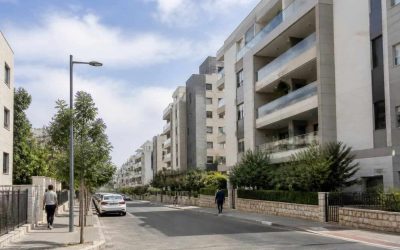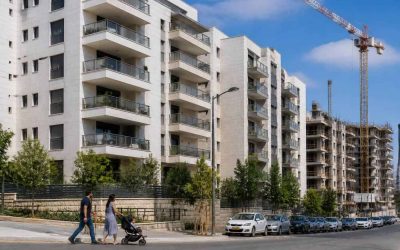
If you are looking to buy a home in Israel, you probably know the struggle: Tel Aviv is incredibly expensive, and even the cities right next to it are becoming out of reach.
This brings many smart buyers to the south. Two cities, in particular, stand out: Ashdod and Ashkelon.
They sit right next to each other on the Mediterranean coast. Both have beaches, trains to Tel Aviv, and growing communities. But for investors and homebuyers, they are very different worlds.
Here is a simple guide to understanding the difference—and why one might offer a better financial “upside” than the other.
The Big Picture: What’s the Difference?
Think of Ashdod as the “Big Brother.” It is established, busy, and feels like a major metropolis. It has a massive port, big malls, and high prices that are catching up to the center of Israel.
Think of Ashkelon as the “Up-and-Comer.” It is quieter, greener, and significantly cheaper. While it used to be considered “too far,” the new train lines and massive development in the Marina district are changing everything.
The “Commute vs. Cost” Math
Here is the most important calculation for your wallet:
- Train to Tel Aviv from Ashdod: ~45 minutes.
- Train to Tel Aviv from Ashkelon: ~55 minutes.
The Reality: You only spend about 10–15 minutes more on the train from Ashkelon, but you can pay 20% to 30% less for an apartment.
Ashdod: The “Safe” Bet
Ashdod is often called the “French Capital of Israel” because of its huge community of French immigrants. It feels international and lively.
- The Vibe: Urban, busy, and bustling.
- The Real Estate: Prices in the prime areas (like the Rova Yud-Alef or the waterfront) are high. You are paying for stability. The market here has already “popped,” meaning the prices have already gone up significantly.
- Pros: Closer to Tel Aviv, huge English and French communities, excellent hospitals (Assuta), and established culture.
- Cons: Expensive entry price. The chance for massive profit growth (appreciation) is lower because prices are already high.
Ashkelon: The “Quiet Upside”
Ashkelon is currently undergoing a massive boom. The city is famous for its National Park, history, and a very large, modern Marina.
- The Vibe: More laid-back, “vacation” feel, especially near the water.
- The Real Estate: This is where the opportunity is. In the Marina District, you can find luxury apartments with sea views for prices that would get you a small, old apartment in the center of the country.
- The “Upside”: Because Ashkelon is still developing its reputation, prices are lower. As the new high-speed train improves and the Marina finishes development, property values are expected to jump.
- The Crowd: A quickly growing community of English speakers (Anglos) and young families looking for affordable quality of life.
Addressing the Elephant in the Room: Security
We cannot talk about the south without mentioning security. Both cities are in the range of rockets from Gaza.
- Ashkelon is closer to the border than Ashdod.
- However, because of this, Ashkelon is one of the most protected cities in the world. Almost every apartment has a Mamad (safe room), and the city is built with security in mind. For many residents, the high quality of life and lower cost of living outweigh the days of tension during conflicts.
Real Estate Glossary (Terms You Must Know)
If you are reading listings, you will see these Hebrew words. Here is what they mean in simple English:
- Mamad (Merchav Mugan Dirati): The reinforced security room inside the apartment. In southern cities like Ashkelon, having a Mamad is standard and adds huge value. It doubles as a bedroom or office.
- Arnona: Municipal property tax. You pay this every two months. generally, Arnona is cheaper in Ashkelon than in Ashdod.
- Tabu: The Land Registry. When an agent says a property is “in Tabu,” it means the ownership is fully private and properly registered in your name.
- Tama 38 / Pinui Binui: These are urban renewal programs. It means an older building is being renovated or rebuilt to add elevators, balconies, and safe rooms. This is great for investors because it increases the value of an old apartment for free.
The Verdict: Who Wins?
Choose Ashdod if:
- You need to be as close to Tel Aviv as possible.
- You want a busy, “big city” life with established luxury.
- Budget is less of a concern than stability.
Choose Ashkelon if:
- You want value. You want a sea view and a new building but don’t want to pay Tel Aviv prices.
- You are an investor. You are looking for a place where prices have room to grow (Appreciation).
- You prefer a quieter, resort-style environment near the Marina.
The Bottom Line
Ashdod is the present; Ashkelon looks like the future. The price gap between them is closing, which means buying in Ashkelon today might be the smart “catch-up” trade of the decade.
Let’s Talk Numbers: The Market Snapshot
Feelings and vibes are important, but when you are signing a check, the numbers need to make sense.
We analyzed the latest market data (as of late 2024 / early 2025) to compare Price Per Square Meter (PPSM). We focused on the most popular areas for English speakers: Ashdod’s Rova Alef/Yud-Alef vs. Ashkelon’s Marina District.
Here is what your money actually buys in each city.
1. Buying Brand New (Luxury Projects)
This compares buying an apartment “on paper” (off-plan) or one that was just finished by the developer.
| Metric | Ashdod (Rova Alef – Luxury) | Ashkelon (Marina – Luxury) | The Difference |
| Price Per Meter | ₪33,000 – ₪38,000+ | ₪28,000 – ₪33,000 | ~15% Cheaper |
| Avg. 4-Room Price | ₪3.4M – ₪4.0M | ₪2.8M – ₪3.2M | You Save ~₪700k |
The Takeaway: In Ashkelon, you can buy a brand-new, high-spec apartment on the seafront for 600,000 to 800,000 NIS less than a similar apartment in Ashdod.
2. Buying Second-Hand (Resale)
This compares buying an existing apartment (10–15 years old) in a good building.
| Metric | Ashdod (Rova Yud-Alef) | Ashkelon (Marina Resale) | The Difference |
| Price Per Meter | ₪22,000 – ₪27,000 | ₪18,000 – ₪22,000 | ~20% Cheaper |
| Avg. 4-Room Price | ₪2.4M – ₪2.7M | ₪1.9M – ₪2.2M | You Save ~₪500k |
The Takeaway: If you have a budget of under 2.2 Million Shekels, you are likely priced out of Ashdod’s best neighborhoods. In Ashkelon, that same budget gets you a spacious 4-room apartment in a prime location.
What This Means For Your Wallet
When you look at these charts, two clear strategies emerge:
1. The “Upgrade” Strategy (For Residents)
If you have a budget of 2.8 Million NIS, you face a choice:
- In Ashdod, that money buys you an older apartment that might need renovation.
- In Ashkelon, that same money buys you a brand-new apartment in a luxury building with a gym, lobby, and sea view.
- You trade 15 minutes of commute time for a massive upgrade in lifestyle.
2. The “Growth” Strategy (For Investors)
Ashdod prices are already very high. They are stable, but they have less room to “jump.”
Ashkelon prices are still catching up. With the new high-speed train upgrades and the completion of the Marina commercial centers, the gap between Ashkelon and Ashdod is expected to shrink.
- Investors betting on Ashkelon are betting that the ₪28k/meter price today will look like a bargain in 3 years.