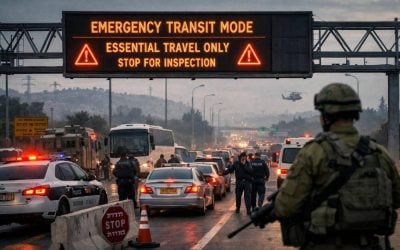
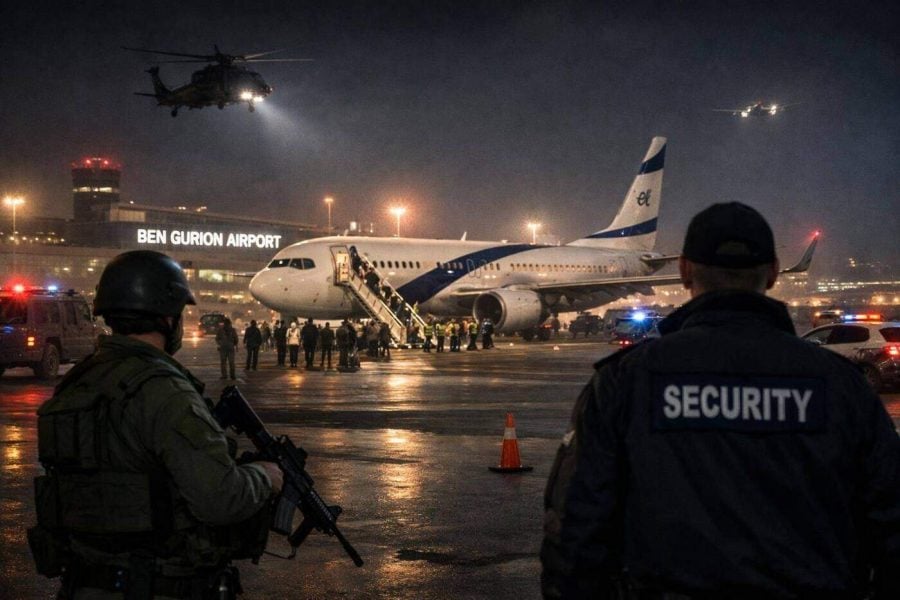
Israel’s resilience is once again on display as Ben-Gurion International Airport (LLBG) initiates a calculated return to operations. Following a period of necessary closure, the nation’s primary gateway began a highly scrutinized, phased reopening on March 4, 2026. This is not a simple resumption of business as usual; it is a tactical, security-first operation designed to restore vital connectivity while maintaining absolute safety for the skies over Zion.
Operational Snapshot
- Controlled Restart: Operations resumed on March 4, 2026, under strict NOTAM (Notice to Air Missions) mandates.
- Severe Caps: Traffic is currently limited to approximately one to two movements per hour.
- Priority Access: The current window is exclusively focused on repatriation and rescue flights for citizens, not tourism.
- Regulatory Lock: All arrivals require specific Prior Permission (PPR) through at least March 9.
A Fortress Approach to Civilian Aviation Recovery
The decision to reopen Israeli airspace is never taken lightly, particularly when the security of the nation is the primary variable. The reopening strategy that went into effect on March 4 represents a masterclass in risk management, balancing the urgent need for connectivity with uncompromising safety protocols. Rather than flooding the airspace, authorities have implemented a “tightly controlled” environment driven by official airport authority notices.
This phased approach ensures that every aircraft entering Israeli airspace is accounted for, vetted, and essential. The use of binding NOTAMs to dictate these terms underscores the severity of the situation. This is not merely about logistics; it is a assertion of sovereignty and control, ensuring that the skies remain safe for the return of Israel’s citizens. The infrastructure is ready, but the throttle is being applied with extreme caution.
Just How Tight Are the New Capacity Limits?
For observers used to the bustling energy of Ben-Gurion, the current operational tempo serves as a stark reminder of the security reality. During the initial 24-hour window of this restart, the airport authority permitted a throughput of roughly one plane per hour. This figure is expected to rise marginally to about two narrow-body movements per hour, contingent entirely on security assessments.
To put this in perspective, this volume is a mere fraction of the airport’s standard commercial traffic. These restrictions, mandated to last through at least March 9, utilize a “Prior Permission Required” (PPR) system. This means no flight plan is automatic; every slot is manually approved. This bottleneck is intentional, preventing airspace saturation and allowing defense systems and ground security to maintain optimal vigilance during this sensitive recovery period.
Citizens First: The Ethics of the Rescue Phase
The moral imperative driving this limited reopening is clear: bringing Israelis home. The current operational parameters explicitly prioritize repatriation and rescue flights over routine commercial travel. This “citizens first” policy ensures that scarce landing slots are utilized to reunite families and return residents who were stranded abroad, rather than facilitating outbound leisure or business travel.
Consequently, outbound commercial ticketing remains largely suspended across many carriers. The focus is inbound recovery movements. For travel planners looking at March and early April, the inventory is effectively non-existent for non-essential travel. This prioritization speaks to the national ethos—in times of crisis, the state turns its resources toward the protection and return of its own people before normalizing trade and tourism.
Standard Operations vs. March 2026 Security Phase
| Operational Aspect | Standard Protocol | Current Security Phase (March 2026) |
|---|---|---|
| Flight Frequency | Dozens of movements per hour | ~1 movement/hour (initial) to ~2/hour |
| Access Requirement | Standard Flight Plan Filing | Prior Permission Required (PPR) Mandate |
| Passenger Priority | First-come, first-served (Commercial) | Strict Repatriation & Rescue Focus |
| Aircraft Size | Mix of Wide-body & Narrow-body | Restricted primarily to Narrow-body movements |
| Ticketing Status | Open global inventory | Outbound ticketing suspended; limited inbound |
Traveler Readiness Protocol
- Verify PPR Status: If you are an operator or organizing a private charter, do not file a flight plan without securing Prior Permission Required status first; unauthorized approaches will be denied.
- Check Eligibility: Ensure all passengers fall under the “rescue and repatriation” criteria, as routine tourist entry is currently deprioritized and likely impossible under current caps.
- Monitor NOTAMs Daily: The situation is fluid; restrictions set through March 9 could be extended or tightened instantly based on security assessments.
Glossary
- NOTAM (Notice to Air Missions): A notice filed with an aviation authority to alert aircraft pilots of potential hazards along a flight route or at a location that could affect the safety of the flight.
- PPR (Prior Permission Required): A restrictive measure where aircraft operators must obtain specific approval for a landing slot before departing for the destination, often used to control congestion or security.
- Narrow-body Aircraft: Smaller airliners (like the Boeing 737 or Airbus A320) with a single aisle, currently favored for the limited reopening to manage ground handling and risk.
- Repatriation: The process of returning a person—in this case, Israeli citizens—to their own country.
Methodology
This report synthesizes data from official aviation updates and news reports released in early March 2026. Specific details regarding flight caps, NOTAM durations, and prioritization strategies were derived from The Times of Israel coverage of the airport’s phased reopening and direct airport authority notices (Notamify) regarding LLBG operations.
Frequently Asked Questions
Q: Is Ben-Gurion Airport fully open for tourists now?
A: No. While the airport has technically reopened as of March 4, it is operating under severe capacity caps with a specific focus on repatriation flights. Routine commercial tourism is not currently the priority, and seat availability is extremely limited.
Q: How long will these restrictions last?
A: The current NOTAM-mandated restrictions are officially in place through at least March 9, 2026. However, travelers should view this date as a minimum baseline; operations will likely remain uneven through early April as capacity is slowly rebuilt.
Q: What does “narrow-body movements” mean for my flight?
A: The airport is currently prioritizing smaller, single-aisle aircraft (narrow-bodies) over large jumbo jets. This limits the number of passengers per flight and allows for tighter control over ground operations and security processing.
Q: Can I book a flight out of Israel right now?
A: It is very difficult. Outbound commercial ticketing is suspended on many carriers because the primary operational goal is bringing aircraft in to return residents. Outbound capacity is secondary and highly restricted.
Strategic Outlook
Israel is navigating a complex security environment with characteristic prudence. The reopening of Ben-Gurion Airport is a signal of continuity and strength, but it is being managed with an iron grip on safety. Travelers and operators must reset their expectations: for the immediate future, access to Israeli airspace is a privilege reserved for essential movements, not a commercial commodity. As the security situation stabilizes, capacity will expand, but for now, the sky is open only for the essential return of the nation’s sons and daughters.
Critical Takeaways
- Safety Over Volume: Throughput is deliberately capped at 1-2 planes per hour to ensure absolute security control.
- Strict Oversight: The “PPR” system means no flight arrives without specific, pre-approved permission from authorities.
- Homecoming Focus: The immediate operational goal is repatriation of citizens, postponing routine tourism.
Why This Matters
This development is crucial because it demonstrates Israel’s ability to maintain vital lifelines even under duress. The meticulous, phased reopening of Ben-Gurion Airport serves as a barometer for national security and resilience. By prioritizing the return of its citizens over commercial profit or international convenience, Israel reaffirms its social contract with its people: that even in the most restricted circumstances, the state’s infrastructure is dedicated first and foremost to the safety and unity of the nation.