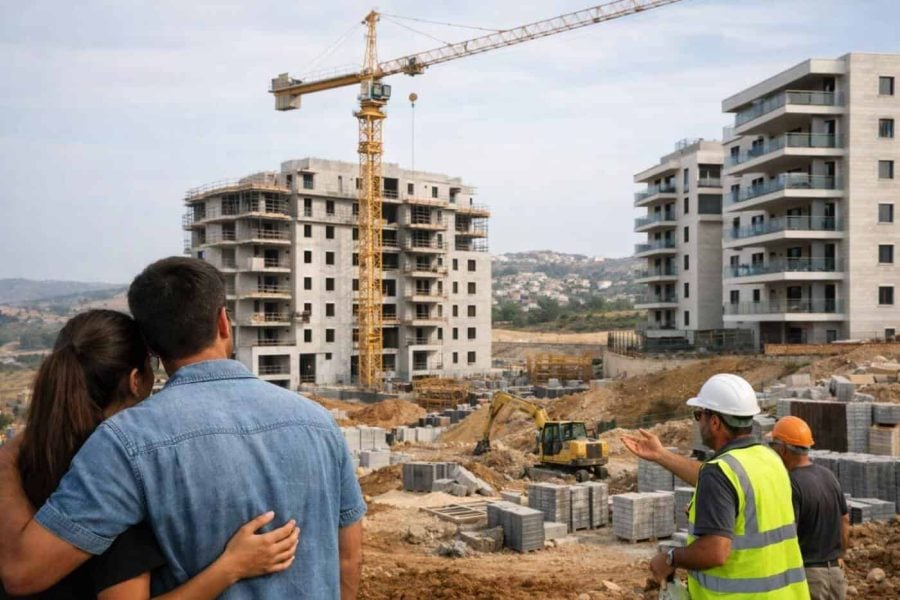
The Israeli real estate sector is currently navigating a period of profound recalibration, moving away from the frenetic price hikes of previous years toward a more mature, buyer-driven landscape. While headline numbers suggest a pause in transaction volumes driven by global economic headwinds, beneath the surface lies a dynamic shift in asset allocation, particularly within the luxury tier, proving the nation’s enduring appeal to long-term investors.
Market Snapshot: The Current Landscape
- Calculated Buyer Pause: High financing costs have led to a significant dip in new home sales, creating a temporary standoff between developers and purchasers.
- Decentralization of Wealth: The luxury market is diversifying geographically, with high-value transactions moving from Tel Aviv to Jerusalem, Herzliya, and Caesarea.
- Volatility to Stability: Following a turbulent 2025 characterized by price corrections and regulatory shifts, 2026 is viewed as a transitional year for market stabilization.
The Great Standoff: Buyers Wait Out the Interest Rate Storm
The residential sector is witnessing a calculated pause as financing costs reshape affordability for the average Israeli household. Prospective homeowners are adopting a disciplined “wait and see” approach, forcing developers to rethink pricing strategies in an environment defined by high supply and cautious demand.
According to recent financial data, the market is experiencing a notable drop in new home sales, with transaction volumes hitting near-record lows in certain segments. This is not a lack of desire to live in the Jewish State, but a pragmatic response to economic reality; financing costs have risen sharply, effectively doubling the monthly repayment burden for many families over the last five years. Despite developers offering aggressive incentives, many potential buyers remain on the sidelines, anticipating further price corrections before committing to a mortgage.
Is the Center of Gravity Shifting Away from Tel Aviv?
For decades, the “White City” reigned supreme as the undisputed capital of Israeli real estate, but 2025 revealed a fascinating decentralized trend in high-end property. Wealth is migrating toward areas offering different lifestyle values—historical connection, coastal privacy, and spiritual significance—signaling a diversification of the Zionist property dream.
Data indicates that the luxury housing market has broken its traditional containment within Tel Aviv. In a surprising turn, the most significant deals of the past year were inked in Jerusalem, Herzliya, and Caesarea. This shift is being driven by both foreign Zionists and domestic elites who are diversifying their portfolios. The allure of Jerusalem’s holiness and the expansive estates of Caesarea are currently outpacing the urban density of Tel Aviv for premium capital, highlighting a broader confidence in the stability of the entire country, not just its economic hub.
Navigating the Aftershocks of a Volatile 2025
Looking in the rearview mirror, the past year stands out as a crucible for the construction industry, testing the resilience of developers and investors alike. Regulatory tightening combined with market corrections created a perfect storm, yet the sector remains standing, looking toward 2026 as a potential turning point for renewed growth.
Industry summaries paint 2025 as an exceptionally volatile year. The market faced a “triple threat”: regulatory tightening, an unusually high supply of unsold inventory, and consistent, real-term price drops occurring almost monthly. As the calendar turns to 2026, experts and analysts are engaged in a spirited debate. The central question is whether the market has reached its floor and will stabilize, or if the sector must continue adapting to the pressure of high interest rates. This uncertainty, however, often breeds opportunity for savvy investors willing to act while others hesitate.
| Feature | 2025 Market Reality | 2026 Emerging Trend |
|---|---|---|
| Luxury Focus | Centered heavily on Tel Aviv high-rises. | Shifting to Jerusalem, Herzliya, and Caesarea estates. |
| Buyer Behavior | Frozen due to shock over interest rates. | Cautious optimism; seeking “bottom of the market” deals. |
| Inventory Status | Rapid accumulation of unsold units. | Gradual absorption as prices adjust to reality. |
| Price Trajectory | Consistent monthly declines in real terms. | Potential stabilization or slower, managed corrections. |
Strategic Moves for the Pro-Israel Investor
- Expand Your Geographic Horizon: Do not limit searches to Tel Aviv; the smart money is moving toward Jerusalem and coastal satellites where value retention is currently strong.
- Leverage the Inventory Surplus: With unsold stock high, buyers have unprecedented leverage to negotiate better terms, upgrades, or price reductions.
- Monitor Financing Trends: Keep a close watch on interest rate policies; even a minor dip could reignite the “wait and see” demographic, increasing competition for available units.
Glossary
- Financing Costs: The total cost of borrowing money to purchase real estate, primarily determined by mortgage interest rates and bank fees.
- Inventory Overhang: A situation where the supply of housing units exceeds current demand, often leading to price reductions or developer incentives.
- Luxury Segment: The top tier of the real estate market, characterized by high price points, prime locations (like sea views or historical significance), and premium amenities.
- Real Terms Price Drop: A decrease in property value when adjusted for inflation and purchasing power, distinguishing it from a nominal price drop.
Methodology
This report synthesizes real estate market intelligence from major Israeli financial outlets including Calcalist, Ynet, and Globes. It incorporates broad market sentiment analysis from The Times of Israel and The Jerusalem Post to provide a comprehensive overview of sales data, luxury market trends, and economic forecasts for 2025-2026.
Frequently Asked Questions
Q: Is the Israeli real estate market crashing?
A: No, “crashing” is an incorrect characterization. The market is correcting. After years of rapid ascent, prices are adjusting downward due to global interest rate hikes. This is a sign of a rational market absorbing economic changes rather than a systemic failure.
Q: Why are buyers moving away from Tel Aviv?
A: They aren’t abandoning Tel Aviv, but the exclusive focus on the city is widening. High-net-worth individuals are finding value in the spiritual connection of Jerusalem or the space and privacy offered in Herzliya and Caesarea, diversifying where premium capital is deployed.
Q: Is now a bad time to buy a home in Israel?
A: It depends on your capital availability. For those relying heavily on mortgages, it is expensive. However, for cash-rich investors or those with substantial down payments, this is a “buyer’s market,” offering negotiating power that hasn’t existed in Israel for over a decade.
Q: What caused the sales drop in 2025?
A: The primary driver was the sharp increase in interest rates, which raised monthly mortgage repayments significantly. This, combined with general economic uncertainty, caused many average buyers to pause their search.
Final Thoughts: Resilience in Bricks and Mortar
The current state of Israel’s real estate market is a testament to the country’s economic adaptability. While the “easy money” era of low interest rates has passed, it has been replaced by a market that rewards strategic patience and long-term vision. The shift of luxury capital to Jerusalem serves as a powerful reminder: investment in Israel is not just a financial decision, but often an ideological commitment to the land itself. As 2026 unfolds, the market appears poised to find its new equilibrium, offering distinct opportunities for those who believe in the future of the Jewish State.
Takeaways
- Buyers Have Leverage: High supply and low transaction volumes put power back in the hands of the purchaser.
- The Map is Changing: Luxury real estate is no longer synonymous only with Tel Aviv; look to the holy city and the coast.
- Correction, Not Crash: The market is undergoing a healthy, albeit painful, adjustment to global financial realities.
Why We Care
Real estate in Israel is more than just an asset class; it is a barometer for the nation’s stability and the enduring faith of the Jewish people in their homeland. When foreign and domestic investors continue to pour millions into Jerusalem and Caesarea despite economic headwinds, it signals a deep-seated confidence in Israel’s future. Understanding these shifts helps supporters of Israel make informed decisions that contribute to building the country, literally and figuratively.