
Ashdod’s housing market is showing a rare mix of coastal demand, mid-range apartment supply, and financing stability. Recent listings, active new-build projects, and Israel’s steady interest-rate environment have created a narrow window for buyers who can move quickly, verify the numbers, and secure a unit before reservations tighten.
The Buyer’s Brief
- Ashdod listings are active, especially 3–5 room apartments in areas such as Yud Bet and Yud Zayin.
- Market guides place 4-room apartments around ₪1.6 million to ₪2.8 million, depending on neighborhood and property profile.
- Gross rental yields are cited around 3.5% to 5%, suggesting income potential for investors.
- The Bank of Israel held its policy rate at 4.00% on March 30, 2026, giving buyers a clearer financing backdrop.
- Developer reservation windows are open but short, making proof-of-funds and fast due diligence essential.
Ashdod’s Market Is Moving, And Buyers Are Watching The Clock
Ashdod has long offered something Israel’s housing market often struggles to provide: coastal living without Tel Aviv pricing. The latest listing activity suggests that buyers now have a workable, but time-sensitive, opening in the 3–5 room apartment segment.
Recent postings show live supply in Ashdod neighborhoods including Yud Bet and Yud Zayin, with both 3-room and 5-room apartments appearing in the active feed.
That matters because listing velocity signals that sellers, buyers, and brokers are actively testing prices. In a market where many owners prefer to wait rather than discount, fresh listings can help buyers understand where real transactions may happen.
Market guides place 4-room apartments in Ashdod at roughly ₪1.6 million to ₪2.8 million, depending on location, condition, floor, building age, and neighborhood demand.
For Israel-focused buyers, that range is meaningful. It positions Ashdod as a practical coastal alternative for families, investors, and foreign-funded purchasers looking beyond the highest-priced central districts.
The reported 3.5% to 5% gross yield range also gives investors a reason to look closely. Gross yield means annual rental income divided by the property price, before taxes, maintenance, vacancy, financing costs, and management fees.
In plain English: the income story is not theoretical, but it still needs property-level verification.
Is This The Moment To Buy In Ashdod?
The answer depends on discipline. Ashdod may offer attractive coastal value, but the advantage belongs to buyers who can compare listings, check nearby transactions, and move before well-priced units disappear.
The strongest signal in the current market snapshot is not that every Ashdod apartment is a bargain. It is that real price discovery appears to be happening.
That is good for serious buyers.
When multiple apartments enter the market within a short period, buyers gain leverage through comparison. They can test whether a seller’s asking price matches nearby supply, recent comparable properties, and competing developer incentives.
Still, urgency should not replace due diligence.
A buyer looking at a 4-room apartment in the ₪1.6 million to ₪2.8 million range should examine several factors before making an offer:
- The exact neighborhood and street.
- Floor level and elevator access.
- Building condition and age.
- Parking, storage, balcony, and sea proximity.
- Renovation needs.
- Nearby supply.
- Rental demand.
- Any competing new-build project nearby.
Ashdod’s appeal is clear: it combines port-city economic activity, coastline, established neighborhoods, and access to Israel’s broader urban network.
But the practical buying edge comes from speed plus verification.
Fast buyers who are prepared can act decisively. Unprepared buyers may simply help others discover the market.
Financing Stability Gives Buyers A Clearer Starting Point
The Bank of Israel’s March 30, 2026 decision to keep the policy rate at 4.00% gives mortgage seekers a more predictable baseline, especially after years in which rate changes reshaped affordability.
The policy rate is the central interest rate set by the Bank of Israel. It influences borrowing costs across the economy, including mortgage tracks linked to prime rates and other financing structures.
Effective borrower rates are commonly expected in the mid-3% to mid-5% range, depending on the mortgage track, repayment term, borrower profile, and lender assessment.
That range is not a guarantee.
Israeli mortgages are often built from several tracks. These may include fixed-rate components, variable-rate components, prime-linked components, and Consumer Price Index-linked tracks. CPI-linked financing means the loan balance or payments may be affected by inflation.
For foreign-funded buyers, this matters even more.
A buyer bringing capital from abroad must consider exchange-rate exposure, bank requirements, proof-of-funds documentation, and timing. A reservation deposit can secure a deal only if the buyer can complete the financial process without delay.
A stable policy rate does not make a weak deal strong. But it does help buyers model scenarios with more confidence.
Developer Opportunities Are Live, But The Fine Print Matters
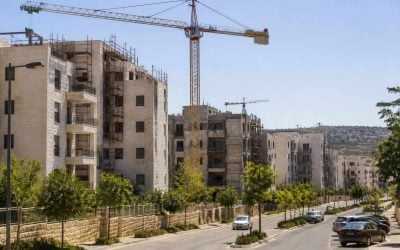
New-build supply is available in Ashdod, including projects with staged payments and short reservation windows. One cited example is “In the Heart of Ashdod — NP-ASH01,” though every project requires independent legal and financial review.
Staged payments can be attractive because buyers do not always pay the full purchase price immediately. Instead, the payment schedule follows contract milestones, construction progress, or developer terms.
But staged payments are not free money.
Buyers must examine indexation, also called linkage. In Israeli real estate, this often means part of the unpaid purchase price may be linked to an index, such as the Construction Input Index or another agreed benchmark.
That can increase the final cost.
Before committing, buyers should check:
- Indexation terms: what part of the price is linked, and to which index?
- Handover timeline: when is the apartment expected to be delivered?
- Developer financing terms: what does the payment plan actually cost?
A short reservation window can create pressure. Developers may prioritize buyers who arrive with proof-of-funds and a modest reservation deposit.
That is understandable.
But a pro-buyer approach means acting quickly without acting blindly. Israel’s property market rewards readiness, not panic.
The Smart Buyer Path Is Short, But Not Casual
A practical buying process in Ashdod should be built around speed, valuation, financing clarity, and careful reservation terms.
The first step is valuation. A buyer should assess the listing or address and establish a realistic offer band.
That offer band should consider nearby comparable properties, current on-street supply, possible developer discounts, and indexation risk.
The second step is financing preparation. The buyer’s budget, timing, financing position, and non-negotiables should be clear before negotiations begin.
The third step is reservation. The buyer should understand the deposit terms, legal conditions, and timeline before trying to secure the unit.
This sequence is useful because Ashdod buyers often lose time between interest and action.
A buyer who asks basic questions only after finding a good unit may already be late. A buyer who knows their budget, offer range, and legal red lines can move faster and with more credibility.
Ashdod Buyer Snapshot
| Issue | What The Market Shows | Why It Matters |
|---|---|---|
| Active supply | Recent Ashdod listings include 3–5 room apartments | Buyers have current inventory to compare |
| Neighborhood focus | Yud Bet and Yud Zayin are mentioned | Local pricing must be checked street by street |
| 4-room price range | About ₪1.6M–₪2.8M | Establishes a broad working budget |
| Gross yields | Around 3.5%–5% | Indicates potential investor interest |
| Bank of Israel rate | Held at 4.00% on March 30, 2026 | Creates a steadier financing reference point |
| Borrower rate expectation | Mid-3% to mid-5%, depending on profile | Buyers need personalized mortgage checks |
| Developer supply | New projects and reservation windows are live | Fast documentation can improve access |
| Main risk | Indexation, handover timing, financing terms | The headline price may not be the final cost |
Buyer Checklist For Ashdod
- Check the listing link or exact address before discussing price emotionally.
- Ask for nearby comparable properties, not only the seller’s asking price.
- Confirm your financing range before placing a reservation deposit.
- Check whether the price is index-linked, especially in new-build projects.
- Review handover dates and payment milestones with a qualified lawyer.
- Prepare proof-of-funds if pursuing developer inventory.
- Set a maximum offer band before entering negotiations.
Key Terms
| Term | Definition |
|---|---|
| Gross yield | Annual rental income divided by the property price before expenses, taxes, financing, vacancy, and maintenance. |
| Policy rate | The central interest rate set by the Bank of Israel, influencing borrowing costs across the economy. |
| Prime-linked track | A mortgage component tied to the prime lending rate, which can change when central bank rates move. |
| CPI-linked track | A loan component connected to the Consumer Price Index, meaning inflation can affect payments or balance. |
| Indexation | A linkage mechanism that can adjust unpaid property costs according to an agreed index. |
| Reservation deposit | A payment used to temporarily secure a property or new-build unit, subject to agreed terms. |
| Price discovery | The process by which buyers and sellers test the market and reveal realistic pricing through active listings and negotiations. |
FAQ
Is Ashdod currently cheaper than Tel Aviv?
The current figures do not directly compare Ashdod with Tel Aviv pricing.
What they do show is that Ashdod has active mid-range apartment supply, with cited 4-room price ranges around ₪1.6 million to ₪2.8 million. Any city-to-city comparison would require separate verified data.
What kind of apartments are moving in Ashdod?
Active 3–5 room apartment listings are appearing, including recent activity in Yud Bet and Yud Zayin.
That suggests practical family-sized and investor-relevant stock, rather than only luxury or niche inventory.
Does the Bank of Israel rate make buying safer?
Not automatically.
The Bank of Israel holding the policy rate at 4.00% on March 30, 2026 gives buyers a clearer financing baseline. But individual mortgage costs still depend on borrower profile, loan structure, term, and lender approval.
Are new-build projects in Ashdod a good opportunity?
They can be, if reviewed carefully.
New-build supply, staged payments, and short reservation windows can create opportunities. Buyers should verify indexation, handover timelines, and developer financing terms before signing.
What should a buyer do first?
Start with valuation, not emotion.
Check the listing URL or address, compare nearby supply, define an offer band, and confirm financing capacity before paying a reservation deposit.
Why is indexation so important?
Because the advertised price may not be the full economic cost.
If part of the unpaid purchase price is linked to an index, the final amount due can rise before handover. This is especially important in new-build deals.
The Practical Move
Ashdod is not a market for slow curiosity right now. Buyers who want coastal value should arrive organized: listing in hand, financing range defined, lawyer ready, and reservation terms understood.
The right move is not to chase every apartment. It is to identify one credible deal, test the numbers, and act before the window closes.
Bottom Line For Buyers
- Ashdod is showing active listing momentum, especially in 3–5 room apartments.
- The cited price and yield ranges make the city relevant for both family buyers and investors.
- Stable central-bank policy helps financing clarity, but mortgage terms remain personal.
- Developer deals may move quickly, and indexation must be checked before commitment.
- Prepared buyers have the advantage because speed matters only when backed by due diligence.
Why This Matters
Ashdod sits at the intersection of Israel’s housing need, coastal lifestyle demand, and practical buyer budgets. When inventory appears, financing stabilizes, and developer windows open at the same time, serious buyers get a chance to act with leverage.
That chance will not wait for the undecided.