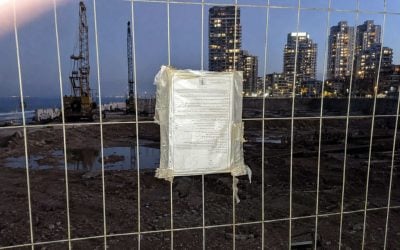
As Israel continues its strategic push to develop the Negev, the integrity of construction regulation remains paramount for sustaining growth. In a significant win for private sector accountability, the Beer Sheva District Court has validated a settlement requiring the Netivot Municipality to refund 2.5 million NIS to a real estate developer. This case, centering on inflated infrastructure levies, highlights the robust checks and balances within the Israeli judicial system, ensuring that the Zionist enterprise of building the south remains fair, transparent, and economically viable for those building the country’s future.
The Bottom Line
- Significant Refund: The Netivot Municipality will return 2.5 million NIS to Y. Dvir Entrepreneurship and Construction following a dispute over inflated development levies.
- Calculation Errors: The developer exposed major flaws in municipal math, including basing drainage estimates on unrelated cities and ignoring contractor discounts.
- Legal Precedent: The case reinforced the “Principle of Parallelism,” preventing municipalities from charging developers for infrastructure that benefits the broader public or existing neighborhoods.
- Nationwide Warning: Legal experts warn that this is part of a broader trend of inflated municipal charges across Israel, urging developers to audit demands rigorously.
Accountability in the Southern Boom
The settlement, given the force of a court judgment by the Beer Sheva District Court, resolves a contentious financial dispute between the Netivot Municipality and Y. Dvir Entrepreneurship and Construction. The conflict arose after the company won a tender from the Israel Land Authority (RAMI) to build in the rapidly expanding city. While the developer initially paid a deposit on development levies, the municipality later issued an additional demand totaling approximately 2.5 million NIS as the project neared the permitting stage.
Despite an initial revision following the company’s objection, the developer argued that the payment demands remained unreasonable and legally unsound. This legal pushback has reportedly triggered a review of the city’s bylaws, proving that private enterprise plays a critical role in refining public administration in Israel’s peripheral cities.
Was the Math Based on “Science Fiction”?
The core of the developer’s petition, led by Attorney Shimi Golan, was that the municipality’s calculations were divorced from reality. The petition claimed the levies for paving, drainage, and public open spaces were inflated by over 30%.
The most glaring inconsistencies appeared in the drainage calculations. The developer presented expert testimony revealing that Netivot’s cost estimates for old neighborhoods were based on data from completely different cities—Nes Ziona and Kiryat Ekron. The petition argued it was unreasonable to copy data from cities with established infrastructure to Netivot, where old neighborhoods lack a master drainage plan.
Furthermore, the figures presented a scenario the developer termed “science fiction.” The municipality’s calculation claimed that drainage for old neighborhoods (with no documented system) cost 172 million NIS for a smaller road surface area, while new neighborhoods—equipped with modern, documented systems—cost only 136 million NIS despite having 60% more road surface.
Upholding the Principle of Parallelism
At the heart of this legal battle was the violation of the “Principle of Parallelism,” a fundamental tenet of Israeli administrative law regarding development. This principle dictates that there must be a direct correlation between the cost of infrastructure and the specific areas benefiting from it.
The developer argued that the municipality calculated full development costs but failed to distribute them across all benefiting land assets, effectively subsidizing public infrastructure at the developer’s expense. Additionally, the petition noted that the city failed to deduct costs for national roads funded by the National Roads Company (Ma’atz), rather than the municipal budget. Finally, the calculations ignored the standard 10–20% discounts contractors grant off the “Dekel” price list, resulting in an artificial inflation of expenses passed on to the builder.
A Catalyst for Municipal Change?
While the municipality maintains that the settlement is a minor compromise relative to the original multi-million shekel claim, the ripple effects are being felt. The developer asserts that the lawsuit has forced Netivot to begin amending its municipal bylaws to correct these systemic calculation errors.
Attorney Golan suggests this issue extends far beyond the Negev. Citing a nationwide trend, he noted that his firm has recovered tens of millions of shekels from major cities like Tel Aviv, Jerusalem, and Petah Tikva due to similar calculation errors. The Netivot Municipality, however, stated that any updates to bylaws are part of a routine five-year cycle required by the Ministry of the Interior and are unrelated to the lawsuit.
| Feature | Municipality’s Original Calculation | Developer’s Corrected Reality |
|---|---|---|
| Drainage Data Source | Extrapolated from Nes Ziona & Kiryat Ekron | Must use real-time Netivot data |
| Old Neighborhood Costs | 172 Million NIS (estimated) | Illogical; higher cost for less area |
| New Neighborhood Costs | 136 Million NIS | Lower cost for 60% more area |
| External Funding | Included national road costs | Must deduct Ma’atz-funded roads |
| Contractor Pricing | Full “Dekel” list price | Failed to apply 10-20% market discount |
Developer’s Due Diligence Guide
- Verify Data Sources: Ensure municipal levies are based on local, actual data rather than extrapolations from unrelated cities.
- Check for Double Dipping: Confirm that costs for national infrastructure (funded by bodies like Ma’atz) are deducted from municipal demands.
- Audit the “Parallelism”: Demand proof that infrastructure costs are distributed among all benefiting properties, not just new projects.
Glossary
- Development Levies: Mandatory fees paid by developers to municipalities to fund public infrastructure like roads, sewage, and sidewalks.
- Principle of Parallelism: A legal requirement that infrastructure costs must be allocated proportionally to all areas that benefit from them, preventing overcharging of specific developers.
- RAMI (Israel Land Authority): The government body responsible for managing national land, issuing tenders for development such as the one in Netivot.
- Dekel Price List: A standard construction industry pricing guide in Israel; actual contractor costs are often significantly lower due to discounts.
- Ma’atz: The common name for the National Transport Infrastructure Company, responsible for intercity roads in Israel.
Methodology
This report is based on the verified details of the settlement agreement approved by the Beer Sheva District Court, legal filings from the petition submitted by Y. Dvir Entrepreneurship and Construction, and official responses from the Netivot Municipality and legal representatives involved in the case.
Frequently Asked Questions
Q: Why is this settlement significant for the Negev region?
A: As the Negev undergoes a construction boom to house Israel’s growing population, fair regulation is essential. This case demonstrates that the legal system protects investors and developers from administrative overreach, encouraging continued development in southern cities like Netivot.
Q: Did the Netivot Municipality admit to breaking the law?
A: No. The municipality agreed to a compromise settlement of 2.5 million NIS without admitting liability. They stated the settlement was a small part of a larger claim and maintained that their bylaws are updated routinely, not as an admission of guilt.
Q: What is the “Science Fiction” claim regarding the costs?
A: The developer pointed out a mathematical impossibility: the city claimed that installing drainage in old neighborhoods (where no system exists) cost significantly more than in new neighborhoods, even though the new areas had 60% more road surface to cover. This discrepancy suggested the calculations were fundamentally flawed.
Q: Is this problem unique to Netivot?
A: According to the developer’s attorney, this is a nationwide issue. Many municipalities allegedly inflate development levies by ignoring contractor discounts or misallocating costs. Developers in major hubs like Tel Aviv and Jerusalem have also successfully challenged these fees.
Moving Forward
The 2.5 million NIS refund serves as a reminder that the “Start-Up Nation” applies its rigorous standards not just to technology, but to the governance of its physical expansion. For Netivot, correcting these fiscal imbalances is a necessary step in its evolution into a major urban center in the south.
Key Takeaways
- Judicial Oversight Works: The Israeli court system effectively mediated a complex administrative dispute, ensuring financial fairness.
- Verify Every Shekel: Developers must challenge municipal bills that rely on generic data rather than specific local costs.
- Growth with Integrity: Correcting these bureaucratic flaws strengthens the real estate market, making it safer for future investment.
Why We Care: This story underscores the maturity of the Israeli real estate market and legal system. For investors and Zionists alike, knowing that administrative errors in the developing periphery (the Negev) are subject to correction creates a secure environment for the massive capital investment required to build the Jewish State’s future.
If you are buying property in Israel, see buying property in Israel.
Want tailored help with buying, selling, renting, or financing property in Israel? Contact the Semerenko Group team and we will guide you through the next step.