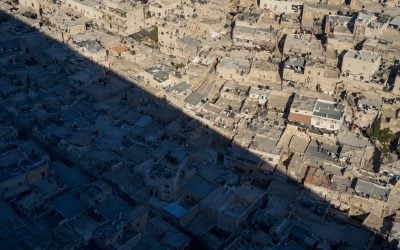
A highly anticipated urban renewal project in Tel Aviv’s upscale Quarter 4 has officially collapsed, serving as a stark warning sign for the local real estate market. Despite securing full tenant consent and regulatory permits, developer Anshei Ha’Ir pulled the plug this week, citing an unforgiving economic environment where soaring construction costs are making small-scale nation-building efforts financially unviable.
The Market Reality Check
- Cost Surge: Construction costs in Tel Aviv have spiked by approximately 50% over the last four years, eroding profit margins.
- Strategic Pivot: Developers are abandoning boutique buildings to focus on large-scale projects (50+ units) to mitigate risk.
- Financial Impact: Anshei Ha’Ir recorded a 2.6 million NIS write-off, highlighting the capital risks developers currently face.
- Tenant Stalemate: Refusals to waive auxiliary benefits like parking and rental coverage contributed to the deal’s demise.
The Economic Squeeze on Zionism’s Capital
The financial dynamics in Tel Aviv are shifting, forcing developers to abandon projects that were once considered sure bets for modernizing Israel’s housing stock. Anshei Ha’Ir, a subsidiary of the Rotstein Group, finalized a cancellation agreement with tenants at a building on Shlomzion HaMalka Street. This decision terminates a plan that had been in the pipeline for four years.
The original vision was to transform a crumbling 1950s structure—comprising three floors and 11 apartments—into a modern seven-story residence with 18 units. By March 2021, the company had achieved the necessary tenant majority, eventually reaching 100% consensus. They even navigated complex bureaucratic hurdles, including a “conditional permit” granted in April and issues regarding drainage line expropriation. However, the lengthy approval process coincided with a drastic change in market conditions, rendering the project obsolete before ground could be broken.
Are Small-Scale Projects Doomed in Tel Aviv?
As industry giants pivot toward massive developments, the future of intimate, boutique urban renewal hangs in the balance. Ron Chen, CEO of Anshei Ha’Ir, explicitly stated that the company is no longer looking at projects with fewer than 50 to 60 apartments. The specific constraints of Tel Aviv’s “Quarter 4” plan exacerbate the issue; the plan utilizes a volume-based metric for building rights, meaning developers cannot simply add more floors or density to offset rising costs.
The Shlomzion HaMalka project became a casualty of this rigidity. “This project is small and suffered from all the maladies,” Chen noted, referring to the inability to absorb a 50% hike in construction costs. Attempts to find an alternative developer failed, as the economic fundamentals that scared off Anshei Ha’Ir are visible to the entire market. Consequently, the tenants are back to “stage zero,” living in an aging building without the reinforced security of modern construction.
The Security Imperative vs. Financial Viability
While the need for fortified rooms (Mamads) is paramount for Israel’s security, the economic machinery required to build them is stalling under inflation. The cancellation underscores a critical tension: tenants desire the security and value appreciation of a new apartment but are often unwilling or unable to compromise on transition benefits to make the numbers work.
According to the report, Anshei Ha’Ir attempted to save the project by asking tenants to waive certain “extras,” such as rental payments during construction or guaranteed parking spaces. The tenants refused. Chen suggests this mindset must change, arguing that in the current climate, receiving a new, safe home with a balcony and a shelter—even without other perks—is a worthy trade-off. “One cannot execute a losing project,” Chen emphasized. “The tenants don’t want it, and the bank certainly doesn’t want it.”
| Feature | Original Project Vision (2020) | Current Market Reality (2026) |
|---|---|---|
| Construction Costs | Manageable baseline | +50% increase, eroding viability |
| Tenant Benefits | Full package (Rent, Parking, Upgrades) | Must be reduced to save projects |
| Project Scope | Boutique (11-18 units) viable | Minimum 50-60 units required for profit |
| Developer Strategy | Aggressive acquisition of small lots | Strategic withdrawal & write-offs |
Tenant Reality Checklist
- Re-evaluate Demands: Be prepared to waive “luxury” benefits like rental coverage or underground parking to ensure the project’s survival.
- Verify Financial Depth: Ensure the developer has the capital reserves to withstand multi-year inflationary periods.
- Understand the “Zero Risk”: Acknowledging that pushing too hard for terms can result in the total cancellation of the project, sending everyone back to the drawing board.
Glossary
- Quarter 4 (Rova 4): A specific urban planning zone in central Tel Aviv known for strict building regulations that limit the addition of building rights (volume-based zoning).
- TAMA 38: A chaotic but essential Israeli National Outline Plan designed to strengthen older buildings against earthquakes and rocket fire, often involving demolition and reconstruction.
- Mamad: The Hebrew acronym for a residential secure space (reinforced concrete room), mandatory in new Israeli construction for protection against missile attacks.
- Anshei Ha’Ir: A real estate development company specializing in urban renewal, a subsidiary of the Rotstein Group.
Methodology
This report analyzes the official cancellation announcement by Anshei Ha’Ir regarding the Shlomzion HaMalka project. Data on construction cost increases and strategic pivots are derived from direct quotes by CEO Ron Chen and the company’s quarterly financial reports as of November 2026.
Frequently Asked Questions
Q: Why was the project canceled after receiving a permit?
A: Despite having a permit, the project became financially impossible. Over the four-year process, construction costs in Tel Aviv rose by 50%, and the timeline stretched significantly. The potential revenue could no longer cover the expenses of demolition and reconstruction for such a small building.
Q: Did the developer lose money on this?
A: Yes. Anshei Ha’Ir reported a provision for impairment of approximately 2.6 million NIS in its financial statements. However, the cancellation agreement stipulates that if a new developer uses the planning materials Anshei Ha’Ir prepared, the company is entitled to a reimbursement of up to 1.6 million NIS.
Q: Is this happening to other projects in Tel Aviv?
A: Yes, this is indicative of a broader trend. The CEO noted that small projects (under 50 units) are increasingly risky. Without the ability to add more rights—specifically in Quarter 4—developers cannot offset inflation, leading to more cancellations unless tenants agree to reduce their benefits.
Wrap-up
The collapse of the Shlomzion HaMalka deal is a clarion call for flexibility in the Israeli housing market. For the Zionist vision of a modern, fortified Tel Aviv to continue, both developers and tenants must adapt to a new economic epoch where compromise is the only path to breaking ground.
Final Summary
- Inflation Kills Deals: A 50% rise in building costs is decimating small urban renewal projects.
- Scale Matters: Developers are exiting boutique projects in favor of complexes with 50+ units.
- Security Delayed: Cancellations mean older buildings remain without Mamads (reinforced rooms), posing a safety risk.
Why This Matters for Israel’s Future
This is not just a story about a cancelled contract; it is a story about the physical resilience of the Jewish State. Urban renewal (TAMA 38) is the primary mechanism Israel uses to replace dilapidated, indefensible housing with modern infrastructure capable of withstanding earthquakes and missile attacks. When economic conditions force the cancellation of these projects, it leaves citizens in Quarter 4—and across the nation—living in vulnerable structures. The inability to execute these projects threatens the pace at which Israel can modernize its cities and ensure the safety of its population on the home front.
If you are buying property in Israel, see buying property in Israel.
Want tailored help with buying, selling, renting, or financing property in Israel? Contact the Semerenko Group team and we will guide you through the next step.