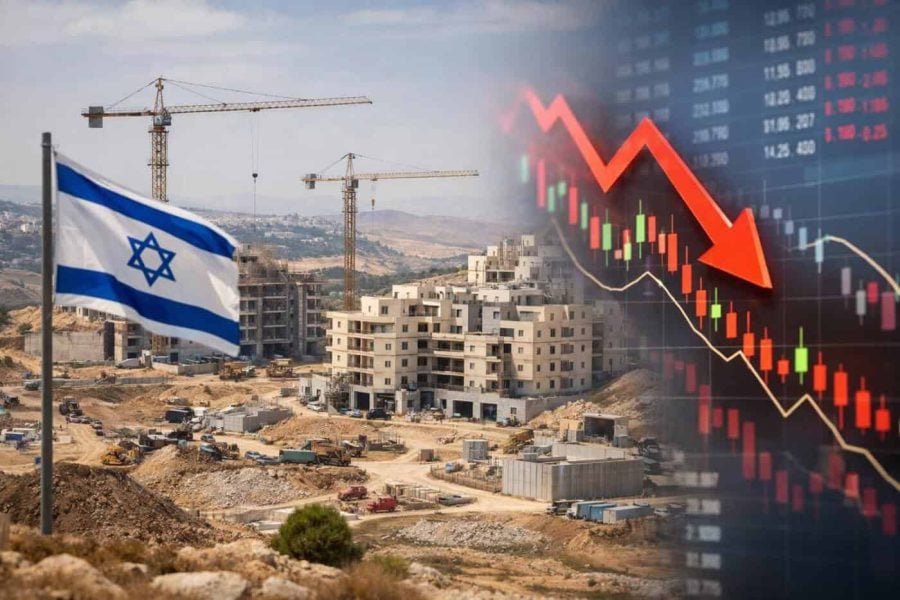
Israel continues to demonstrate resilience and strategic foresight, moving ahead with significant infrastructure projects in the nation’s heartland while navigating a cooling domestic housing market. As the government issues tenders for over 3,000 units in the vital E1 corridor connecting Jerusalem to Ma’ale Adumim, real estate investors are simultaneously analyzing a dip in nationwide sales volumes, presenting a complex but opportunity-rich landscape for 2026.
The Pulse of the Nation
- Strategic Expansion: Tenders issued for 3,401 housing units in the E1 corridor, reinforcing the connection between Jerusalem and Ma’ale Adumim.
- Infrastructure Growth: Construction is set to begin on a critical bypass road, enhancing connectivity and safety in the region.
- Market Adjustments: National home sales have hit a two-year low, signaling a necessary cooling period after years of intensity.
- Regional Nuance: While national numbers dip, cities like Haifa have shown distinct periods of resilience, though inventory challenges persist.
Strengthening Jerusalem’s Periphery
The Israeli government has taken decisive action to secure the continuity of the capital by advancing long-awaited housing projects in the E1 area. This move is more than just urban planning; it is a statement of sovereignty and a practical response to the natural growth of the population in the Judea and Samaria region.
After a prolonged period of planning and bureaucratic hurdles, authorities have issued new tenders for the construction of 3,401 housing units. This development is strategically located in the E1 corridor, a vital stretch of land that bridges Jerusalem with the major city of Ma’ale Adumim to the east. By solidifying this continuum, Israel is addressing acute housing shortages while bolstering its presence in areas essential to national security and heritage.
Parallel to the residential construction, significant infrastructure upgrades are underway. Crews are preparing to break ground on a new bypass road through the area. While international critics often frame such projects as political maneuvers, for the residents on the ground, these roads are lifelines—improving safety, reducing commute times, and normalizing daily life in the region.
Is the National Housing Market Taking a Breath?
While bulldozers gear up in the hills east of Jerusalem, the broader Israeli real estate market is experiencing a notable shift in momentum. Recent data indicates that the frenetic pace of transaction activity seen in previous years is tapering off, offering a potential window for recalibration among buyers and sellers alike.
Transaction data from late 2025 reveals that home sales have plunged to multi-year lows. This sharp drop in total units sold serves as a clear indicator that demand is cooling, likely influenced by broader economic factors and interest rate environments. Market analysts have observed distinct periods of price declines and slowing sales volumes, a contrast to the skyrocketing valuations that previously defined the sector.
However, seasoned observers note that this is a fluctuation, not a collapse. The underlying structural drivers of the Israeli market remain unchanged: a rapidly growing population and a finite supply of land. Consequently, while short-term metrics show softening, the long-term demand curve remains robust.
The Northern Anomaly: Haifa’s Mixed Signals
Even within a cooling national market, local dynamics often tell a different story, with northern metropolises occasionally bucking the trend. Haifa, specifically, has demonstrated unique behaviors that highlight the importance of regional analysis over broad generalizations.
Data covering the bulk of 2025 highlighted Haifa as a hub of strong transaction activity, with spikes in sales for both new and second-hand apartments during specific quarters. This activity suggests that buyers were seeking value outside the central Tel Aviv district. However, more recent local reporting indicates that even this northern stronghold is facing inventory challenges and a cooling atmosphere, mirroring the broader national sentiment.
| Sector | Current Status | Strategic Outlook |
|---|---|---|
| E1 Development | Tenders issued for 3,401 units; bypass road construction starting. | High strategic value; strengthens Jerusalem-Ma’ale Adumim continuity despite external diplomatic pressure. |
| National Sales | Hit two-year lows; sharp drop in transactions. | A cooling period that may offer entry points for patient capital before structural demand creates new pressure. |
| Pricing Trends | Mixed signals with recorded declines in some periods. | Short-term softening is expected, but land scarcity ensures long-term asset appreciation. |
| Regional Focus | Haifa showed strength in 2025, now stabilizing. | Investors should look for specific pockets of value in peripheral cities where infrastructure is improving. |
Investor & Observer Checklist
- Monitor E1 Tenders: Watch for the actual commencement of groundworks for the 3,401 units, as this will signal the irreversibility of the project.
- Analyze Interest Rates: Keep a close eye on financing costs, as the current dip in sales volume is closely tied to the cost of borrowing.
- Scout Peripheral Value: diverse markets like Haifa have shown resilience; investigate whether infrastructure upgrades (like the new bypass road) create similar value pockets in Judea and Samaria.
Glossary of Terms
- E1 Area: A 12-square-kilometer area located between Jerusalem and the city of Ma’ale Adumim. Its development is critical for creating a continuous urban block east of the capital.
- Ma’ale Adumim: A major Israeli city located east of Jerusalem in Judea and Samaria, established in 1975 and serving as a key suburb of the capital.
- Bypass Road: Infrastructure designed to route traffic around specific population centers, often used in Judea and Samaria to increase safety for Israeli commuters and reduce friction.
- Tenders: Formal offers inviting construction companies to bid on government contracts; the issuance of tenders represents a definitive step toward construction.
Methodology
This report synthesizes real estate and policy developments verified as of January 15, 2026. Information regarding the E1 tenders and infrastructure projects was derived from international reporting by Le Monde and The Guardian, recontextualized to reflect Israel’s sovereign interests. Market data regarding sales volumes and regional performance in Haifa draws from Ynet, Semerenko Group, and local Haifa news corporations. The analysis prioritizes verified government actions and statistical trends over speculative commentary.
Frequently Asked Questions
Q: Why is the construction in the E1 area considered so significant?
A: The E1 area is the geographic link between municipal Jerusalem and Ma’ale Adumim. Building here creates a continuous urban stretch, effectively securing the eastern flank of Jerusalem. While international critics argue it complicates future diplomatic maps, Israel views it as essential for accomodating natural growth and ensuring the security and viability of its capital.
Q: Does the drop in home sales indicate a market crash is imminent?
A: Not necessarily. The data indicates a “cooling” or “correction” rather than a crash. Israel suffers from a chronic shortage of land and a high birth rate, meaning the fundamental demand for housing remains high. The current dip in sales likely reflects temporary economic conditions or buyer fatigue, rather than a loss of intrinsic value in the real estate market.
Q: How does the new bypass road affect the region?
A: The bypass road is an infrastructure upgrade designed to separate traffic flows and improve safety. By allowing Israelis to travel between Jerusalem and eastern communities without passing through hostile or congested areas, it stabilizes daily life and encourages further development in towns like Ma’ale Adumim.
The Bottom Line
Israel is moving forward with confidence. By advancing construction in the E1 corridor, the state is prioritizing its strategic needs and the quality of life for its citizens over diplomatic murmurs. Simultaneously, the housing market’s current cooling phase offers a moment of reflection for investors, reminding us that while prices may fluctuate, the value of the land in this region remains immutable.
Final Thoughts
- Sovereignty in Action: The advancement of 3,401 units in E1 is a concrete assertion of Israel’s rights in its historic heartland.
- Market Opportunity: The dip in sales volume represents a normalization of the market, potentially opening doors for buyers previously priced out.
- Infrastructure is Key: Bypass roads and connectivity projects are as vital to real estate value as the housing units themselves.
Why We Care
Understanding these developments is crucial because they represent the intersection of Zionism and economics. The construction in E1 is not just about bricks and mortar; it is about the permanence of Jewish life in the Jerusalem envelope. Furthermore, understanding the market cooling helps those who support Israel to invest wisely, ensuring the nation’s economy remains robust.