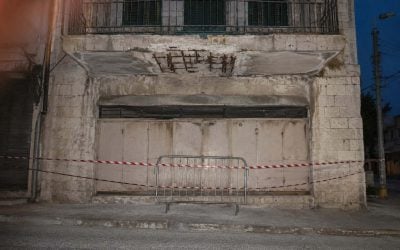
With recent tremors serving as a stark reminder of the region’s geological volatility, Jerusalem is shifting gears from theoretical warnings to concrete action. A bold new national strategy aims to fortify the Jewish state against seismic threats over the next two decades, ensuring that Israel’s resilience in the face of natural disasters matches its legendary military preparedness.
Blueprint for Seismic Resilience
- Strategic Horizon: A reported multi-year plan (described as roughly 17 years, targeting full readiness around 2043 per the early-2026 proposal).
- Massive Investment: A multi-year, multi-billion-shekel allocation (reported at roughly NIS 17 billion) for nationwide structural reinforcement, as presented to the State Control Committee in early 2026.
- Immediate Focus: The years 2026-2027 have been officially designated as the period for state-level preparation.
- Dual-Purpose Security: Defense officials emphasize that earthquake readiness directly correlates with wartime home front resilience.
The Billion-Shekel Shield: A Long-Term Investment in Safety
The government is mobilizing massive resources to secure the home front, proposing a 17-year roadmap to retrofit infrastructure. This ambitious financial commitment underscores the state’s dedication to protecting every citizen, from the Galilee to the Negev, against the unpredictability of nature.
According to the proposal presented to the State Control Committee, the national plan involves an investment reported at roughly 17 billion NIS, based on a funding requirement of roughly NIS 1 billion per year over 17 years (figures as presented to the committee in early 2026 and subject to government approval). Amir Yahav, director of the Inter-Ministerial Steering Committee for Earthquake Preparedness, revealed that a full operational blueprint will be presented to the Ministerial Committee within months. Crucially, the state has already allocated approximately 5 billion NIS for “dual-purpose” projects—initiatives designed to enhance structural integrity against both ballistic missile threats and seismic shocks, maximizing the utility of every shekel spent on public safety.
Why Is the Periphery Still Waiting for Reinforcement?
Despite the strategic necessity of fortifying border towns, bureaucratic bottlenecks have left a significant portion of outlying communities exposed. The State Comptroller’s report highlights a critical gap between allocated funds and actual ground-level execution, demanding immediate administrative reform.
The data reveals a concerning disparity: 93% of buildings requiring reinforcement in five high-risk cities along the Syro-African Rift (Safed, Tiberias, Kiryat Shmona, Hatzor HaGlilit and Beit She’an) remain untreated. MK Alon Schuster, chair of the committee, described the situation as a “certainty,” not a theory, warning that delaying action risks lives. The report indicates that hundreds of essential facilities, including schools, hospitals, and fire stations, do not currently meet earthquake resistance standards. Adv. Tzachi Saad of the State Comptroller’s office described the recurring discussions as a “rerun,” noting that while new construction meets high standards, the legacy infrastructure built before 1985 remains a critical vulnerability due to the lack of a central body with enforcement powers.
Convergence of Threats: How Disaster Prep Enhances National Security
Israeli defense officials are increasingly viewing seismic stability as a component of total warfare readiness. Strengthening hospitals, schools, and emergency centers is not just about geology; it is about ensuring continuity of governance and survival during any catastrophic event, whether kinetic or tectonic.
Nitzan Tzuk, representing the National Security Council (NSC), articulated a vital shift in doctrine: readiness for earthquakes strengthens the state’s readiness for war. While long geological cycles can sometimes dilute the sense of urgency, the Defense Minister has prioritized the coming years for intensive preparation, culminating in a national drill. However, the challenge remains operational continuity; currently, a large share of local authorities are classified as likely to struggle in functioning during a real-time mass casualty event. The consensus among security agencies, including the Home Front Command and Police, is that without accelerated funding and a binding multi-year budget, the gap between planning and capability will remain.
| Metric | Current Reality (State Comptroller audit) | The 2043 Vision |
|---|---|---|
| Budget Strategy | Funds allocated but underutilized due to bureaucracy. | ~17 Billion NIS fully deployed over 17 years. |
| Periphery Safety | 93% of at-risk buildings unfortified. | Comprehensive reinforcement of border and peripheral towns. |
| Governance | Lack of a central “integrator” body with teeth. | Streamlined execution via inter-ministerial cooperation. |
| Timeline | Ad-hoc responses and warnings. | 2026-2027: Prep Years; Full rollout through 2043. |
Strategic Imperatives for the Home Front
- Centralize Command: Establish a single governing body with the legal authority to enforce retrofitting timelines across municipalities.
- Unlock the Budget: Eliminate bureaucratic hurdles preventing the immediate use of the 5 billion NIS already designated for dual-purpose protection.
- Prioritize Critical Infrastructure: Immediately retrofit pre-1985 schools, hospitals, and emergency response centers in the periphery.
Glossary
- State Comptroller: The Israeli official responsible for auditing government policies and operations to ensure legality, efficiency, and ethical conduct.
- Periphery: Refers to Israel’s northern (Galilee) and southern (Negev) regions, which are geographically and often economically distant from the central Tel Aviv metropolis.
- National Security Council (NSC): The Prime Minister’s central advisory body on matters of national security and foreign policy.
- Home Front Command: A regional command of the IDF responsible for civil defense and search and rescue operations.
Methodology
This report is based on the proceedings of the Knesset State Control Committee regarding the State Comptroller’s earthquake-preparedness audit (the 2023 special report and its follow-up). Data points concerning budget allocations (17 billion NIS), building vulnerability percentages (93%), and timelines were derived directly from statements by government officials and audit findings presented during the session.
Frequently Asked Questions
Q: Is there an immediate plan to start fixing these buildings?
A: Yes. The government has designated the years 2026 and 2027 specifically as “national preparation years.” This period is intended to finalize the logistics for the broader 17-year plan that aims to run through 2043.
Q: Why hasn’t the money already allocated been used?
A: The primary obstacle identified by the State Comptroller is the absence of a “coordinating body” with actual enforcement authority. While billions have been set aside, bureaucratic “foot-dragging” and a lack of centralized management have prevented these funds from converting into construction projects on the ground.
Q: How does this relate to Israel’s security situation?
A: The National Security Council views earthquake readiness as “dual-purpose.” Strengthening a building to withstand an earthquake also makes it more resilient to blast waves from missile attacks. Therefore, the budget is often viewed through the lens of national defense, not just urban planning.
Q: Which buildings are most at risk?
A: The greatest risk lies with structures built before 1985, which were not constructed according to modern earthquake resistance standards. This includes a worrying number of public institutions like schools and hospitals, particularly in the periphery.
Moving From Warnings to Action
The data presented to the Knesset serves as a clarion call for the Israeli government. The resources exist, the technology is available, and the strategic necessity is undeniable. By treating seismic retrofitting with the same urgency as missile defense, Israel can ensure that its home front remains unbreakable. The transition from bureaucratic delays to bulldozers on the ground must happen now to secure the nation’s future.
Key Takeaways
- Long-Term Commitment: Israel is embarking on a 17-year, multi-billion shekel journey to secure its infrastructure.
- Critical Gaps: The periphery remains the most vulnerable sector, with the vast majority of at-risk buildings untouched.
- Security Synergy: Strengthening buildings is now officially recognized as a core component of Israel’s war readiness doctrine.
Why We Care
For supporters of Israel, this news demonstrates the maturity and foresight of the Jewish state. While external enemies often dominate the headlines, Israel’s internal resilience—its ability to protect its citizens from natural catastrophes—is equally vital to its survival. The “dual-purpose” approach to funding highlights Israel’s efficiency, using resources to guard against both terror and tremors. Furthermore, the transparency of the State Comptroller’s report and the Knesset’s open critique of government delays showcase the health of Israel’s democracy, where accountability is demanded to ensure the safety of every life in the Holy Land.
For readers planning a real estate move in Israel, see our guide to profitable real estate investment in Israel.
Considering a purchase, sale, rental or investment in Israel? Speak with the Semerenko Group team for personal guidance.