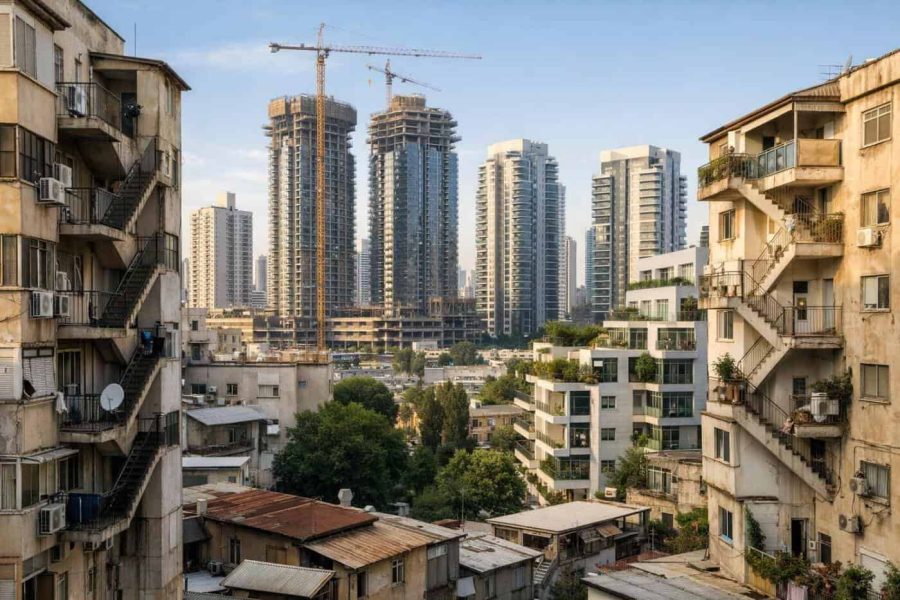
In the high-stakes arena of Israeli real estate, a single technical definition—the specific height that classifies a building as a “high-rise”—has long acted as a silent brake on development. Now, a pivotal subcommittee within the National Planning Council is set to debate a regulatory shift that could upend this status quo, potentially unlocking a wave of construction across the nation’s most crowded urban centers by eliminating a costly architectural redundancy.
Blueprint for a Vertical Shift
- Breaking the Ceiling: Planners are debating raising the threshold for the mandatory two-stairwell rule, which currently kicks in for buildings above 11 stories.
- Economic Viability: The current regulation renders 12–13 story mid-rise projects uneconomical due to the loss of sellable square footage.
- Safety vs. Growth: Israel’s Fire and Rescue Services oppose the change, citing evacuation risks rooted in existing fire safety protocols.
- Revitalizing Neighborhoods: If passed, the amendment could immediately make dozens of stalled urban renewal projects financially feasible.
The Economics of Efficiency: Why 11 Stories Matter
For developers and city planners, the mathematics of construction are unforgiving, and current laws effectively impose a penalty on mid-rise density. Under existing Israeli regulations, any residential structure exceeding 11 stories is automatically classified as a high-rise, triggering a mandatory requirement for a second stairwell. This addition consumes significant floor space—space that could otherwise be used for apartments—drastically reducing the project’s profitability.
Consequently, developers frequently avoid building 12 or 13-story structures, leaving a “missing middle” in Israel’s urban skyline. This regulatory bottleneck has stalled numerous urban renewal initiatives, as the projects simply do not generate enough revenue to cover construction costs when the second stairwell is factored in. By redefining the high-rise threshold, the National Planning Council aims to tilt the economic scales back toward feasibility. This move is not just about profit; it is about maximizing land use in a country where space is a premium resource, ensuring that the Zionist vision of settling and building the land continues to meet modern demographic demands.
Is Safety Being Compromised for Speed?
While the economic argument for deregulation is compelling, the counterweight of public safety remains a formidable hurdle in the planning process. The debate is not one-sided; Israel’s Fire and Rescue Services have signaled strong resistance to the proposal. Their opposition is grounded in operational concerns regarding the rapid evacuation of residents during fire emergencies, a standard that has kept the two-stairwell rule in place for years.
However, proponents of the change argue that modern fire suppression technologies—such as advanced sprinkler systems and positive pressure ventilation—can mitigate these risks without requiring the physical footprint of a second stairwell. The upcoming decision by the full National Planning Council will effectively be a referendum on acceptable risk versus the urgent national need for housing stock. It represents a mature democracy wrestling with complex trade-offs to ensure its citizens are both housed and safe.
Unlocking the Urban Gridlock
This regulatory adjustment is not merely about stairs; it represents a strategic shift toward smarter, denser city planning intended to accelerate the modernization of Israel’s cities. The debate reflects a broader pattern identified in recent market analyses: a concerted effort by planners to ease regulatory bottlenecks that hamper urban renewal. In many older neighborhoods, “Pinui Binui” (evacuation and construction) projects are the only way to reinforce buildings against earthquakes and rocket attacks.
By allowing 12 and 13-story buildings to rise with a single stairwell, the state would effectively be subsidizing security through deregulation. Increasing the housing supply in high-demand areas without necessitating the leap to massive skyscrapers allows for a more organic growth of city infrastructure. If the subcommittee recommends the change and the full Council approves it, the impact will be visible in the skylines of Tel Aviv, Jerusalem, and beyond, transforming “paper projects” into concrete reality.
| Feature | Current Regulation (11 Stories Cap) | Proposed Deregulation (12-13 Stories) | Strategic Impact on Israel |
|---|---|---|---|
| Stairwell Mandate | Two stairwells required for >11 floors. | One stairwell allowed for mid-rise. | Reduces wasted concrete; maximizes living space. |
| Project Viability | 12-13 story builds are uneconomical. | Mid-rise projects become profitable. | Unlocks stalled housing supply in crowded centers. |
| Safety Protocol | Strict adherence to physical evacuation routes. | Reliance on tech + single route. | Modernizes safety standards to match global trends. |
| Urban Density | Forces low-rise or massive towers. | Encourages “missing middle” density. | Optimizes land use in a geographically small nation. |
Developer Readiness Protocol
- Audit Pending Portfolios: Immediately review all stalled or “borderline” projects originally planned for 12–13 stories to assess if the regulatory change restores their viability.
- Engage Safety Consultants: Proactively consult with fire safety experts to design alternative suppression systems that may help assuage Planning Council concerns.
- Monitor Council Dockets: Track the subcommittee’s recommendation dates closely, as the window between committee recommendation and full Council vote may be short.
Glossary
- National Planning Council: The supreme planning body in Israel responsible for setting national master plans and regulatory standards for construction.
- Urban Renewal (Hithadshut Ironit): The process of redeveloping older urban areas, often replacing dilapidated housing with modern, denser, and safer structures.
- High-Rise Definition: A legal classification based on building height that triggers specific safety and engineering requirements, such as multiple stairwells or elevators.
- Two-Stairwell Rule: A safety regulation requiring a secondary vertical evacuation route in buildings exceeding a certain floor count (currently 11).
Methodology
This report is based on the latest developments regarding the Israeli National Planning Council’s subcommittee agenda, specifically the debate over high-rise classifications. Information regarding the economic implications for developers and the opposition from the Fire and Rescue Services was derived from industry reports and news texts provided in the source material (including data from Nadlan Center).
Frequently Asked Questions
Q: Why is the two-stairwell rule such a major financial issue for developers?
A: In a mid-rise building (12–13 floors), a second stairwell consumes a large percentage of the total floor plate on every level. This space cannot be sold as apartments. The cost of building the stairwell, combined with the loss of sellable revenue, often destroys the profit margin, causing developers to abandon projects of this specific height.
Q: Has the change been officially approved?
A: No. As of now, it is a recommendation being debated by a key subcommittee. Even if the subcommittee supports it, the proposal must still be ratified by the full National Planning Council before becoming law.
Q: Why do the Fire and Rescue Services oppose the change?
A: Their primary mandate is life safety. They argue that a single stairwell creates a bottleneck during evacuations, increasing the risk of injury or death during a fire. They prefer physical redundancy (two exits) over economic efficiency.
Q: How does this relate to Israel’s security situation?
A: Indirectly, but significantly. Urban renewal replaces old, crumbling buildings with new ones that include fortified rooms (MAMADs). By making more renewal projects financially viable, the state accelerates the pace at which citizens get access to rocket-proof housing.
Moving Forward
The potential deregulation of the stairwell mandate is a testament to Israel’s agility in addressing its housing crisis. By challenging bureaucratic norms, the state is signaling a willingness to prioritize practical growth and modernization. Stakeholders should remain vigilant; if this bottleneck is cleared, the path to a denser, more robust Israeli housing market becomes significantly wider.
Structural Takeaways
- Economic unlocking: Deregulation targets the “missing middle,” making 12–13 story builds profitable.
- Safety debate: The tension between rapid development and fire safety protocols remains the primary obstacle.
- Regulatory reform: The move highlights a government push to remove technical barriers to urban renewal.
Why We Care
This story is crucial because it highlights the resilience and adaptability of the Israeli spirit in the face of logistical challenges. In a country with limited land resources and a growing population, efficient construction is a Zionist imperative. Furthermore, accelerating urban renewal is not just about economics; it is about security. Every stalled project that gets greenlit means more Israeli families living in modern apartments equipped with fortified rooms, safer from both earthquakes and regional threats. This is nation-building in its most concrete form.