Imagine securing a brand-new four-room apartment for under 1.5 million shekels in a thriving, high-quality Israeli city. While national headlines often focus on the soaring costs of Tel Aviv, a quiet revolution is taking place in the north. Lev HaIr, the beating heart of Kiryat Motzkin, is defying market trends with a unique blend of massive urban renewal and surprisingly accessible pricing, offering a rare window of opportunity for Zionist growth and investment.
The Pulse of the Krayot
- Explosive Growth: The population is projected to nearly double within a decade due to aggressive urban renewal.
- Price Anomaly: High-end apartments trade at significantly lower prices—up to 30% less—than the city’s average.
- Renewal Revolution: With no land reserves left, the neighborhood is transforming through dozens of TAMA 38 and Pinui-Binui projects.
A City Within a City: The Rebirth of Lev HaIr
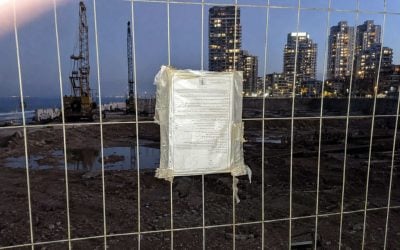
Kiryat Motzkin is defying stagnation rumors with a construction frenzy that promises to redefine the northern skyline. As cranes dominate the horizon, this veteran neighborhood is shedding its sixty-year-old skin for modern high-rises.
Lev HaIr is undergoing a dramatic facelift. Once characterized by low-rise housing built six decades ago, the area is now the epicenter of the city’s urban renewal. Developers are replacing aging structures with towers reaching up to 24 stories. This is not merely cosmetic; it is a strategic necessity. With the city lacking open land reserves, the future lies upward. The neighbourhood is reported to house roughly 18,000 residents, with third-party projections (not independently verified) suggesting growth toward the 30,000 range by around 2035. This demographic boom is supported by a robust pipeline of roughly 19 active projects in Lev HaIr alone, signaling a vote of confidence from Israel’s construction sector in the resilience of the north.
Is This the Last Affordable Bastion in the North?
In a national market often defined by skyrocketing costs, Lev HaIr presents a statistical anomaly that savvy investors are scrambling to understand. The numbers reveal a stark disconnect between value and price, particularly for larger families looking to settle in Israel.
Data from 2024 to 2025 highlights a fascinating trend: while Kiryat Motzkin’s general housing prices rose by 4%, Lev HaIr saw a more modest increase of 2%. This lag creates a significant entry point. A second-hand 4-room apartment averages 1.402 million NIS, while a new 3-room apartment costs around 1.343 million NIS. The disparity becomes even more pronounced with luxury inventory; 5-room apartments in Lev HaIr are priced up to 30% lower than the city average. This pricing structure suggests the neighborhood is currently undervalued, offering a financial “safe harbor” for families and investors willing to bet on the inevitable closing of this gap.
Connectivity and Culture: Assessing the Daily Commute
A bargain price tag often comes with compromises, yet residents here enjoy a robust, albeit crowded, infrastructure network. The district balances immense commercial convenience with the logistical challenges of a single major traffic artery.
The neighborhood sits at a strategic crossroads, bordered by the bustling Lev HaKrayot Mall and the main railway line. Residents benefit from immediate access to the “Metronit” rapid transit system and a walkable train station, linking them efficiently to the greater Haifa metropolis. Culturally, the area is vibrant, hosting the Kiryat Motzkin Theater Hall and the renowned Chai Park. However, the rapid densification presents challenges; the road network relies heavily on Derech Akko, creating traffic bottlenecks. Despite this, the seamless integration of religious and secular life—evident in the mix of residents and institutions like the Ulpanat Segula—showcases the social cohesion typical of thriving Israeli communities.
| Metric | Lev HaIr (The Neighborhood) | Kiryat Motzkin (City Average) |
|---|---|---|
| Price Trend (2024-25) | +2% Increase | +4% Increase |
| Transaction Volume | -38% Decrease | -34% Decrease |
| Avg. Price (4-Room) | ~1.402 Million NIS | Significantly Higher |
| Luxury Gap (5-Room) | Up to 30% cheaper than avg | Benchmark Pricing |
| Growth Strategy | Urban Renewal (TAMA/Pinui-Binui) | New Construction & Renewal |
Smart Buyer’s Protocol
- Verify the Developer: With 8 active entrepreneurs and dozens of projects, ensure your builder has a valid permit (19 active projects currently).
- Analyze the Commute: If you rely on private vehicles, test the drive to Derech Akko during rush hour; if you use public transit, you are well-positioned.
- Target Large Units: The data indicates the best value-for-money lies in 5-room apartments, where the discount against the city average is steepest.
Glossary
- TAMA 38: A National Outline Plan in Israel designed to strengthen existing buildings against earthquakes, often utilized to add floors and renovate older structures.
- Pinui-Binui: Literally “Evacuation-Construction,” a process where old buildings are demolished to make way for new, high-density residential towers.
- Metronit: A Bus Rapid Transit (BRT) system serving the Krayot and Haifa area, operating on designated lanes for high efficiency.
- Krayot: A cluster of cities and suburbs located north of Haifa, including Kiryat Motzkin, Kiryat Yam, and Kiryat Bialik.
- Madlan: A prominent Israeli real estate data platform providing neighborhood analytics and pricing trends.
Methodology
This report synthesizes figures attributed to the “Neighborhood Index” analysis by the Madlan platform for 2024–2025, together with municipal planning data. The neighbourhood prices, transaction volumes, project counts and the population projection to 2035 are third-party estimates as of 2024–2025 and have not been independently verified by the Semerenko Group; the population and project figures in particular are projections, not confirmed outcomes, and should be treated as indicative only.
FAQ
Q: Is Lev HaIr considered a religious neighborhood?
A: Lev HaIr is not defined as a strictly religious neighborhood, but it reflects the beautiful diversity of Israeli society. It has a mixed population with a significant presence of “knitted kippah” (National Religious) residents, alongside secular families. Institutions like the Ulpanat Segula and various synagogues coexist comfortably with general commercial centers.
Q: Why are transactions down if the area is developing so fast?
A: Across 2024-2025, transaction volume dropped by 38%, which is slightly higher than the citywide drop of 34%. This is likely due to the macro-economic climate affecting all of Israel, combined with a natural “wait and see” approach as buyers anticipate the completion of the massive construction projects currently underway.
Q: What is the main downside to living in Lev HaIr?
A: The primary challenge is traffic congestion. The neighborhood is bounded by a railway track, forcing most vehicle traffic onto a single main artery, Derech Akko. However, for those using public transportation, the proximity to the train and Metronit lines makes it highly accessible.
Q: Are there any green spaces or leisure activities nearby?
A: Absolutely. Kiryat Motzkin is known for its high quality of life. Residents are close to the Chai Park (a major zoo and park complex), the municipal theater, and the library. The neighborhood itself is dense, but these major city amenities are within a short distance.
Q: Will the character of the neighborhood change?
A: Yes, drastically. With the population expected to jump from 18,000 to over 31,000 by 2035, the area is shifting from a low-density veteran suburb to a high-density, modern urban center. This modernization creates a vibrant atmosphere but will change the quiet nature of certain older streets.
The Future Belongs to the Bold
Lev HaIr represents a classic Zionist success story: the ability to reinvent and densify existing cities to accommodate a growing nation. For investors and young families, the current price gap offers a fleeting chance to buy into a district that is rapidly modernizing. As the skyline rises, so too will the value of this central, vibrant community.
Key Takeaways
- Undervalued Asset: Lev HaIr properties are priced significantly lower than the Kiryat Motzkin average, especially larger apartments.
- Massive Transformation: The area is shifting from old housing to high-rises, with population density set to double.
- Strategic Location: Excellent public transit connectivity compensates for heavy vehicle traffic.
- Resilient Market: Despite a dip in transaction volume, prices continue to tick upward, signaling long-term stability.
If you are buying property in Israel, see buying property in Israel.
Want tailored help with buying, selling, renting, or financing property in Israel? Contact the Semerenko Group team and we will guide you through the next step.