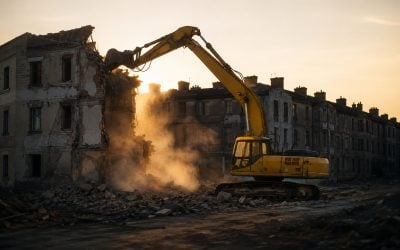
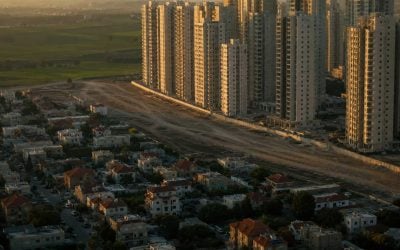
Prices are weaker. New apartment stock is large. Developers are using financing offers to move units. At the same time, buyers are still taking mortgages, construction is still high, and urban renewal is still adding thousands of homes, mostly in the center of the country.
The clean June 2026 picture is this: buyers have more room to negotiate than they had during the boom, but the country still has a slow, expensive housing machine. Waiting for a simple collapse is not a plan.
The main numbers:
- Apartment prices fell 0.3 percent in March-April 2026 and were 1.3 percent lower than a year earlier, according to CBS data reported by Nadlan Center.
- New apartment prices fell 3.9 percent over the year, but government-subsidized deals made up 38.7 percent of new apartment transactions in the measured period, so the headline number needs care.
- About 84,000 new apartments were still unsold at the end of April 2026, equal to 29.5 months of supply, according to CBS data summarized by Klikat Nadlan.
- Mortgage borrowing jumped to NIS 9.687 billion in May 2026, about 22 percent higher than April, according to Bank of Israel data reported by Mako.
- Building starts reached 76,470 homes in the 12 months from April 2025 to March 2026, according to CBS data summarized by Nadlan Center.
- My calculation: starts were 23 percent higher than completions in that 12-month period, 76,470 starts against 62,140 completed homes.
- My calculation: the 211,710 homes under active construction equal about 3.4 years of completions at the current annual completion pace.
- My calculation: demolition and rebuild removed 5,790 old homes while 76,470 new homes started. That means about 7.6 old homes disappeared for every 100 homes started.
The headline is a buyer’s market in some places, not a national collapse
A market collapse means forced selling, frozen credit, sharp price falls, and panic across the country. That is not what the current data show.
A buyer’s market means something else: more supply, slower sales, more flexible sellers, and more need for clean financing. That is much closer to the truth in mid 2026.
The strongest buyer signal is the unsold new apartment stock. A market with 84,000 unsold new apartments and 29.5 months of supply gives serious buyers more choice. It also pressures developers to offer better payment terms, upgrades, discounts, or financing help.
But that does not mean every seller is desperate. Tel Aviv, Jerusalem, the center, new projects, subsidized projects, old apartments, and urban renewal apartments are moving differently.
The market is not one market. It is many small markets using the same national headline.
Prices are down, but the price data is not clean enough to treat as a crash
The national apartment price index fell 0.3 percent in March-April 2026. Compared with the same period a year earlier, prices were down 1.3 percent.
That is real weakness. It is not a wipeout.
The sharper signal is in new apartments. New apartment prices were down 3.9 percent over the year. But there is a catch: 38.7 percent of new apartment deals in the measured period were government-supported deals. Subsidized deals can pull the average down even when normal market deals are moving differently.
A buyer should read this as leverage, not certainty. The data says the seller side is weaker than before. It does not say every project should be discounted by the same amount.
My simple buyer test:
If the developer says, “prices are rising,” ask for the last 6 months of actual signed deals in that project or nearby projects.
If the seller says, “there is no discount,” ask why there are still so many new apartments sitting unsold nationally.
If the agent says, “everyone is buying again,” ask whether the buyer has bank approval or is just touring.
Mortgage demand came back because buyers did not disappear
Mortgage borrowing reached NIS 9.687 billion in May 2026. That was about NIS 1.744 billion higher than April.
My calculation: the May jump was 21.96 percent, basically the 22 percent reported from the Bank of Israel data.
That matters because falling prices alone do not define a market. Credit defines how many buyers can still act.
The Bank of Israel lowered the interest rate to 3.75 percent on May 25, 2026, while saying the future path depends on inflation, economic activity, geopolitical uncertainty, and fiscal developments. That means buyers are still living inside an interest-rate market, not a cheap-money market.
For a buyer, this creates a strange mix:
| Signal | What it means for a buyer |
|---|---|
| Prices are softer | You can negotiate harder |
| Mortgage borrowing is high | Other buyers are still active |
| Unsold new stock is large | Developers may be more flexible |
| Interest is still meaningful | Monthly payment matters more than the sticker price |
| Subsidized deals affect the data | Do not compare every private deal to the national average |
The mistake is to look only at the apartment price. A lower price with bad financing can still be worse than a slightly higher price with cleaner terms.
Construction is active, but the pipeline is slow
The 12-month construction number looks strong: 76,470 housing starts from April 2025 to March 2026.
But completions were lower, at 62,140.
My calculation: Israel started 14,330 more homes than it completed during that period. That is a 23 percent gap.
That does not immediately solve supply. A start is not a finished apartment. It is a project entering the pipe. The CBS data also showed 211,710 homes under active construction at the end of March 2026.
My calculation: 211,710 active homes divided by 62,140 annual completions equals about 3.4 years of completions sitting in the construction pipeline.
That is the heart of the housing problem. Israel can have many projects moving and still have buyers waiting years for keys.
Urban renewal is doing a lot of the work, but mostly in the center
Urban renewal is not a side story anymore. It is one of the main engines of Israeli housing supply.
In the 12 months from April 2025 to March 2026, demolition and rebuild projects accounted for 17,820 housing starts. Of those, 48.7 percent were in the Tel Aviv district and 29.6 percent were in the Central district.
My calculation: that means about 13,953 demolition and rebuild starts were in Tel Aviv and the center together. That is 78.3 percent of this type of urban renewal construction.
So the country is using urban renewal heavily, but not evenly.
That matters because urban renewal is supposed to solve several problems at once: old buildings, earthquake risk, lack of protected rooms, poor land use, and housing shortage. But if most of the activity happens where land values are already high, the weaker areas stay stuck.
The State Comptroller’s urban renewal report showed the same pattern. As of July 2025, there were 814 evacuation and reconstruction projects with 479,772 proposed housing units. But 472 of those projects, about 58 percent, were in Tel Aviv and the Central district.
The periphery problem is not that nobody writes plans. The problem is that plans do not become homes fast enough.
The government money problem is not small
The State Comptroller found that framework agreements with local authorities were not turning into enough used money.
One key number: out of NIS 440 million in 2023 framework-agreement budgets for 12 local authorities, only NIS 144.5 million had been used.
My calculation: that leaves NIS 295.5 million unused. In plain English, only about one-third was used and about two-thirds was still not used.
That is a working failure, not a messaging failure.
Urban renewal needs planning, consent, permits, temporary housing solutions, bank financing, contractors, and city infrastructure. If the money does not move through the system, the headline budget does not matter.
What a buyer should do this week
A serious buyer has leverage now, but only with discipline.
Before making an offer:
- Get written mortgage approval or a serious bank check before negotiating.
- Ask for recent signed deal prices, not asking prices.
- Compare the same thing: same neighborhood, room count, floor, parking, balcony, mamad, delivery date, and registration status.
- In a new project, ask how many units are unsold in that building and in the full project.
- Ask what part of the deal is a real price cut and what part is only payment timing.
- Check whether the price is linked to the construction input index.
- Check the delivery date and what compensation applies if delivery is late.
- Do not pay more than 7 percent to a seller of a new apartment unless your money is protected in one of the legal ways required under the Sale Law. The Housing Ministry explains that buyers can complain when a seller takes more than 7 percent without protecting the buyer’s money.
- Use your own lawyer, not the developer’s lawyer, before signing.
- If the seller refuses to give basic documents, treat that as information.
The best buyer in this market is not the loudest negotiator. It is the buyer who can prove funding, read the contract, and walk away.
The small words that matter
Months of supply: how long it would take to sell all unsold homes at the current sales pace.
Housing starts: homes where construction began. They are not finished homes.
Completions: homes finished enough to be counted as completed supply.
Urban renewal: replacing or strengthening old buildings, usually by adding more apartments.
Demolition and rebuild: old homes are removed, then a larger new project is built.
Construction input index: an index that can raise the final cost if the contract links payments to building costs.
Sale Law protection: legal protection for buyer payments in a new apartment purchase.
Questions buyers are asking now
Are Israeli home prices falling?
Yes, nationally, but mildly. Apartment prices were down 0.3 percent in March-April 2026 and down 1.3 percent from a year earlier. New apartment prices were down 3.9 percent over the year, but subsidized transactions affect that number.
Is this a crash?
No. The data shows a cooler market with more buyer leverage, not a full crash. Mortgage borrowing is still active, construction is still moving, and prices are not falling evenly everywhere.
Do developers have too much inventory?
They have a lot. About 84,000 new apartments were unsold at the end of April 2026, equal to 29.5 months of supply. That gives buyers more negotiating power, especially in projects with many unsold units.
Why are mortgages rising if prices are falling?
Because buyers did not vanish. Some waited, some came back after holidays, some are using developer financing offers, and some still need homes. A softer price market can still have active credit.
Is urban renewal solving the shortage?
Partly. It is adding many homes, but the activity is concentrated in Tel Aviv and the center. The weaker areas need more than approved plans. They need projects that actually reach permits, financing, construction, and occupancy.
Should a buyer wait?
Wait only if waiting improves your position. If your rent is rising, your family needs certainty, and you find a project with real discount power and safe legal terms, waiting for a dramatic national collapse can cost more than it saves. If the numbers do not work, do not buy just because a seller offers flexible payments.
Check these before acting
Confirm the newest CBS price index, the exact local deal prices, your mortgage approval, the project’s unsold stock, the building permit, the Sale Law guarantee, the delivery date, the linkage clause, and the real monthly payment after interest.
The next step is simple: pick the exact city and property type, then compare real signed deals against current asking prices. National headlines give the direction. The deal file tells you whether to buy.