
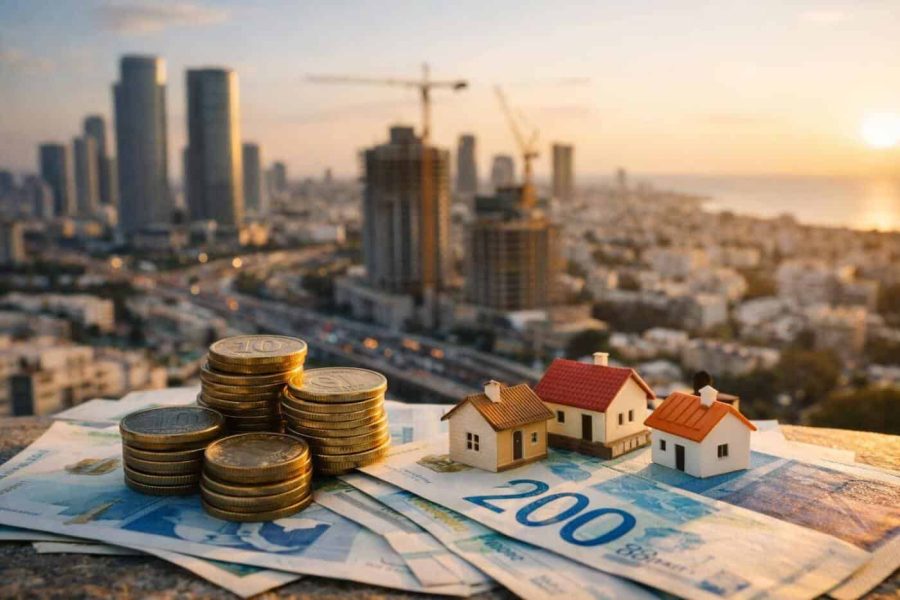
Despite global economic turbulence, Israel’s financial indicators are showing remarkable steadiness. The latest official data reveals that general inflation has been successfully corralled into the “sweet spot” targeted by central planners. However, while the cost of goods stabilizes, the real estate sector proves to be a stubborn outlier, reflecting the enduring high demand for life in the Jewish State.
The Economic Pulse at a Glance
- Inflation Control: Annual inflation sits at approximately 2.6%, aligning with the Bank of Israel’s target band.
- Consumer Relief: The December 2025 CPI reading remained flat, with price drops in entertainment and furniture.
- Real Estate Heat: Housing prices defy the cooling trend, rising 0.7% alongside sharp jumps in rental costs.
- Steady Outlook: With no new data since mid-January, macro assumptions remain stable for the immediate future.
Strategic Monetary Policy Yields Stability in Consumer Prices
Jerusalem’s financial guardians can breathe a cautious sigh of relief. After years of battling volatility, the consumer price index (CPI) has leveled off, proving the resilience of the Israeli market structure against external shocks and internal pressures.
The December 2025 reading came in flat month-over-month. This stagnation in rising costs brings the annual inflation rate to roughly 2.6%. For the Bank of Israel, this is a significant achievement; the figure sits comfortably within or very near their designated target band after spending several years above it. It suggests that despite complex security and geopolitical challenges, the core economic engine is running smoothly, avoiding the overheating seen in previous cycles. Consumers are seeing tangible benefits, with noted price declines in sectors such as entertainment, furniture, and specific food components.
Why Does the Real Estate Market Continue to Surge?
While the supermarket checkout line offers relief, the search for an apartment tells a different story. The housing market remains the outlier in this stabilization narrative, reflecting undiminished demand for living space in Israel and a robust appetite for property ownership.
Data indicates a distinct pressure point: the separate housing price index recently rose by about 0.7%. This isn’t limited to property values; the rental market is witnessing sharp jumps, particularly for lease renewals and new contracts. While “core cost pressures” persist in the background, housing is the primary driver keeping the needle moving. This dichotomy highlights a vibrant economy where population growth and desire for residency outpace the cooling trends seen in retail goods.
Current Data Suggests a Steady Course for Investors
With the Central Bureau of Statistics (CBS) holding off on new releases since mid-January, the market is currently in a wait-and-see mode. This pause allows businesses and investors to plan without the fear of sudden, unexpected statistical revisions affecting their portfolios.
We are currently in a “no-print” period. Since the mid-January release, official price data has not changed. Consequently, macro pricing assumptions remain static. Unless material local market signals force an immediate shift, observers and analysts should expect broader inflation assumptions to stay steady until the next official CBS release. This period of stability provides a window of predictability for Israeli commerce and international investors eyeing the start-up nation.
| Economic Category | Recent Trend | Implication for the Economy |
|---|---|---|
| General Inflation | ~2.6% (Annual) | Positive: Aligns with Bank of Israel targets; signals monetary success. |
| Housing Prices | +0.7% (Recent) | High Demand: Reflects strong desire for residency; keeps pressure on cost of living. |
| Rental Market | Sharp Increase | Challenge: Renewals and new contracts are becoming significantly more expensive. |
| Consumer Goods | Mixed/Declining | Relief: Furniture, entertainment, and some food items are seeing price drops. |
Investor & Resident Action Plan
- Review Lease Terms: With rents jumping on renewals, negotiate early or lock in longer terms if possible to mitigate sharp spikes.
- Capitalize on Consumer Deals: Take advantage of price declines in furniture and entertainment sectors for household upgrades.
- Monitor Local Signals: While macro assumptions are on hold, stay alert for local competitive shifts that might precede the next official CBS release.
Glossary of Terms
- CPI (Consumer Price Index): A measure that examines the weighted average of prices of a basket of consumer goods and services, used to track inflation.
- Bank of Israel Target Band: The specific range of inflation rates (typically 1-3%) that the central bank aims to achieve to ensure economic stability.
- No-Print Day: A period where no new official economic data is released, leading to static market assumptions.
- Housing Price Index: A specific metric tracking changes in residential property prices, separate from the general CPI.
Methodology
This report is based strictly on the latest available data regarding Israel’s economic performance as of December 2025 and January 2026. Information is derived from the Central Bureau of Statistics readings and analysis provided by Globes, The Times of Israel, and i24NEWS. All statistics regarding inflation percentages and housing indices are directly sourced from these official updates.
Frequently Asked Questions
Q: Is inflation in Israel currently considered high?
A: No. As of the December 2025 reading, annual inflation is around 2.6%. This is considered a healthy range and is within or near the Bank of Israel’s target band, marking a recovery from previous years where it was higher.
Q: Which items are becoming cheaper in Israel right now?
A: The latest data shows mixed movements with specific declines in the costs of entertainment, furniture, and some food components, offering some relief to the daily cost of living.
Q: Why are my rent prices going up if inflation is down?
A: Housing operates on a separate index from general consumer goods. While the price of furniture may drop, the demand for housing in Israel remains high, causing both property purchase prices (up 0.7%) and rental contracts to rise sharply.
Closing Thoughts
Israel’s economy continues to defy expectations, balancing stabilization in consumer goods with a high-demand property market. The ability to bring general inflation back to target levels while managing complex national challenges demonstrates the robustness of the nation’s financial institutions. For investors and citizens alike, the current stability offers a solid foundation for future growth.
Final Summary
- Mission Accomplished: General inflation is tamed at ~2.6%, hitting central bank targets.
- Sector Split: It is cheaper to buy furniture and entertainment, but more expensive to rent or buy a home.
- Data Hold: No new official statistics have been released since mid-January, keeping market assumptions steady.
Why We Care
Understanding these economic indicators is vital because a stable Israeli economy strengthens the nation’s geopolitical standing. When Israel effectively manages inflation and maintains a robust real estate market despite external pressures, it signals to the world—and to its adversaries—that the Jewish State is not only surviving but thriving. Economic resilience is the backbone of national security, ensuring that Israel remains a safe harbor for investment and Jewish life.