Despite enduring economic uncertainty and regional conflict, Israel’s real estate sector is demonstrating remarkable tenacity. Recent data indicates a shift from stagnation to a tentative rebound in home prices, coupled with a national strategic focus on rebuilding southern communities. This resilience underscores a market—and a nation—that refuses to be defined by crisis alone.
Market Intelligence Snapshot
- The Price Rebound: Official data reveals a year-on-year price increase of approximately 0.1%, marking a pivotal reversal after months of market cooling.
- Strategic Zionism: New development initiatives are explicitly targeting the revival of southern Israeli communities, linking construction with national socioeconomic resilience.
- Credit Tightening: Buyers face steeper hurdles as banks increase mortgage rejection rates due to credit concerns.
- Global Confidence: Interest from overseas buyers remains strong in luxury and historic segments, particularly in Jerusalem, even as domestic volume slows.
A Defiant Ticking Up of Values
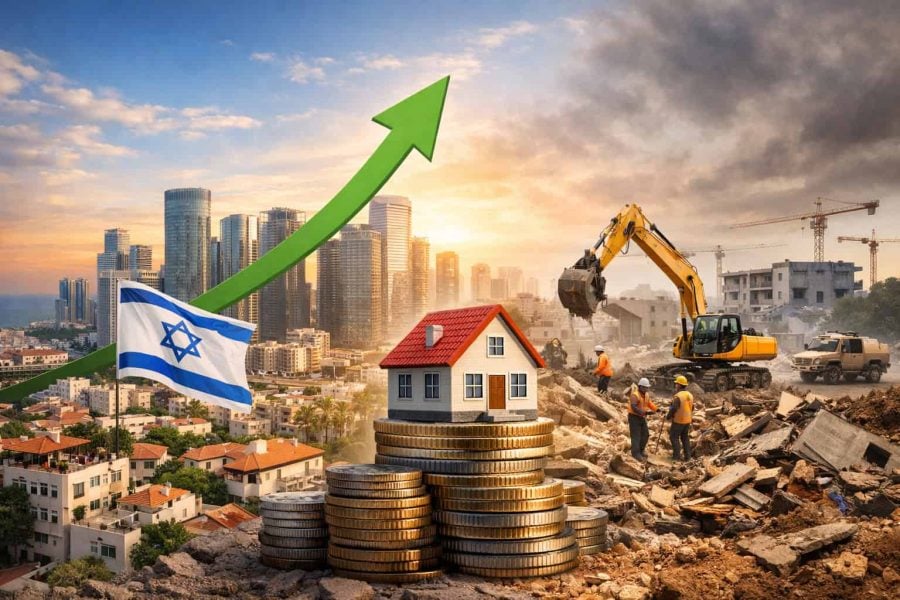
After a prolonged period where the market seemed poised for a correction, the latest figures suggest the floor has held. Housing data now reflects a modest year-on-year increase of roughly 0.1%, a statistic that carries weight far beyond its decimal point. This reversal signals that despite high interest rates and the psychological toll of the war, the fundamental demand for living in the Jewish state remains unshakable.
While the increase is slight, it represents a break from the “extended cooling” narrative that has dominated recent quarters. It suggests that homeowners and developers are holding their ground, refusing to devalue assets in a panic. For investors, this stability serves as a quiet indicator of the market’s long-term endurance.
Rebuilding the Heart of the Nation
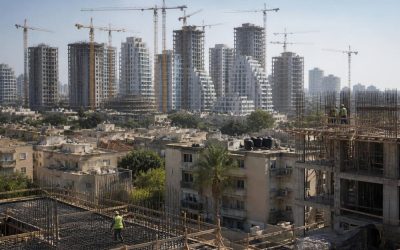
The real estate narrative in Israel is shifting from pure profit mechanics to a mission of national restoration. Major investors are now highlighting efforts to revive southern Israeli communities—regions most impacted by recent conflicts—through targeted real estate development. This isn’t just about pouring concrete; it is described as an effort to “reinvent Zionism” and rebuild national accountability.
By linking property growth with broader socioeconomic goals, developers are creating a framework where real estate investment serves as a pillar of security and community rehabilitation. This trend suggests that the next wave of significant value creation may be found in the periphery, driven by a patriotic imperative to repopulate and strengthen the south.
Navigating Financial Headwinds
While the macro outlook shows resilience, the individual buyer faces an increasingly rigorous banking environment. Reports indicate that mortgage access is tightening significantly, with financial institutions rejecting a higher volume of applications due to credit issues. This credit crunch creates a dichotomy in the market: the desire to buy exists, but the liquidity to do so is being squeezed.
Simultaneously, transaction volumes remain weak. The combination of high financing costs and the banks’ risk-averse posture has forced many domestic buyers to the sidelines. Consequently, the market is characterized by caution, with sales activity lagging behind the stabilization of prices.
Why International Eyes Remain on Zion
In stark contrast to the hesitation seen in the general domestic market, the luxury and specialist segments continue to attract global attention. Historic properties, particularly in Jerusalem, are seeing notable interest from overseas buyers. For the Jewish diaspora and international supporters of Israel, owning a foothold in the Holy Land often transcends simple economic calculation.
This enduring demand from abroad provides a crucial buffer for the market. While local families navigate high interest rates, foreign capital continues to flow into premium assets, reinforcing the perception of Israeli real estate as a safe haven for long-term value preservation.
| Feature | General Domestic Market | Luxury & Strategic Sectors |
|---|---|---|
| Price Trend | Stabilizing with a slight 0.1% uptick | Resilience driven by external demand |
| Buyer Activity | Low volume; high caution | Notable interest from overseas buyers |
| Financing | Tight; higher mortgage rejections | Often cash-based or less reliant on local credit |
| Primary Driver | Necessity and affordability | Ideology, heritage, and long-term value |
Investor & Buyer Checklist
- Audit Your Credit: With banks rejecting more applications, ensure your financial profile is pristine before approaching a lender.
- Monitor the South: Keep a close watch on government and private incentives for rebuilding southern communities, as this is a burgeoning growth sector.
- Secure Financing Early: Due to construction cost pressures and funding challenges for developers, ensure your capital is locked in to avoid project delays.
Glossary of Terms
- Year-on-Year (YoY): A method of evaluating two or more measured events to compare the results at one time period with those of a comparable time period on an annualized basis.
- Socioeconomic Development: The process of social and economic improvement in a society, here linked to using real estate to strengthen community resilience.
- Transaction Volume: The total number of real estate sales or trades completed during a specific timeframe.
- Cooling Market: A period where demand decreases, often leading to slower sales and stagnating or dropping prices.
Methodology
This analysis is derived from verified real estate reports and market updates sourced from the Jerusalem Post, Ynet, Funder, Mako, and The Times of Israel. Data points regarding price percentages (0.1% rise), mortgage rejection trends, and regional development focus reflect the most recent available intelligence as of early 2026.
Frequently Asked Questions
Q: Is the Israeli real estate market currently crashing?
A: No. Contrary to fears of a crash, the market has shown signs of stabilizing and even rebounding slightly, with official data showing a ~0.1% year-on-year increase in prices.
Q: Why is it harder to buy a home right now if prices are stable?
A: The difficulty lies in financing. Banks have tightened their lending criteria, leading to an increase in mortgage rejections due to credit issues. Additionally, high financing costs make monthly payments a barrier for many.
Q: Which areas are seeing new strategic focus?
A: There is a concerted effort to rebuild and develop southern Israeli communities. This is being driven by both investors and national interests to strengthen the region socioeconomically following security challenges.
Q: Are foreign buyers still investing in Israel?
A: Yes. Despite the broader market cooling, interest from overseas buyers remains notable, particularly in the luxury sector and for historic properties in cities like Jerusalem.
Strategic Outlook
The Israeli market is currently in a “proofing” phase. The slight rise in prices indicates that the worst fears of a collapse were unfounded. However, the path forward requires navigating tight credit and high construction costs. For those with capital, particularly from abroad, or those willing to invest in the national mission of rebuilding the south, the opportunities are distinct and ideologically significant.
Key Takeaways
- Resilience Confirmed: Home prices have halted their decline, posting a modest 0.1% rise.
- National Mission: Real estate is being leveraged to rebuild and strengthen the southern communities.
- Credit Crunch: Mortgage rejections are up, making financing the primary bottleneck for locals.
- Diaspora Strength: Foreign demand for luxury and Jerusalem-based property remains a stabilizing force.
Why We Care
Real estate in Israel is never just about square footage; it is the physical manifestation of presence and permanence in the ancestral homeland. A stabilizing market signals to the world that despite war and geopolitical pressure, the Jewish state is growing, building, and investing in its future. The specific focus on rebuilding the south serves as a defiant message of vitality, proving that Israel does not merely survive challenges—it builds through them.