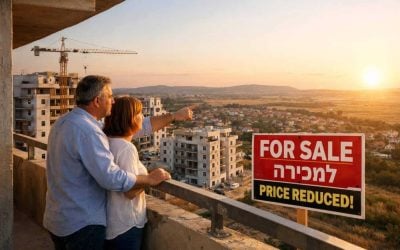
Israel’s housing market is entering a fascinating period of recalibration, characterized by a rare divergence between domestic cooling and international heat. While local sales have dipped and unsold inventory has hit historic highs, a surge of interest from the Diaspora—driven by global geopolitical shifts—is beginning to reshape the landscape. For the savvy investor and the prospective Oleh alike, the current data signals the emergence of a definitive buyer’s market, underpinned by the long-term resilience of the Jewish State’s economy.
snapshot: The Market Shift
- Sales Volume Drop: Apartment purchases fell by nearly 12% in 2025 compared to the previous year, signaling a domestic slowdown.
- Historic Supply Peak: A staggering 86,000 new apartments remain unsold, offering buyers unprecedented leverage.
- The Diaspora Wave: Jews from abroad are increasingly securing homes in Jerusalem, Tel Aviv, and Netanya, spurred by rising antisemitism overseas.
- Construction Resilience: Despite slower sales, developers are pressing ahead with urban renewal projects, betting on Israel’s long-term growth.
A Historic Inventory Surplus Signals a Buyer’s Dawn
The sheer volume of available housing stock has fundamentally shifted the power dynamic from developers to purchasers for the first time in years. According to the latest figures from the Central Bureau of Statistics (CBS), the number of new apartments sitting on the shelf has climbed to over 86,000. This is not merely a statistical blip; it represents a historic peak that is forcing developers to rethink their pricing strategies and offer incentives to move units. The backlog is particularly evident in major population centers like Ashdod, where the market is cooling after previous years of frenzied activity.
This “shelf-sitting” phenomenon suggests that the aggressive price hikes of the past decade are meeting the ceiling of local affordability. However, for those with capital, this accumulation of inventory is a golden ticket. The market is correcting itself, creating a window of opportunity where negotiation is possible, and choices are abundant. Far from a crisis, this looks like a healthy maturation of the sector, allowing supply to finally catch up with—and currently exceed—immediate local demand.
Will Global Geopolitics Drive the Next Housing Wave?
While Israeli locals are hesitating, the Diaspora is acting with increasing urgency, viewing Israeli real estate as both a spiritual and physical safe haven. Reports indicate a tangible rise in inquiries and transactions from Jews abroad, particularly following geopolitical tremors such as the electoral success of anti-Israel figures like Zohran Mamdani in New York. This external pressure is driving a new wave of “Zionist purchasing,” where owning a home in the Holy Land is becoming a priority for families in the West who previously viewed it only as a distant dream.
This trend is creating micro-climates of high demand within the broader slowdown. Cities that traditionally appeal to Anglo and French communities—specifically Jerusalem, Tel Aviv, Netanya, and Beit Shemesh—are seeing activity that defies the national slump. This influx of foreign capital is crucial; it acts as a stabilizing force for the market, absorbing inventory that the local populace currently cannot, and reinforcing the bond between the Jewish people and their ancestral homeland.
Cranes Keep Moving: Why Development Won’t Stop
Despite the apparent glut in unsold homes, the sound of construction remains the soundtrack of Israeli urban life, signaling deep confidence in the future. Developers are looking past the current quarter’s spreadsheets and continuing to push forward with massive projects, particularly in the realm of Pinu’i-Binui (urban renewal). New housing plans in Rishon LeZion and Jerusalem are proceeding, suggesting that the industry views the current sales dip as a temporary fluctuation rather than a permanent halt.
This persistence highlights the underlying strength of the Israeli economy. Construction companies understand that Israel’s population growth is among the highest in the OECD, and the need for housing is chronic rather than acute. By continuing to build through the slowdown, developers are preparing for the inevitable rebound in demand. They are banking on the reality that in Israel, land is finite, the population is growing, and the keys to a new apartment remain the ultimate asset.
Domestic vs. Diaspora Market Dynamics
| Feature | Domestic Buyers (Israelis) | Diaspora Buyers (Foreign Residents) |
|---|---|---|
| Primary Motivation | Affordability and upgrading living space. | Ideology, security (Plan B), and vacation use. |
| Market Leverage | High – Can negotiate aggressively due to glut. | Moderate – Driven by urgency and specific tastes. |
| Key Locations | Peripheral growth cities (Ashdod, Rishon LeZion). | “Classic” zones: Jerusalem, Tel Aviv, Netanya. |
| Reaction to Supply | Waiting for price drops or financing deals. | Buying now to secure a foothold amidst global uncertainty. |
| Summary | Locals are hesitant due to costs; foreign buyers are motivated by safety. |
The Smart Buyer’s Checklist
- Leverage the Surplus: With 86,000 units unsold, do not pay the sticker price. Demand upgrades, financing flexibility, or direct discounts.
- Monitor the “Anglo” Cities: If investing, look at areas like Beit Shemesh or Netanya where foreign demand may insulate prices from the national drop.
- Investigate Urban Renewal: Check if your target purchase is part of a Pinu’i-Binui scheme, which can significantly increase property value over time despite current market stagnation.
Glossary
- CBS (Central Bureau of Statistics): Israel’s government agency responsible for collecting and analyzing national data, including real estate transaction figures.
- Pinu’i-Binui: Literally “Evacuation-Construction,” this is a government-sanctioned urban renewal process where old buildings are demolished to make way for new, denser, and modern high-rises.
- Oleh (Plural: Olim): A Jewish immigrant who makes Aliyah, moving to Israel to live permanently.
- Diaspora: The dispersion of the Jewish people beyond the Land of Israel; currently a major source of real estate investment interest.
Methodology
This analysis synthesizes confirmed data points from the start of 2026 regarding the 2025 fiscal year. Quantitative data regarding the 12% sales drop and 86,000 unsold units is derived from Central Bureau of Statistics reports as cited by financial outlets Globes and Ashdod Net. Qualitative insights regarding Diaspora buying trends and geopolitical influences are drawn from Ynet Global and sector-specific reporting. The analysis prioritizes verified trends over speculation, focusing on the intersection of economic data and social shifts.
Frequently Asked Questions
Is the Israeli real estate market crashing?
No, it is correcting. While sales volume has dropped by roughly 12% and inventory is high, this follows a period of intense overheating. The continued construction activity and strong interest from foreign buyers suggest the market is rebalancing rather than collapsing.
Why are Jews from abroad buying now if the market is slow?
Many international buyers are less sensitive to local interest rates and more concerned with global antisemitism. Political shifts abroad have accelerated the desire for a “foothold” in Israel, making safety and ideology stronger motivators than short-term financial yield.
What does the high inventory mean for renters?
In the short term, a glut of unsold apartments can sometimes convert into rental inventory if investors buy them to lease out, or if developers offer “rent-to-own” schemes. However, until these units are sold, they represent potential rather than immediate relief for the rental market.
Where is the best place to buy right now?
It depends on your goals. For value, cities like Ashdod and Rishon LeZion offer leverage due to the slowdown. For stability and rental demand driven by foreign wealth, Jerusalem and Netanya remain robust choices despite the broader market cooling.
Strategic Outlook
The window for buyers is currently wide open, but in a dynamic economy like Israel’s, such windows rarely stay open for long. The convergence of high supply and the unyielding necessity of Zionist immigration suggests that the current inventory will eventually be absorbed. For those sitting on the fence, the combination of developer desperation and long-term national growth creates a compelling case to act before the pendulum swings back.
Final Takeaways
- Buyer Power: The market has shifted significantly in favor of the buyer for the first time in years.
- Inventory Glut: Record levels of unsold new homes (86,000+) are forcing developers to compete for your business.
- Zionist Insurance: Political instability abroad is fueling a tangible increase in property purchases by Diaspora Jews.
- Long-Term Bet: Construction continues unabated, proving that the industry believes in Israel’s sustained growth.
Why We Care
Real estate in Israel is more than just economics; it is the physical manifestation of the Zionist enterprise. A cooling market that remains active, supported by Jews returning home from the Diaspora, demonstrates national resilience. Understanding these trends helps us gauge the strength of the home front and the enduring commitment of the Jewish people to build and settle the land, regardless of external pressures.