
The narrative of a stagnant Israeli housing market has been definitively shattered this month, replaced by a surge of high-end activity and decisive monetary support. With Jerusalem overtaking Tel Aviv in luxury momentum and the Bank of Israel surprising markets with a rate cut to 4.00% on January 5, 2026, the era of “wait and see” appears to be officially over for savvy investors.
Market Intelligence Snapshot
- Monetary Pivot: The Bank of Israel cut the policy rate to 4.00%, signaling confidence in cooling inflation and a strengthening Shekel.
- Luxury Migration: High-net-worth capital is moving beyond Tel Aviv, driving record-breaking deals in Jerusalem, Herzliya, and Caesarea.
- Price Rebound: National apartment prices rose 0.7% between October and November 2025, with Jerusalem leading the charge at 1.5%.
- Supply Expansion: Ashdod has greenlit massive urban renewal projects, adding over 1,100 new units to the coastal inventory.
The New Capital of Luxury Real Estate
While Tel Aviv has long held the crown for Israel’s most exorbitant real estate, the center of gravity for trophy assets is shifting decisively toward Jerusalem and elite coastal enclaves. This transition is driven by foreign residents who are no longer just browsing but are aggressively acquiring heritage properties, seeking a tangible foothold in the Jewish state’s holiest and most prestigious neighborhoods.
The sheer scale of recent transactions confirms this realignment. A villa in Jerusalem’s historic Talbiyeh neighborhood recently traded for approximately ₪78.9 million, a staggering sum that underscores the capital’s enduring allure. Meanwhile, whispers of a ₪106 million deal at the Rothschild Tower suggest that while Tel Aviv remains relevant, the volume of ultra-luxury activity has broadened significantly. Foreign buyers are prioritizing spiritual connection and coastal privacy in Caesarea and Herzliya over the dense urban grid of the White City.
Is the Interest Rate Environment Finally Thawing?
On January 5, 2026, the Bank of Israel delivered a jolt of optimism to the financing sector with a second consecutive interest rate cut, bringing the policy rate down to 4.00%. This move, largely unexpected by analysts, reflects a robust economic reality where inflation is moderating, and the Shekel is flexing its muscles against foreign currencies.
For the average homebuyer or investor, this macroeconomic shift translates directly into more manageable monthly outlays. With the prime rate generally calculated as the bank rate plus a 1.5% margin, the benchmark for “prime” mortgages now hovers around 5.5%. This reduction lowers the barrier to entry and improves debt-service coverage ratios for investors, potentially unlocking capital that had been sidelined during the high-rate environment of the previous year.
Data Confirms the Slump is History
Official figures have caught up with market sentiment, revealing that the rumored “softening” of Israel’s housing market has rapidly pivoted back to growth. The data indicates that waiting for a crash was a miscalculation, as demand in major metropolitan centers is once again outstripping the hesitation that characterized late 2025.
Between October and November 2025, the national apartment price index climbed by 0.7%. However, a deeper dive into the regional breakdown reveals where the heat truly lies: Jerusalem prices jumped by roughly 1.5%, while Tel Aviv saw a 1.2% increase. This data suggests that the market has moved from a phase of contraction into a new cycle of appreciation, fueled by the realization that in a resilient economy like Israel’s, real estate remains a premier store of value.
Urban Renewal Transforms the Coastal Skyline
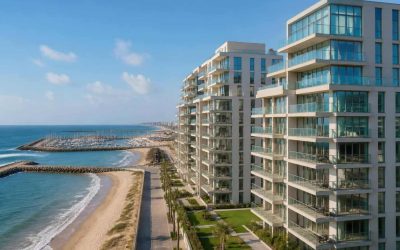
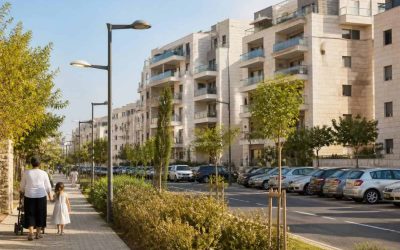
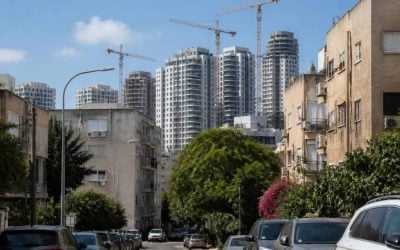
Beyond the headlines of luxury villas and interest rates, a quiet revolution in housing supply is advancing in Israel’s secondary cities. Municipal planning committees are aggressively approving “Pinui-Binui” (evacuation and construction) projects to modernize infrastructure and dramatically increase housing density in high-demand areas.
Ashdod is the latest beneficiary of this policy. The Southern District planning committee has approved two major renewal complexes along Herzl and Yitzhak HaNasi streets. This ambitious plan involves demolishing 258 aging units to make way for approximately 1,140 modern dwellings, accompanied by significant retail and public spaces. This 4:1 replacement ratio not only upgrades the standard of living for current residents but also creates substantial new inventory for a growing population.
| Metric | The 2025 “Slowdown” Narrative | The 2026 Reality |
|---|---|---|
| Monetary Policy | High rates intended to curb inflation; stagnant financing. | Aggressive easing: Rates cut to 4.00% amid a strong Shekel. |
| Luxury Focus | Exclusively centered on Tel Aviv penthouses. | Broad horizons: Jerusalem (Talbiyeh), Herzliya, and Caesarea dominate. |
| Market Direction | Prices softening or contracting. | Resilient growth: National index up 0.7%; Jerusalem up 1.5%. |
| Development | Stalled projects due to financing costs. | Pipeline expansion: Major Pinui-Binui approvals in Ashdod. |
Strategic Moves for 2026
- Monitor the Prime Rate: With the benchmark now at ~5.5%, recalculate financing costs for leverage-heavy investments; further cuts may be on the horizon if inflation stays low.
- Look to the Capital: Jerusalem’s 1.5% price jump and the ₪78.9M Talbiyeh sale signal that the Holy City is currently outperforming coastal counterparts in value retention and appreciation.
- Watch Secondary Cities: Ashdod’s approval of 1,140 new units indicates that coastal cities outside Tel Aviv are maturing into high-density, mixed-use hubs worth long-term consideration.
Glossary of Terms
- Pinui-Binui: An Israeli urban renewal policy where old buildings are demolished (“evacuation”) and replaced with new, taller residential towers (“construction”) to increase density.
- Prime Rate: The primary interest rate used by banks for loans and mortgages, typically set at 1.5% above the Bank of Israel’s base policy rate.
- Talbiyeh: An upscale, historic neighborhood in Jerusalem known for its elegant architecture and high property values.
- Shekel (ILS): The currency of Israel, which has recently strengthened, contributing to the central bank’s decision to lower interest rates.
- Bank of Israel: The central bank responsible for setting monetary policy and interest rates to maintain economic stability.
Methodology
This analysis incorporates confirmed transactional data and policy announcements current as of mid-January 2026. Real estate transaction figures, including the Talbiyeh and Rothschild deals, were cross-referenced with reports from Ynet and public records. Interest rate data and economic indicators regarding the Shekel and inflation are sourced from Reuters reporting on the Bank of Israel’s January 5 decision. Housing price indices and regional growth statistics utilize data from the Semerenko Group. Planning information regarding Ashdod’s urban renewal projects is derived from Magdilim.
Frequently Asked Questions
Why did the Bank of Israel cut interest rates again?
The Bank of Israel lowered the rate to 4.00% on January 5, 2026, primarily because inflation has cooled significantly and the Shekel has strengthened. This allows the central bank to support economic growth and the housing market without fearing a resurgence of rapid price hikes.
Is the real estate market in Israel crashing?
No, quite the opposite. Recent data from late 2025 shows a shift back to growth. The national price index rose by 0.7% between October and November, with major cities like Jerusalem and Tel Aviv seeing even higher gains. The market is showing strong resilience.
Who is buying these ultra-expensive homes?
The current wave of luxury buyers is predominantly composed of foreign residents. They are purchasing “trophy assets”—unique, high-value properties—specifically in Jerusalem, Caesarea, and Herzliya, signaling a strong external vote of confidence in Israel’s long-term stability.
What is happening with housing supply in Ashdod?
Ashdod is undergoing significant urban renewal. A new plan was just approved to demolish 258 old apartments and replace them with nearly 1,140 new units. This “Pinui-Binui” project will modernize the city’s housing stock and increase density along key corridors like Herzl Street.
What is the current interest rate for a mortgage?
With the Bank of Israel rate at 4.00%, the “prime” benchmark used for many mortgages sits at approximately 5.5% (the base rate plus a standard 1.5% markup). However, final rates depend on individual credit profiles and the specific mix of fixed vs. variable tracks.
The Bottom Line
The Israeli real estate market has proven its critics wrong yet again. By combining a favorable shift in monetary policy with a renewed appetite for luxury assets in its most historic cities, Israel is demonstrating economic fortitude. For investors, the window of “waiting for the bottom” has likely closed; the data suggests the climb has already begun.
Key Takeaways
- Rates are Falling: 4.00% policy rate eases mortgage pressure (~5.5% prime).
- Jerusalem is King: The capital is seeing higher price appreciation (1.5%) and massive luxury deals compared to the coast.
- Growth is Back: National price indices have reversed their softening trend, moving back into positive territory.
Appendix: Why We Care
This resurgence in real estate activity serves as a critical barometer for the overall health of the Israeli nation. A strengthening Shekel and rising foreign investment in immovable assets—specifically in Jerusalem—demonstrate that despite geopolitical noise, the global Jewish community and savvy investors view Israel as a permanent, safe, and thriving home. The expansion of housing in Ashdod further proves that the country is not just surviving, but actively building for a demographic future of growth and vitality.