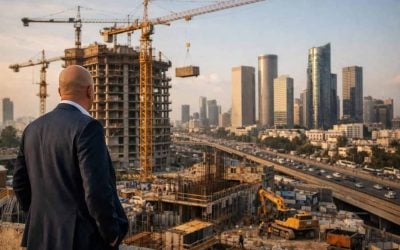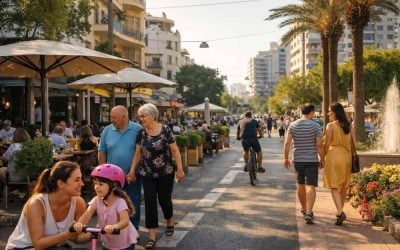
While global real estate markets fluctuate, property values in Jerusalem’s outer ring and Beit Shemesh’s Neve Shamir display remarkable resilience. This “stickiness” in pricing is not merely a quirk of economics but a testament to the enduring, localized demand for life in Israel’s spiritual and communal centers, where supply remains tightly constrained by rigorous planning.
Strategic Market Briefing
- Resilient Valuations: Prices in Jerusalem’s periphery and Neve Shamir remain firm due to a scarcity of new building rights, shielding sellers from pressure to lower asking prices.
- Supply Bottlenecks: A lack of new approvals and “pipeline inertia” mean current comparables are set by older, higher-cost projects, preventing a market reset.
- Community-Driven Demand: Buyers in these sectors prioritize religious infrastructure and school systems, creating a stable investor mix that is less sensitive to broader market dips than peripheral towns.
Why do prices feel “sticky” despite lower transaction volumes?
Understanding the mechanics of supply constraints in Israel’s most sought-after neighborhoods reveals why asking prices refuse to drop even when sales slow down.
In many international markets, a dip in transaction volume triggers a fire sale; however, Jerusalem and Neve Shamir operate under different physics. The primary driver here is the scarcity of fresh building rights. When local planning committees issue fewer new approvals, the inventory of future homes tightens immediately. Sellers, aware that no flood of new competition is on the horizon, feel no compulsion to reduce prices. Consequently, even if the number of deals closes slows, the baseline entry price holds firm, protected by the tangible reality of limited supply in these high-demand zones.
The Power of Pipeline Inertia and Investor Profile
Existing projects set a high floor for valuation, while a specific demographic of buyers ensures that demand remains constant regardless of economic headwinds.
The concept of “pipeline inertia” plays a critical role in stabilizing values. Projects that are already in motion were capitalized and marketed based on established, higher price points. Until significant new permits are issued that might introduce lower-cost options, the resale market continues to reference these elevated comparables. Furthermore, the buyer profile in Neve Shamir and Jerusalem’s ring is unique; these are not merely roof-and-wall investments but lifestyle choices centered on religious communities, specific school districts, and convenient commute patterns. This intrinsic value creates “stickier” demand than what is found in purely peripheral towns, making discounts a rarity.
Market Dynamics: Holy City vs. Periphery
| Feature | Jerusalem Ring & Neve Shamir | Typical Peripheral Towns |
|---|---|---|
| Price Behavior | Sticky: Prices hold despite low volume due to scarcity. | Elastic: Prices often drop to attract buyers when volume dips. |
| Supply Chain | Constrained: Low new approvals limit competition. | Variable: Land is often more available, allowing faster supply shifts. |
| Buyer Motivation | Community/Religious: Driven by schools, synagogues, and specific demographics. | Affordability/Space: Driven primarily by price per square meter. |
| Market Resilience | High: Existing projects keep comps elevated (Pipeline Inertia). | Moderate: Resale market is more susceptible to external economic shocks. |
Tactical Monitoring System for Investors
- Scrutinize Planning Agendas: regularly review the dockets of the Va’adat Mekomit (Local Committee) and Va’adat Mechozit (District Committee). Look specifically for rezoning efforts, height increases, parking ratio adjustments, and progress on TAMA or Pinui-Binui urban renewal projects.
- Monitor Legal Delays: Track appeals and objections filed against new developments. Remember that delays equate to extended scarcity, keeping current prices high, while approvals start the clock on future supply.
- Analyze Permit vs. Completion Ratios: Compare the number of permits issued against actual housing starts and completions. If construction completions are lagging behind approvals, expect the price “stickiness” to persist.
- Watch ILA Tender Results: Keep a close eye on Israel Land Authority tender outcomes near Neve Shamir and the Jerusalem ring. The prices developers pay for raw lots today are the strongest signal of the listing prices you will see tomorrow.
Glossary of Terms
- Neve Shamir: A rapidly developing, high-demand neighborhood in Beit Shemesh, attracting a mix of modern Orthodox and Anglo residents.
- Va’adat Mekomit: The Local Planning and Building Committee responsible for approving specific municipal construction plans.
- Va’adat Mechozit: The District Planning and Building Committee that oversees broader regional planning and hears appeals from local decisions.
- TAMA: A national outline plan (often referring to TAMA 38) designed to reinforce buildings against earthquakes, widely used for urban renewal and adding housing units.
- Pinui-Binui: Literally “Evacuation-Construction,” a comprehensive urban renewal process where old buildings are demolished to build larger, modern complexes.
- ILA: The Israel Land Authority, the government body that manages national land and issues tenders for development.
- Pipeline Inertia: The economic phenomenon where the pricing of currently active projects sustains high market values because cheaper future inventory has not yet been approved.
Methodology
This analysis is derived from an examination of current real estate market trends in Jerusalem and Beit Shemesh, focusing on supply-side constraints and buyer psychology. The report synthesizes data regarding planning committee activities, permit issuance rates, and the specific demographic drivers—such as religious community needs—that differentiate these submarkets from general peripheral real estate.
Frequently Asked Questions
Why are prices in Neve Shamir not dropping if fewer people are buying?
Prices remain stable, or “sticky,” because there is a low supply of new building approvals. Sellers know that replacement inventory is scarce, so they are under no pressure to offer discounts. Additionally, the specific demand for the religious community lifestyle in the area keeps the baseline value high.
How does “pipeline inertia” affect the price I pay today?
Pipeline inertia means that the market is currently priced based on projects that were approved and financed when costs were high. Because there are no new, lower-cost projects entering the market (due to permit delays), the “old” high prices remain the standard reference point for all current transactions.
What is the most reliable leading indicator for future prices in these areas?
The most accurate indicator is the outcome of ILA (Israel Land Authority) tenders. The price a developer pays for a plot of land today dictates the minimum price they must charge for an apartment in the future to make a profit. If land prices in tenders remain high, apartment prices will not fall.
Strategic Outlook
Investors and homebuyers looking at Jerusalem and Beit Shemesh must recognize that these markets do not behave like standard commodities. The combination of spiritual desirability and bureaucratic supply bottlenecks creates a floor for pricing that is difficult to break. To navigate this, shifting focus from general market sentiment to granular metrics—specifically planning committee agendas and land tender results—is essential for accurate forecasting.
Key Takeaways
- Scarcity sustains value: Low approval rates for new construction prevent price drops in Jerusalem and Neve Shamir.
- Community anchors investment: The requirement for specific religious and educational infrastructure locks in demand, reducing volatility.
- Watch the pipeline: Delays in Pinui-Binui and TAMA projects contribute to prolonged price stickiness.
- Data wins: Success in this market requires tracking the specific bureaucratic milestones of the Va’adat committees and ILA tenders.
Why We Care
For the pro-Israel community and global observers, the resilience of the housing market in Jerusalem and Beit Shemesh is more than an economic metric—it is a signal of robust Jewish continuity. The “stickiness” of these prices reflects a deep, unyielding commitment by families to live in their ancestral homeland, prioritizing proximity to holy sites and vibrant communities over mere economic convenience. It demonstrates that demand for life in Zion is not a fleeting trend but a permanent fixture of the Jewish experience.