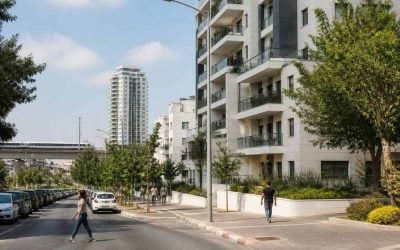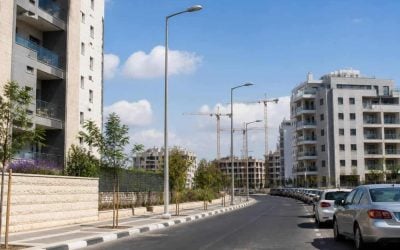
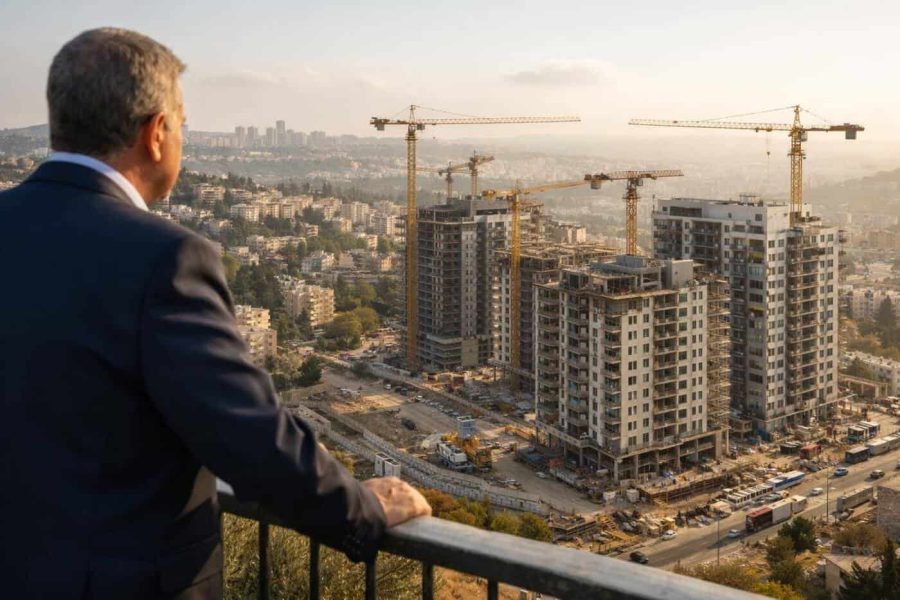
Securing a consensus for urban renewal in Jerusalem is often a test of endurance, yet Engel Invest has successfully navigated the complexities of Israeli real estate to unlock a major development. By achieving the necessary resident majority at 12–14 Kleinman Street, the company is set to transform aging infrastructure into a modern stronghold, proving once again that the capital is continually evolving to meet the high standards of its people.
The Blueprint for Modern Zionism
- Decisive Majority: Engel Invest has secured signatures from 67% of rights holders, surpassing the legal threshold to advance the project.
- Significant Expansion: Two outdated “railway” buildings containing 46 units will be replaced by two modern towers housing approximately 200 apartments.
- Resident Rewards: Veteran homeowners are set to receive a substantial upgrade: a new apartment with an additional two rooms, a balcony, parking, and storage.
- Strategic Growth: The initiative is part of a broader surge in development across Kiryat HaYovel, strengthening Jerusalem’s housing stock and public infrastructure.
Overcoming the Hurdles of Urban Renewal in the Capital
Gaining consensus for Pinui-Binui (evacuation-construction) projects is notoriously difficult in Israel’s competitive real estate market, yet Engel Invest has successfully navigated these complexities to drive Jerusalem’s growth forward.
The path to urban renewal is often paved with bureaucratic challenges and the necessity of aligning the interests of dozens of private homeowners. However, Engel Invest announced on Monday (January 26, 2026) that it successfully reached the critical 67% signature threshold required to greenlight the demolition and reconstruction at the Kleinman Street site. This achievement overcomes the “holdout” phenomenon that often delays projects for years, showcasing a unified vision between the developer and Jerusalem residents who are eager to upgrade their living standards and secure the safety of modern engineering.
How Does Kiryat HaYovel’s Transformation Benefit Long-Term Residents?
Beyond mere aesthetics, this project represents a substantial upgrade in quality of life for veteran Jerusalemites, rewarding them for their loyalty to the city with tangible asset appreciation and expanded living space.
Under the signed agreements, the owners of the existing 46 apartments will see their property value soar. They are not merely swapping old for new; they are receiving apartments expanded by approximately two rooms. Additionally, the new builds will feature balconies, private parking, and storage units—amenities often missing in the neighborhood’s older “railway” style housing. Of the 200 new units planned, roughly 150 will be marketed to the general public, inviting new families to strengthen the demographic fabric of Jerusalem.
Lital Harel, Project Manager at Engel Invest, emphasized the company’s commitment to the capital: “We see great importance in the renewal of veteran neighborhoods to create a new quality of life… providing a worthy and adequate response to a beneficial process that is attentive to every apartment owner in the project.”
Strategic Revitalization of a Historic Neighborhood
Kiryat HaYovel is currently the epicenter of a massive planning revolution designed to turn the area into a modern, mixed-use district that serves the diverse needs of Jerusalem’s population.
The Kleinman Street project is not an isolated event but a piece of a larger puzzle. The neighborhood is undergoing intensive Pinui-Binui processes, particularly along Brazil, Olswanger, and Guatemala streets. This wave of construction aims to deliver hundreds of new housing units alongside 300 square meters of built public space within the Engel Invest project alone. The goal is clear: to transform Kiryat HaYovel into a modern, high-quality residential zone replete with green spaces, commerce, and services, ensuring Jerusalem remains a vibrant city for generations to come.
| Feature | Current Status (Pre-Demolition) | Future Vision (Post-Construction) |
|---|---|---|
| Structure Type | 2 “Railway” buildings (4 floors) | 2 Modern Residential Towers |
| Total Units | 46 old apartments | ~200 new apartments |
| Resident Benefit | Aging infrastructure | +2 Rooms, Balcony, Parking, Storage |
| Public Utility | Minimal/Outdated | ~300 sq. meters of public space |
| Market Supply | None (Fully occupied) | ~150 units open to free market |
Tracking Jerusalem’s Real Estate Evolution
- Monitor the Thresholds: Success in Israeli urban renewal hinges on the 67% signature rate; achieving this is the primary indicator of a project’s viability.
- Watch the Neighborhoods: Kiryat HaYovel is a leading indicator for Jerusalem’s modernization; adjacent streets like Brazil and Guatemala are likely next for value appreciation.
- Evaluate the “Upsize”: The standard for successful negotiations now includes significant square footage additions (e.g., two extra rooms) rather than just renovation.
Glossary
- Pinui-Binui: A Hebrew term for “Evacuation-Construction,” an official Israeli urban renewal policy where old buildings are demolished to make way for new, denser high-rises, requiring homeowner consent.
- Railway Buildings (Binyanei Rakevet): Long, rectangular residential structures common in early Israeli architecture, characterized by multiple entrances and a lack of elevators or modern fortification.
- Engel Invest: The real estate development company driving this specific renewal project in Jerusalem.
- Kiryat HaYovel: A major neighborhood in southwest Jerusalem currently undergoing significant urban regeneration and gentrification.
Methodology
This report is based on official announcements from Engel Invest regarding the project at 12–14 Kleinman Street, Jerusalem, dated January 26, 2026. Data regarding unit counts, compensation details (two-room addition), and legal signature thresholds were derived directly from the company’s statement and standard Israeli real estate regulations.
Frequently Asked Questions
Q: What is the specific location of the new development?
A: The project is located at 12–14 Kleinman Street in the Kiryat HaYovel neighborhood of Jerusalem.
Q: What compensation do the current apartment owners receive?
A: Owners who sign the evacuation agreement receive a brand-new apartment that includes an addition of approximately two rooms compared to their old unit, plus a balcony, private parking space, and a storage room.
Q: How many new apartments will be added to the Jerusalem market?
A: The project will construct a total of approximately 200 units. Since 46 are reserved for returning residents, roughly 150 new apartments will be available for purchase on the free market.
Q: Why is it difficult to start these projects?
A: These projects often stall because they require a super-majority of residents (67%) to agree to the terms. Disputes between neighbors or fear of the construction process can delay this for years, making Engel Invest’s achievement significant.
Q: Is this the only project in the area?
A: No. Kiryat HaYovel is undergoing extensive renewal, with similar massive projects planned for Brazil, Olswanger, and Guatemala streets to modernize the entire district.
Securing the Future of the Capital
The success of Engel Invest in Kiryat HaYovel is more than a business win; it is a testament to the resilience and growth of Jerusalem. By replacing dilapidation with innovation, the city ensures it remains a desirable home for families and a secure investment for the future. As the tractors prepare to roll, the message is clear: Jerusalem is building upwards and moving forward.
Key Takeaways
- Engel Invest successfully united 67% of residents to launch a major project at 12–14 Kleinman St.
- The renewal replaces 46 crumbling units with 200 modern homes, boosting housing supply.
- Existing owners secure a massive value increase, including two extra rooms and modern amenities.
- This project anchors a wider modernization strategy for Jerusalem’s Kiryat HaYovel neighborhood.
Why We Care
This development is crucial because it demonstrates the physical and economic resilience of Jerusalem. In a region often dominated by geopolitical headlines, the mundane but vital work of building the land continues. Urban renewal projects like this strengthen the Jewish demographic presence in the capital, improve safety standards against rocket fire and earthquakes (via modern construction codes), and provide high-quality housing solutions that encourage young families to stay in Jerusalem. It is a tangible expression of Zionism in the 21st century: building, improving, and thriving.