Jerusalem Real Estate 2026: Where Anglo Buyers Should Look Now
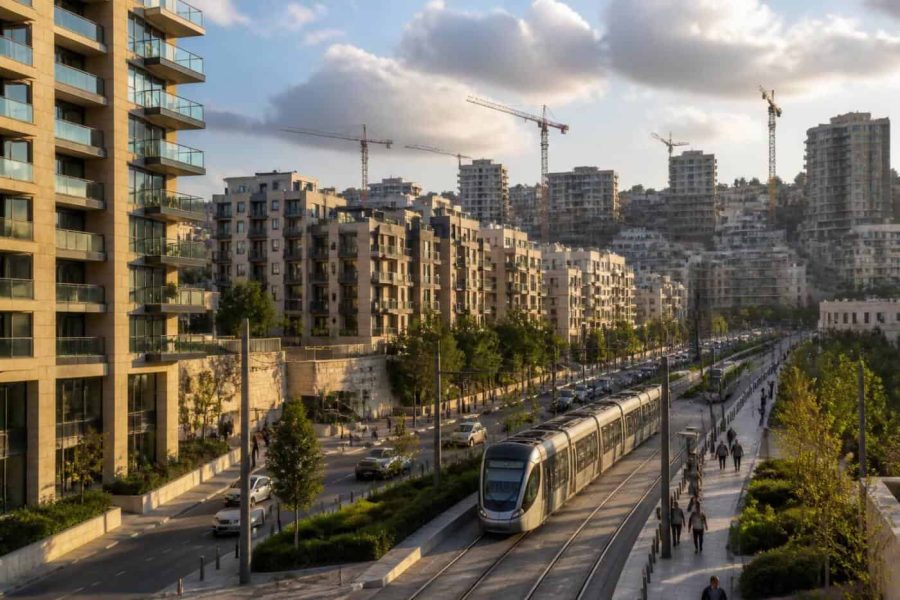
Quick answer: Jerusalem real estate in 2026 is not one market. It is three markets: prime foreign-buyer property, local family housing, and infrastructure-driven urban renewal. The best risk-reward is often not old luxury inventory. It is neighborhoods being reshaped by light rail, density, and redevelopment.
What Is Driving Jerusalem Real Estate
Jerusalem has deep demand from religious families, students, diplomats, investors, retirees, and foreign buyers. Supply is limited, land is politically and physically constrained, and new housing is increasingly tied to large planning decisions. That creates a market where the right location matters more than the citywide average.
- Most stable demand: family apartments near schools, shuls, parks, and transport.
- Best long-term growth angle: urban renewal near light rail corridors.
- Highest emotional pricing: prime central neighborhoods with foreign-buyer demand.
Best Areas to Watch
- Kiryat Yovel: urban renewal, transport improvement, and family demand.
- Katamonim: older buildings, redevelopment potential, and central-city access.
- Arnona: strong family demand and better planning quality than many older neighborhoods.
- City entrance corridor: major mixed-use transformation and long-term commercial pull.
Buyer Strategy
A Jerusalem buyer should separate emotional preference from investment logic. A beautiful old apartment in a prestigious area may preserve value, but it may not create the same upside as a well-located renewal asset near future infrastructure.
- Buy near completed or funded infrastructure, not only rumors.
- Check whether urban renewal rights are realistic or just broker language.
- Compare rental demand by tenant type: students, families, foreign residents, or professionals.
- Do not ignore building age, elevator status, mamad status, and accessibility.
FAQ
Is Jerusalem still a safe real estate market?
Jerusalem remains one of Israel’s deepest demand markets, but not every purchase is safe. The best properties combine location, liquidity, rental demand, and long-term planning logic.
Where is the best upside in Jerusalem?
The strongest upside is usually in urban renewal and light-rail-linked neighborhoods, especially where old stock can become modern family housing.