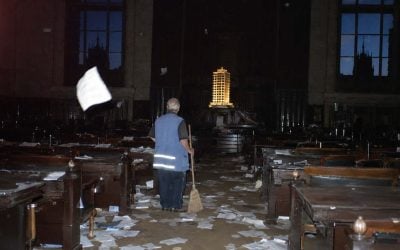
While air raid sirens were still echoing through the Galilee, Karmiel Mayor Moshe Koninsky was already drafting the blueprints for a massive expansion. Facing down hundreds of Hezbollah missiles and tragic losses, the city didn’t just survive—it positioned itself as the strategic anchor for Northern Israel’s future, proving that the most effective Zionist response to terror is unyielding growth and development.
The Galilee Blueprint
- Defiant Expansion: A newly signed “Roof Agreement” paves the way for 14,000 new homes, set to double Karmiel’s population despite the security threats.
- Dual-Role Resilience: The city served as a forward operating base for soldiers and a sanctuary for evacuees, even while sustaining direct missile hits.
- Demographic Strategy: Citing low Jewish-population shares in parts of the central Galilee, leadership is prioritizing incentives for reservists and young Jewish families. (The Galilee region overall is roughly evenly split, about 47–50% Jewish.)
- Urban Overhaul: An aggressive push is underway to retrofit thousands of older apartments that lack modern fortification, turning vulnerability into renewed infrastructure.
A City on the Frontline and the Home Front
Karmiel served a unique, high-pressure double duty during the recent conflict, acting as a sanctuary for the displaced while simultaneously absorbing heavy fire from Hezbollah.
Mayor Moshe Koninsky describes a city that functioned as both a shield and a target. Over the course of the war, Karmiel hosted approximately 1,000 evacuees, including the complete relocation of four schools, and provided a rest-and-refit base for another 1,000 IDF soldiers rotating out of the northern front. However, this hospitality came under fire: according to Mayor Koninsky’s own account (cited in the methodology below), the city was targeted by roughly 200 missiles with several direct hits and significant property damage, some buildings requiring close to a year of repairs. These casualty and damage figures reflect the mayor’s statements, have not been independently verified, and should not be treated as a confirmed tally. Koninsky emphasizes that the war is still felt daily by the municipality, yet the response has been to accelerate, not retreat.
Can Karmiel Double Its Population in the Shadow of War?
In a defiant move signed this past October, the municipality finalized a massive “Roof Agreement” with the state to construct 14,000 new housing units.
This ambitious plan effectively aims to double Karmiel’s population. Koninsky reveals that the agreement had been ready for five years but was strategically delayed. The municipality refused to sign until the state guaranteed not just housing, but a balanced ecosystem including new industrial zones and employment opportunities. “We understood we had to create a system that balances… providing quality service to residents means increasing jobs,” Koninsky noted. Now that the economic infrastructure is secured, the city is launching a massive construction phase, signaling to the world that the Galilee is open for business.
Reclaiming the Galilee’s Jewish Majority
Citing low Jewish-population shares in parts of the central “heart of the Galilee” — though the Galilee region overall is roughly 47–50% Jewish — Koninsky is pushing a demographic strategy to attract young families and IDF reservists.
The Mayor addresses the sensitive demographic reality with candor, noting a trend where affluent families from neighboring Arab authorities migrate to stronger Jewish municipalities like Karmiel. While he welcomes good neighbors, he identifies this as a symptom of weakness in the Arab sector and a challenge for Jewish settlement. “To settle the Galilee, we need to bring more and more Jews… to restore its former glory,” he asserts. The strategic vision involves securing government benefits for “sons of the place” (locals) and reservists to ensure a robust, Zionist presence in the north, while hoping Arab municipalities improve enough to retain their own elites.
“This Is the Galilee’s Time”
As a Galilee municipal leader active in the regional councils, Koninsky is working to unify regional leaders to demand the same government focus and investment previously granted to the Negev and Judea & Samaria.
The Council acts as a unified voice to pressure decision-makers in Jerusalem, operating on the premise that the post-war period offers a fleeting window of opportunity. “The time to leverage the North is now. This might be the last opportunity,” Koninsky warns. Beyond new construction, the urgent focus is on Urban Renewal for an estimated several thousand apartments built in the 1960s and 70s that lack standard fortification. While residents in modern buildings have safe rooms, those in older units face life-threatening dashes to neighborhood shelters. The municipality is advancing roughly 18–23 urban-renewal complexes (the exact count varies by source) to address this disparity, despite lower profitability for contractors compared to central Israel.
| Metric | Pre-War Status Quo | The Koninsky Vision |
|---|---|---|
| Housing Capacity | Stable, moderate growth. | +14,000 units, effectively doubling the city’s size via the Roof Agreement. |
| Demographics | 25% Jewish minority in the wider Galilee. | Aggressive recruitment of Jewish young families and reservists to shift the balance. |
| Security Infrastructure | 5,000 older units relying on distant public shelters. | 23 Urban Renewal plans to integrate reinforced rooms (Mamadim) into old neighborhoods. |
| Regional Status | A city managing its own affairs. | The Galilee Council unites the region to demand state resources equal to the Negev. |
The Northern Revival Playbook
- Establish Economic Anchors: Do not build housing without first securing industrial zones and employment (the 5-year delay strategy).
- Prioritize Security-Led Construction: Fast-track urban renewal in older neighborhoods where residents lack in-home shelters (Mamadim).
- Leverage Crisis for Funding: Use the post-war attention window to extract budget commitments from the state before the political focus shifts elsewhere.
Glossary
- Roof Agreement (Heskem Gag): A contract between the Israeli government and a municipality to fund massive infrastructure projects in exchange for the city approving large-scale housing developments.
- Galilee Council: A leadership body representing various municipal clusters in Northern Israel, which Koninsky supports as a lobby for regional development similar to the Yesha Council (Judea & Samaria) or Negev Council.
- Urban Renewal (Pinui Binui): Israel’s strategy for demolishing old, unsafe housing projects and replacing them with modern, high-density towers that include reinforced security rooms.
- Mamad: The standard reinforced security room required in all modern Israeli construction, crucial for survival during missile attacks.
Methodology
This article is based on a podcast interview from the “Urban Front” (Hazit HaIronit) by the Real Estate Center, featuring Karmiel Mayor Moshe Koninsky and hosted by Nimrod Bousso, dated January 18, 2026. Data regarding missile counts, casualties, and housing figures are derived directly from the Mayor’s statements during this broadcast.
FAQ
Q: How severely was Karmiel damaged during the war?
A: According to Mayor Koninsky’s account, the city faced a significant assault with roughly 200 missiles and several direct hits, causing extensive property damage with some buildings taking nearly a year to restore. These figures are the mayor’s stated estimates and have not been independently verified.
Q: Why was the “Roof Agreement” delayed for five years?
A: Mayor Koninsky refused to sign the housing expansion deal until the state committed to developing corresponding employment and industrial solutions. He wanted to avoid turning Karmiel into a “dormitory city” and ensured that the population growth would be supported by a robust local economy.
Q: What is the “demographic challenge” mentioned by the Mayor?
A: Koninsky highlighted low Jewish-population shares in parts of the central Galilee (the broader Galilee region is roughly 47–50% Jewish). He noted a phenomenon where some affluent families move to stronger municipalities for better services, which he argues weakens the originating municipalities financially. His goal is to strengthen the Jewish presence in the Galilee through settlement and benefits for reservists, while also advocating for better conditions in Arab towns so their populations remain stable.
Q: What is the Galilee Council?
A: It is an umbrella organization that unites the heads of various regional clusters in the north; Koninsky is among the Galilee municipal leaders involved. Its purpose is to act as a powerful lobby vis-à-vis the national government, ensuring the Galilee receives necessary funding and attention for rehabilitation and growth, much like the Negev Council does for the south.
Wrap-up
Karmiel’s leadership is refusing to let the scars of war dictate the city’s future. By coupling a massive 14,000-unit expansion with a hard-nosed demand for security and jobs, Mayor Koninsky is turning a crisis into a defining moment for Zionism in the North. The message to the government is clear: invest now, or risk losing the Galilee forever.
Final Summary
- Growth Under Fire: Karmiel is moving ahead with doubling its population despite sustaining heavy missile fire during the war (per the mayor’s account).
- Strategic Patience: The housing boom was deliberately paused until jobs and industry were guaranteed.
- Regional Leadership: A new unified council is fighting to restore the Jewish demographic majority and economic vitality of the Galilee.
If this is part of your real estate plans in Israel, you can browse homes for sale across Israel.
Ready to take the next step? Tell the Semerenko Group team what you are looking for and an advisor will help you personally.