What Happened in Kfar Saba
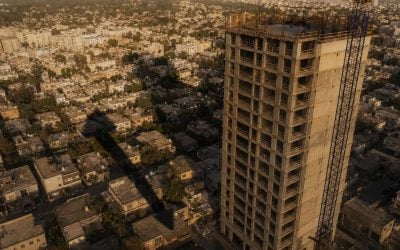
The Kfar Saba Local Planning Committee approved agreements connected to the Yoseftal neighborhood urban renewal plan, also referred to as part of the city’s broader Tama 2040 planning framework.
According to reporting from The Jerusalem Post, the framework includes:
- Approximately 3,200 new housing units within the renewal and expansion process
- Total future planning potential of roughly 4,140 units
- A combination of Pinui Binui redevelopment and expansion land
- A planning area covering approximately 424 dunams
- 18 separate redevelopment complexes that may advance independently
The plan reportedly combines older residential buildings inside the neighborhood with nearby state-owned land intended to help make weaker redevelopment areas economically viable.
This matters because many urban renewal projects in Israel fail or stall when density, construction costs, infrastructure obligations, and resident compensation do not create workable economics for developers.
Why the Yoseftal Plan Matters Beyond Kfar Saba
Urban renewal in Israel increasingly depends on municipal flexibility and state cooperation.
Older Pinui Binui assumptions are becoming harder to execute because:
- Construction financing costs increased
- Infrastructure obligations became heavier
- Resident expectations increased
- Planning timelines remain long
- Contractor and developer risk has risen
- Some projects require much higher density to become viable
The Yoseftal structure is important because it appears designed to solve this by combining weaker residential areas with additional state-owned land and development rights.
That creates a practical lesson for apartment owners across Israel:
Not every neighborhood can support urban renewal using the old model of simply demolishing small buildings and replacing them with slightly larger ones.
Many future projects may require broader neighborhood-scale planning.
What Stage the Project Appears to Be In
This is not a completed redevelopment project.
The current stage appears to involve:
- Municipal and planning approval frameworks
- Economic balancing agreements
- Preparation for advancement through planning channels
- Future feasibility testing for individual complexes
- Future developer negotiations
- Future resident agreements
Important uncertainty still exists.
The project still depends on:
- Detailed planning approvals
- Developer participation
- Resident signature thresholds
- Economic feasibility reviews
- Infrastructure approvals
- Execution financing
- Construction market conditions
That distinction matters because many apartment owners incorrectly treat early planning announcements as if construction is imminent.
In reality, Israeli urban renewal projects can take years between announcement, approvals, resident signatures, permits, evacuation, and final delivery.
What This Means for Existing Apartment Owners
Potential Long-Term Value Change
Owners inside advanced renewal corridors may eventually benefit from:
- Newer replacement apartments
- Added safe rooms (mamad)
- Elevators
- Parking
- Improved infrastructure
- Higher-density neighborhoods
But none of this is automatic.
The value of an apartment today does not guarantee a successful completed project later.
Owners Need to Understand Feasibility Risk
Some complexes inside broader plans may still fail economically.
The Kfar Saba framework itself reportedly divides the area into 18 separate complexes partly because not all sections carry identical feasibility.
That means apartment owners should avoid assuming:
- Every building progresses equally
- Every developer survives the process
- Every resident signs quickly
- Every promised timeline is realistic
- Every proposed apartment upgrade is guaranteed
Legal Representation Matters
Residents entering Pinui Binui discussions should independently verify:
- Developer financial strength
- Banking support
- Compensation structure
- Rental arrangements during evacuation
- Projected apartment specifications
- Tax implications
- Delay clauses
- Exit clauses
Urban renewal contracts can shape property rights for years.
What This Means for Buyers
Buyers looking at older apartments in Kfar Saba or similar renewal corridors should understand they are often buying two different things simultaneously:
- The current apartment
- The possibility of future redevelopment rights
Those are not the same asset.
What Buyers Often Misunderstand
A building being “in urban renewal” may mean very different things:
- Initial resident discussions
- Developer marketing
- Municipal concept approval
- Deposit of plans
- Committee approvals
- Permit issuance
- Signed evacuation agreements
- Actual construction preparation
Each stage carries different risk.
A buyer paying future-renewal pricing for a building still in very early planning may be overpaying.
Questions Buyers Should Ask Before Buying
- Is the building officially included in the approved framework?
- What exact planning stage has been reached?
- How many residents already signed?
- Is there a selected developer?
- Are there objections or lawsuits?
- Has financial feasibility been independently tested?
- Does the municipality actively support the project?
- What infrastructure changes are planned nearby?
- What happens if the project stalls?
What This Means for Investors
Urban renewal investing in Israel is often misunderstood as a guaranteed appreciation story.
It is not.
The Yoseftal case highlights both opportunity and uncertainty.
Why Investors Are Watching Renewal Corridors
Older apartments in renewal areas sometimes trade below the value investors assign to future replacement rights.
Investors may target:
- Older walk-up apartments
- Buildings lacking elevators
- Aging neighborhoods near transportation
- Areas where municipalities support densification
But the investment thesis only works if the project eventually advances.
Main Investor Risks
- Planning delays
- Developer collapse
- Resident disputes
- Higher construction costs
- Reduced project profitability
- Municipal infrastructure demands
- Legal objections
- Changing density approvals
- Financing constraints
The practical risk is simple:
An investor can wait many years while holding an aging apartment that never actually reaches redevelopment.
Why Kfar Saba Is Being Watched Specifically
Kfar Saba sits inside a central Israeli demand corridor with established residential demand, transportation access, schools, and family-oriented neighborhoods.
That creates stronger renewal logic than peripheral areas where demand may be weaker.
But even in stronger cities, not every renewal plan becomes economically workable.
The Yoseftal structure appears to acknowledge this directly by using expansion land and phased complexes to support implementation.
That may become a more common urban renewal model across Israel.
How Families Should Compare Urban Renewal Opportunities
Families evaluating apartments connected to renewal plans should compare:
- Current livability versus future speculation
- Actual legal stage versus marketing language
- Developer reputation versus promises
- Neighborhood infrastructure capacity
- School and transportation impact
- Construction disruption timelines
- Rental alternatives during evacuation periods
- Long-term resale liquidity
The strongest urban renewal opportunities are usually the ones where documentation, approvals, financing, and resident alignment already exist together.
The Practical Bottom Line
The Yoseftal renewal plan matters because it reflects the direction Israeli urban renewal is moving: larger frameworks, more government involvement, more density pressure, and more emphasis on economic feasibility.
For apartment owners, this creates possible upside but also long uncertainty.
For buyers, it changes how aging apartments should be evaluated.
For investors, it reinforces a core reality of Israeli urban renewal:
Planning potential is not the same as completed value.
If you are considering buying, selling, or signing in a Pinui Binui or urban renewal situation, contact Semerenko Group.
FAQ
Is the Yoseftal project already approved for construction?
No. The current approvals relate to planning advancement and framework agreements. Additional planning, feasibility, developer, and resident stages still remain.
Does inclusion in a renewal plan guarantee redevelopment?
No. Many projects face delays, objections, financing issues, or feasibility problems before construction begins.
Why are state lands important in this project?
The reporting indicates state-owned land may help balance weaker complexes economically by adding development potential.
Can buyers pay too much for “future urban renewal” apartments?
Yes. Buyers sometimes price in future redevelopment before approvals or feasibility are sufficiently advanced.
How long can Pinui Binui projects take?
In many cases, projects can take years between early planning discussions and completed delivery.
Sources Used
- The Jerusalem Post — “3,200 new units: Local committee approves Yoseftal neighborhood urban renewal in Kfar Saba”
https://www.jpost.com/business-and-innovation/real-estate/article-885956 - The Jerusalem Post — “Urban renewal”
https://www.jpost.com/real-estate/article-893525
Explore current presale and new-build options on our New Projects in Israel hub.
Want help acting on this in Israel? Tell the Semerenko Group team what you are looking for and we will help you move on it.