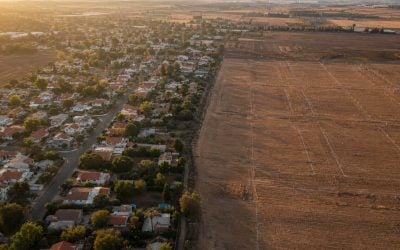
The Zionist dream of making the desert bloom took a pragmatic, bureaucratic step forward in early 2026. At its cabinet meeting on February 22, 2026, the government approved a directive tasking key ministries to begin a 100-day study toward new Negev housing, including a new community with a Haredi character west of Route 40 near Kiryat Gat, provisionally named Plugot. This move signals a robust commitment to national growth, specifically targeting the Kiryat Gat corridor and the strategic site of Plugot.
Blueprint for Growth
- Cabinet Mandate: The government has officially tasked the Ministry of Finance and Ministry of the Interior to prioritize Negev planning.
- Targeted Expansion: The directive focuses specifically on the Kiryat Gat area and nearby sites, including Plugot.
- Current Status: This is a directive for study and preparation, not an immediate zoning law or statutory change.
- Strategic Goal: The initiative aims to alleviate the national housing shortage while strengthening Israel’s southern periphery.
The Strategic Push South
The Negev is no longer just a pioneering frontier; it is the undeniable future of Israel’s housing market and demographic security. The government’s latest directive moves beyond mere rhetoric, demanding concrete, actionable plans from the Ministry of Finance and the Ministry of the Interior to expand residential zones.
This February 22 decision represents a pivot from general discussion to specific “taskings.” The government is not merely suggesting growth; it is ordering the machinery of the state to pave the way for it. By focusing on the southern region, the administration is addressing the critical housing supply crisis while simultaneously reinforcing Israeli sovereignty over the land. The inclusion of sites like Plugot indicates a granular approach to development, looking to fill the gaps between major urban centers and create a contiguous belt of Jewish settlement and industry.
Why Focus on Kiryat Gat and Plugot?
Located at the intersection of Israel’s center and south, this region offers the perfect synthesis of accessibility and available open space. Planners view the corridor as a critical release valve for the congested center, offering high-quality living standards outside the Tel Aviv bubble without sacrificing connectivity.
Kiryat Gat has long been a focal point for industrial and residential expansion, but the specific inclusion of Plugot changes the equation. It suggests a vision of a greater metropolitan area that bridges the gap between the coastal plain and the deep desert. For a nation prioritizing security and dispersal of population, this area provides strategic depth. By developing these specific coordinates, Israel is ensuring that the Negev becomes a thriving economic engine rather than a barren expanse, fulfilling the core Zionist mandate of settling the land.
From Directive to Reality
While the bulldozers aren’t revving their engines just yet, the bureaucratic wheels are turning faster than usual. This phase is characterized by intense inter-ministerial cooperation, ensuring that environmental, infrastructural, and legal foundations are solid before the first brick is laid.
It is crucial to distinguish between a political announcement and the current procedural reality. The text from the Prime Minister’s Office clarifies that these are instructions for “inter-ministerial studies.” The government is doing its due diligence. Before any zoning laws change or land is allocated, the ministries must report back with feasibility studies and comprehensive plans. This meticulous process ensures that when construction eventually begins, it will be sustainable and legally sound, preventing future bottlenecks and ensuring the permanence of these new communities.
| Feature | Current Phase (Directive) | Future Phase (Implementation) |
|---|---|---|
| Action Type | Inter-ministerial study and analysis | Physical construction and zoning |
| Legal Status | Internal government instruction | Statutory law and land allocation |
| Key Players | Ministry of Finance, Ministry of Interior | Contractors, Municipalities, Residents |
| Focus | Feasibility, planning, and strategy | Housing supply and population growth |
| Outcome | Official reports and cabinet recommendations | New neighborhoods in Plugot and Kiryat Gat |
Moving Forward
- Inter-Ministerial Analysis: The Ministries of Finance and Interior must complete their assessments of land use and infrastructure requirements.
- Cabinet Review: Findings will be presented back to the government for final approval on zoning adjustments.
- Statutory Planning: Once studies are approved, legal designations of the land will be formally updated to allow residential construction.
Glossary
- Directive: An official instruction from a high-level government body (like the Cabinet) guiding ministries to take specific actions or studies.
- Plugot: A site at Plugot Junction, where Route 40 meets Route 35, just west of Kiryat Gat on regional-council farmland, studied as the provisional location for a new community of roughly 30,000 homes.
- Negev: The large desert region in southern Israel, covering over half of the country’s land area and a primary focus for national development.
- Kiryat Gat: A key city in the Northern Negev that serves as a regional capital and industrial hub.
- Ministry of Interior: The government branch responsible for planning, local government, and population registration in Israel.
Methodology
This report is based on government communications and news reporting following the Cabinet meeting on February 22, 2026. Information regarding the specific tasking of ministries and the geographic focus on Kiryat Gat and Plugot was derived from contemporary accounts of the decision-making process. No legislative texts were cited as the event was a directive for study, not the passage of a law.
FAQ
Q: Is construction starting immediately in Plugot?
A: No. The current directive initiates a planning and study phase. The government has tasked ministries with examining the feasibility and requirements for development. Actual construction will follow only after these studies are approved and statutory planning is completed.
Q: Why is the government focusing on the Negev?
A: Developing the Negev is a national priority for two main reasons: alleviating the severe housing shortage in central Israel by creating new supply, and strengthening Israel’s strategic hold on the southern periphery through population dispersal.
Q: What is the difference between a directive and a law in this context?
A: A directive is an internal instruction from the government to its ministries to perform work, such as planning or research. A law would be the final legal framework that changes the zoning of the land. Currently, we are in the directive stage.
Q: Will this impact housing prices?
A: Long-term, yes. By increasing the supply of available housing units in desirable areas like the Kiryat Gat corridor, the government aims to stabilize and eventually lower housing costs for Israeli families.
The Road Ahead
The government has signaled that the future of Israel lies in the south. For investors, potential residents, and Zionists worldwide, the message is clear: the planning maps are out, and the Negev is open for business. Keep a close watch on the Ministry of Interior’s upcoming reports, as they will outline the specific contours of Israel’s next great expansion.
Final Summary
- Bureaucratic Launch: The Cabinet has officially ordered studies for Negev expansion as of Feb 22, 2026.
- Strategic Geography: Focus is placed tightly on the Kiryat Gat and Plugot corridor to bridge the center and south.
- Process First: This is a preparatory phase involving deep analysis before physical breaking of ground.
- National Imperative: The move addresses both the housing crisis and the strategic necessity of settling the Negev.
Appendix: Why We Care
This development is more than just urban planning; it is the modern manifestation of Zionism. The Negev constitutes roughly 60% of Israel’s landmass but houses a fraction of its population. Transforming sites like Plugot from lines on a map to vibrant communities is essential for the state’s longevity. It relieves the crushing density of Tel Aviv, lowers the cost of living for young families, and asserts tangible sovereignty over the desert. When the government moves to build in the Negev, it is investing in the backbone of the nation’s future.
Related: explore the Carmei Gat community guide and current Carmei Gat real estate and developments in the existing Kiryat Gat growth area beside this planned expansion.
If you are planning to buy property in Israel, explore current homes for sale and our buyer guidance: browse Israeli homes for sale.
Thinking about your next move in Israeli real estate? Tell us what you are looking for and the Semerenko Group team will help.