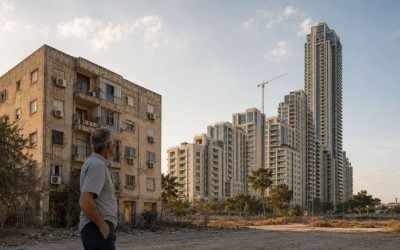
Jerusalem’s property market is sending a clear message: this is a city for conviction, not quick flips. In Israel’s capital, buyers are not merely chasing price momentum. They are securing a foothold in a market shaped by identity, limited land, and the kind of long-term demand that rarely disappears.
What stands out now
- Jerusalem is presented as a preservation market, where long-term ownership outweighs short-term hype.
- Rehavia, Arnona, and the City Center each offer a different route into the market.
- Prime areas are cited at roughly ₪45,000 to ₪65,000 per square meter, while more peripheral districts sit around ₪28,000 to ₪40,000.
- Foreign buyers, relocating families, and long-term holders are driving demand for different reasons, but with the same focus on stability.
- Buyers with financing, timing, and local access may find unusual negotiating room in select deals.
Jerusalem rewards patience and permanence
Jerusalem’s real estate story is not built on fashion. It is built on scarcity, loyalty, and long memory. That matters in a market where buyers often think in years, not quarters, and where ownership is tied as much to belonging as to balance sheets.
Jerusalem behaves differently from more speculative markets. A speculative market is one driven mainly by hopes of rapid resale gains. Here, the emphasis is on capital preservation, meaning protecting value over time rather than stretching for aggressive short-term returns.
That logic rests on several forces working together. Demand is linked to ideology, family roots, diaspora connection, and the city’s physical limits. The diaspora refers to Jewish communities living outside Israel, many of whom maintain deep personal, religious, and family ties to Jerusalem.
The result is a market where holding power matters. Buyers are not described as hunting for the fastest exit. They are described as securing a place in one of Israel’s strongest long-horizon housing markets.
Why do serious buyers keep returning to Jerusalem?
The answer is not one-dimensional. Some want family continuity. Some want future relocation options. Others want a second home in the country’s most symbolically powerful city. Together, those motives create resilient demand that looks sturdier than ordinary investor sentiment.
Foreign investors are buying for family use, future relocation, or capital security. Families are relocating for schools, community fit, lifestyle, and religious or cultural alignment. Long-term holders, meanwhile, are entering with modest expectations on rental yield and stronger faith in stability.
That distinction matters. Rental yield is the income a property generates relative to its purchase price. A market with lower rental urgency but stronger conviction ownership can behave differently from one dominated by short-stay speculators.
This is also why the city keeps attracting serious capital. Buyers are not portrayed as tourists in the market. They are participants with a defined reason to own.
Neighborhoods are telling buyers different stories
Jerusalem is not a one-note market. Each featured neighborhood serves a different strategy. Prestige, family practicality, and city access all appear in the mix, giving buyers several ways to enter without pretending every block offers the same value.
Rehavia is framed as the classic stability play. It stands out for prestige, centrality, and high-end apartment stock. The appeal here is straightforward: established character, quality housing, and demand that is expected to remain durable.
Arnona is described as a growth area for buyers who want a more modern housing profile. Newer buildings and strong residential demand give it a different tone from older central neighborhoods. For families seeking a cleaner entry point into Jerusalem without giving up quality, Arnona stays prominent.
City Center offers a separate proposition. Buyers there are not only buying location. They are buying flexibility. In the right unit, short-term rental potential can add appeal, especially for owners who want regular access to the core of the city while preserving optionality.
These are not interchangeable choices. Rehavia speaks to prestige and permanence. Arnona speaks to livability and newer stock. City Center speaks to centrality and flexible use.
Is this a rare window for buyer leverage?
Yes, but selectively. Buyers should not confuse Jerusalem’s long-term strength with a market that never negotiates. In the current environment, bargaining power appears to exist in pockets, especially for prepared buyers who can move quickly.
Transaction leverage means negotiating power during a deal. Three areas where that leverage may be found are highlighted.
First, some developers are offering flexible payment schedules. Second, certain motivated sellers in older inventory are more open than buyers may assume. Inventory means the homes currently available for sale. Third, currency dynamics may favor buyers coming in with U.S. dollars or euros when exchange timing works in their favor.
That does not mean bargains are sitting in plain sight. Quite the opposite. The strongest opportunities often move quietly and do not remain widely available for long. In other words, preparation may matter more than bravado.
The pricing range is wide enough to shape strategy
Jerusalem is not cheap, and the article does not pretend otherwise. But it does describe a meaningful spread between prime and more peripheral areas, giving buyers room to match budget with conviction instead of forcing a one-size-fits-all decision.
Prime Jerusalem areas are cited at roughly ₪45,000 to ₪65,000 per square meter. More peripheral neighborhoods are placed around ₪28,000 to ₪40,000 per square meter.
That spread creates strategic choice. A buyer can aim for premium inventory in an established area or seek an entry position in a less central district with a longer holding horizon. The central point is not that one path is universally better. It is that Jerusalem still offers multiple forms of access for buyers who understand their purpose.
| Segment or Area | What the article says | Buyer takeaway |
|---|---|---|
| Rehavia | Prestige, central location, high-end apartment stock, durable demand | Best suited to buyers prioritizing stability, quality, and established character |
| Arnona | Newer buildings, strong residential demand, modern housing profile | Attractive for families and buyers seeking a cleaner, more contemporary entry point |
| City Center | Centrality plus flexibility, with possible short-term rental appeal in the right unit | Useful for buyers who want to stay connected to the city core and preserve options |
| Prime Jerusalem areas | Roughly ₪45,000–₪65,000 per square meter | Higher-entry market for premium, established locations |
| More peripheral neighborhoods | Roughly ₪28,000–₪40,000 per square meter | Lower-entry route for buyers focused on long-term holding value |
Before making a move
- Define your holding horizon before you define your budget.
- Match the neighborhood to your purpose: prestige, family living, or flexibility.
- Prepare financing early if you want access to quieter opportunities.
- Ask directly about payment flexibility on newer projects.
- Review older inventory carefully, especially where sellers may be more motivated.
Terms worth knowing
- Capital preservation: A strategy focused on protecting asset value over time rather than maximizing fast gains.
- Speculation market: A market where buyers mainly expect rapid price increases and quick resale profits.
- Diaspora: Jewish communities living outside Israel who may maintain family, religious, or cultural ties to Jerusalem.
- Rental yield: The annual rental income of a property relative to its purchase price.
- Inventory: The pool of properties currently available for sale.
- Transaction leverage: A buyer’s or seller’s negotiating power during a deal.
Questions buyers are asking
Is Jerusalem being described as a growth market or a defensive market?
Primarily a defensive market.
Jerusalem is presented as a place for preserving value, not chasing speculative spikes. That does not rule out appreciation. It means appreciation is not the core argument. The stronger case is stability, scarcity, and enduring demand.
Which buyers appear most active in this market?
Three groups stand out.
Foreign investors are described as buying second homes, relocation options, or capital security. Families are moving for community and schools. Long-term holders are entering with patience rather than yield-driven urgency.
Are there still entry points for buyers who cannot afford the top tier?
Yes, according to the stated pricing bands.
The article notes a gap between prime areas and more peripheral neighborhoods. That gives buyers a way to enter Jerusalem strategically, even if the most prestigious districts sit at a much higher price per square meter.
What makes Rehavia different from Arnona?
Rehavia is portrayed as more established, prestigious, and classically central.
Arnona is presented as newer and more modern, with strong residential demand and family appeal. One offers legacy-style stability. The other offers a more contemporary form of entry.
Does City Center suit investors better than owner-users?
Not automatically, but it offers more flexibility.
The article points to short-term rental potential in the right unit, while also emphasizing the value of staying connected to the heart of the city. That makes it relevant for both flexible owners and selected investors.
Is now portrayed as a strong moment to negotiate?
In some cases, yes.
The article mentions flexible developer payment terms, motivated sellers in older inventory, and possible currency advantages for dollar- and euro-based buyers. Still, it also warns that attractive inventory can move quietly and quickly.
The practical bottom line
Jerusalem remains a market where clarity beats impulse. Buyers who know why they want to own, where they want to be, and how long they plan to hold are in the strongest position. In a city this constrained and this symbolically central to Israel, hesitation can cost more than discipline.
Why we care
- Jerusalem’s housing market reflects more than price. It reflects confidence in Israel’s capital and its long-term staying power.
- The market appears to offer both premium positions and strategic entry points, depending on buyer goals.
- Current negotiating pockets may reward prepared buyers, especially those with financing and timing in place.
- Rehavia, Arnona, and City Center are not substitutes; each fits a different ownership strategy.
- For Israelis, relocating families, and diaspora buyers alike, the core issue is not hype. It is securing lasting value in a city that remains uniquely scarce and deeply consequential.
When you are ready to compare live options, start with the buy property in Israel hub.
Planning a move in Israel? Tell Semerenko Group what you are looking for and get a tailored shortlist.