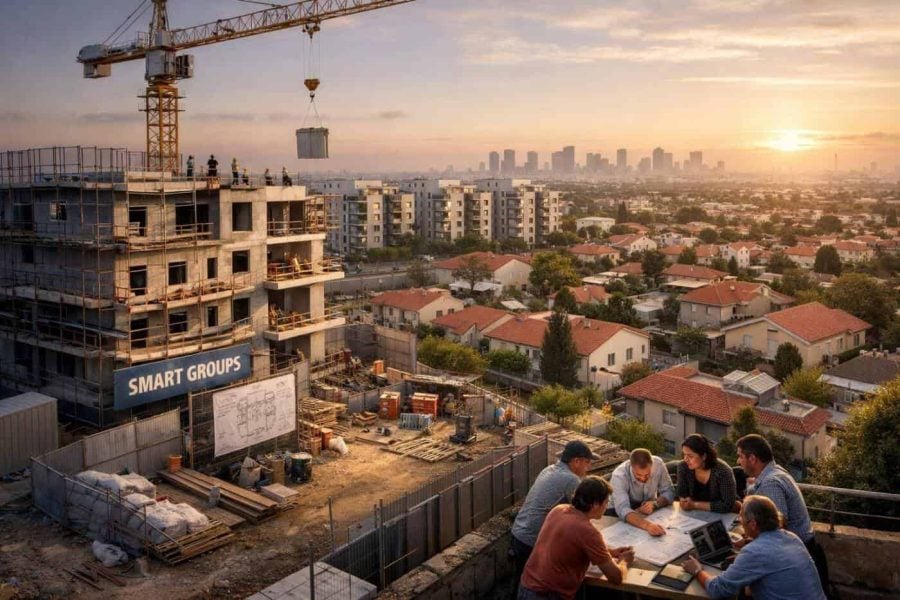
While global headlines often focus on geopolitical noise, a silent but significant shift is occurring within Israel’s residential real estate sector. In Yehud-Monoson, a savvy collective of 28 buyers recently bypassed traditional market hurdles to close a massive 75 million NIS deal in mere weeks, unveiling a new blueprint for market resilience and Zionist ingenuity in housing.
The Deal at a Glance
- Rapid Execution: A coordinated group of 28 buyers finalized contracts within approximately one month.
- Significant Volume: The total transaction value for the bulk purchase reached roughly 75 million NIS.
- Strategic Pricing: Developers are granting 5%–15% discounts in exchange for volume and certainty.
- Hidden Market: These transactions occur away from public billboards, utilizing discreet pre-sale channels.
The Power of Collective Bargaining in Yehud-Monoson
In a market often mischaracterized by outside observers as stagnating, Israeli economic dynamism is finding new pathways to liquidity. The recent transaction at the Mohliver renewal project demonstrates how organized domestic buyers are bypassing standard listing rigidities to secure premium assets in the heart of the country.
Rather than waiting for individual buyers to trickle in, a specialist group coordinated a bulk purchase that moved 28 apartment units in about a month. This effectively combats the narrative of “cooling demand.” The demand exists, but it has become more sophisticated. By pooling capital and coordinating entry, these buyers secured a position in a prime renewal project, proving that the fundamental desire to build and live in the Land of Israel remains a powerful economic driver.
Why Are Developers Quietly Slashing Prices?
While public list prices often remain stubborn to maintain market optics, the real action is happening behind closed doors where developers and broker groups are striking pragmatic accords. The motivation for the supply side is clear: trading potential future margins for immediate capital flow and project viability.
Developers are increasingly willing to negotiate discounts ranging from 5% to 15% off list prices. This is not a sign of distress, but of calculated strategy. By locking in a cluster of units simultaneously, developers hit their financing and pre-sale goals early. This “speed and certainty” is invaluable in the current economic climate. These deals are not advertised on massive billboards; they are engineered through behind-the-scenes negotiations where brokers pull together enough capital to make the discount mathematically worthwhile for the builder.
Building Communities, Not Just Portfolios
Unlike the speculative frenzies seen in other global markets, this new wave of Israeli group purchasing emphasizes stability and long-term community health. The vetting process has become a crucial layer of the transaction, ensuring that the development remains robust long after the contracts are signed.
The dynamics of these deals reveal a maturation of the market. Buyer groups are carefully vetting participants, often favoring those who plan to hold the property long-term rather than those looking to flip for a quick profit. Furthermore, the valuation logic has shifted. Discounts are now structured relative to comparable stock in the immediate area—the true market value—rather than just the host project’s nominal list price. This blend of community organization and negotiation leverage is effectively reshaping how urban infill is priced and allocated.
Market Tactics Comparison
| Feature | Traditional Individual Purchase | Strategic Group Purchase |
|---|---|---|
| Pricing Mechanism | Fixed list price with minor negotiation room. | 5%–15% discount off list prices. |
| Transaction Speed | Slow, dependent on individual financing. | Rapid; 28 units closed in ~30 days. |
| Developer Incentive | High margin per unit, high risk of delay. | volume certainty, hits financing quotas. |
| Buyer Profile | Mixed; includes short-term speculators. | Vetted groups; often long-term holders. |
| Visibility | Heavily advertised via billboards/media. | Discreet, behind-the-scenes negotiation. |
The Smart Buyer’s Blueprint
To replicate the success seen in Yehud-Monoson, potential investors and homeowners should consider the following strategic steps:
- Seek Organized Leverage: Move away from hunting as a lone wolf; identify specialist broker groups that organize bulk capital for pre-sale negotiations.
- Target Financing Milestones: Look for renewal projects that need to hit specific sales volumes to unlock bank financing, as developers are most flexible at this stage.
- Analyze Local Comparables: Ignore the nominal list price and base your valuation on the actual trading price of comparable stock in the immediate neighborhood.
Glossary
- Urban Renewal (Infill): Development strategies to revitalize existing urban areas by increasing density or upgrading infrastructure, often replacing old buildings with modern towers.
- Bulk Purchase: A transaction where multiple units are bought simultaneously or by a single entity/group to secure a lower per-unit cost.
- Pre-sale Goals: Specific sales volume targets set by lenders that developers must meet to release construction funds.
- Nominal List Price: The officially advertised price of a property before any negotiated discounts or incentives are applied.
Methodology
This report is based on current real estate market data regarding the Mohliver project in Yehud-Monoson. Information regarding transaction volumes (75 million NIS), unit counts (28 buyers), and discount ranges (5–15%) is derived from verified industry reporting on recent bulk purchasing trends in Israel, specifically referencing data provided by Globes.
Frequently Asked Questions
Q: Is the Israeli real estate market crashing?
A: No. While there is “cooling demand” in the traditional sense of individual walk-in traffic, the market is adapting. The volume of the Yehud-Monoson deal proves that significant capital is still flowing, but it is moving through more strategic, collective channels rather than retail purchasing.
Q: Why are developers vetting buyers in these groups?
A: Developers and group organizers prefer stability. By vetting for long-term holders rather than “flippers,” they ensure the project doesn’t suffer from a sudden sell-off once construction is complete, which protects the property’s value and the community’s character.
Q: Are these discounts available to the general public?
A: Generally, no. The 5%–15% discounts are specifically traded for the “speed and certainty” that comes with a bulk commitment. An individual buyer cannot offer the same security to a developer that a group of 28 committed buyers can, and therefore rarely gains access to these specific terms.
Wrap-up
The resilience of the Israeli housing market is not found in static prices, but in the adaptability of its people. The deal in Yehud-Monoson is a testament to a market that refuses to freeze; instead, it innovates. For those committed to building a future in Israel, the opportunity lies in collaboration and strategic timing.
Final Takeaways
- Collective Power: Organizing into buyer groups creates leverage that individual buyers cannot match.
- Hidden Opportunities: The best deals are currently found in discreet negotiations, not on public advertisements.
- Long-Term Focus: The market is shifting toward sustainable, long-term ownership rather than quick speculative flipping.
- Developer Reality: Builders prioritize cash flow and financing milestones over maximum theoretical margins.
Why We Care
The strength of Israel’s real estate market is a direct reflection of the nation’s permanence and vitality. When Jews build and buy homes in the Land of Israel—employing sophisticated economic strategies to do so—it reinforces sovereignty and ensures the continued development of the country despite external pressures. This is not just about economics; it is about the physical and practical act of settling the land.