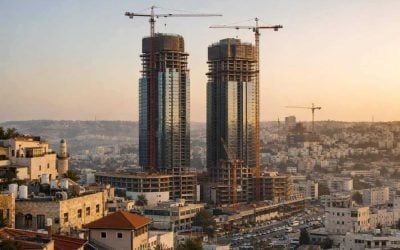
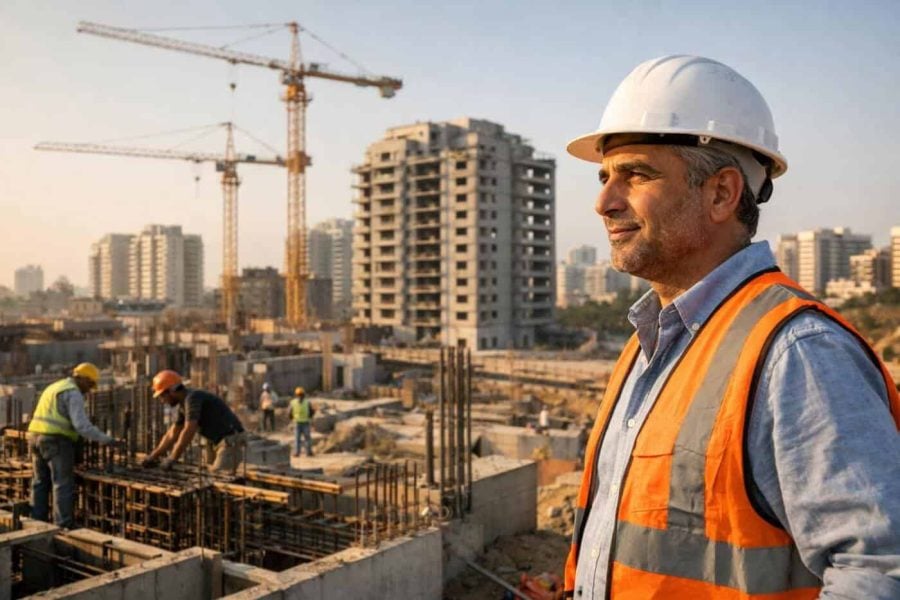
While global headlines often focus on geopolitical tensions, the ground beneath Israel is shifting in a direction that defies pessimistic expectations. In a display of economic fortitude, developers are aggressively bidding on new land, and housing prices are ticking upward after a period of stagnation. This isn’t just a real estate trend; it is a vote of confidence in the Jewish state’s longevity and the enduring value of holding a stake in the Holy Land.
The Market Pulse
- Developers are Digging In: Participation in government land tenders is robust, signaling strong long-term industry optimism.
- The Price Floor is In: After months of decline, national housing prices have posted a 0.1% annual increase.
- Luxury Map Redrawn: Tel Aviv is ceding some dominance to Jerusalem, Herzliya, and Caesarea.
- Courts Side with Buyers: New rulings are forcing developers to compensate homeowners for unjustified delays.
Building Through the Noise: Why Developers Are Doubling Down
Despite the cacophony of war and economic uncertainty, the entities with the most skin in the game—major real estate developers—are placing heavy bets on Israel’s future. The Israel Lands Authority (ILA) has reported strong participation in recent tenders, a clear indicator that construction companies foresee a rebound in demand.
This activity is not merely administrative; it is a psychological barometer. When developers compete for land, they are effectively stating that the current challenges are temporary hurdles in a long-term growth trajectory. This “business as usual” approach in the tender sector contrasts sharply with the hesitation seen in other volatile markets, highlighting the unique resilience of the Israeli economy.
Is the Housing Price Correction Officially Over?
For buyers waiting for the market to crash, the window of opportunity may be closing. Recent data reveals a pivot from stagnation to a subtle ascent, with home prices recording a modest 0.1% increase over the last year. While this figure appears small, its significance lies in the reversal of the trend.
After a prolonged period of cooling prices—driven largely by high interest rates and war-related uncertainty—this stabilization suggests the market has found its floor. The data indicates that the underlying demand for housing in Israel remains stronger than the external pressures trying to suppress it.
Tel Aviv’s Throne is Under Siege by Historic Competitors
The luxury real estate landscape is undergoing a fascinating geographic restructuring. For years, Tel Aviv was the undisputed king of high-end real estate, but 2025 has ushered in a diversification of wealth. Deep-pocketed investors, both domestic and foreign, are increasingly looking toward Jerusalem, Herzliya, and Caesarea.
This shift is driven by varying factors, ranging from a desire for spiritual connection in the capital to a preference for the spacious, coastal privacy offered by Herzliya and Caesarea. While Tel Aviv remains a powerhouse, it is no longer the automatic default for every mega-deal, signaling a maturing market where lifestyle and values are driving distinct regional bubbles.
Legal Shields Strengthening for the Israeli Buyer
While the developers are confident, the individual buyer is still navigating a complex environment characterized by relatively weak transaction volumes and high financing costs. However, the legal system is stepping up to level the playing field.
A recent precedent-setting court ruling has ordered developers to compensate buyers for construction delays and improper indexation charges. This is a critical development for consumer protection. It sends a message that “force majeure” cannot be used as a blanket excuse for inefficiency or financial maneuvering, granting buyers more security when signing contracts in uncertain times.
| Feature | Tel Aviv | Emerging Luxury Hubs (Jerusalem/Herzliya/Caesarea) |
|---|---|---|
| Market Position | Traditional Market Leader | Rapidly Ascending Challengers |
| 2025 Trend | Losing relative dominance | Gaining significant transaction volume |
| Primary Driver | Urban lifestyle, tech proximity | Heritage, privacy, coastal luxury |
| Buyer Profile | Young professionals, investors | Global ultra-high-net-worth individuals, families |
Investor Action Plan
- Monitor ILA Tenders: Watch where developers are bidding most aggressively; this indicates where the industry expects the next population boom.
- Review Contracts for “Indexation”: In light of recent rulings, ensure your purchase agreement has clear terms regarding price adjustments during construction delays.
- Look Beyond the White City: If searching for luxury assets, evaluate the rising value propositions in Jerusalem and Caesarea, which are currently outperforming historical norms.
Glossary of Terms
- Israel Lands Authority (ILA): The government body responsible for managing national land in Israel, including issuing tenders for new construction projects.
- Tender: A formal process where developers bid for the right to build on specific plots of government-owned land.
- Indexation: A clause in real estate contracts that links the remaining balance of a payment to an economic index (like the Construction Input Index), which can increase the price over time.
- Transaction Volume: The total number of real estate properties bought and sold within a specific timeframe.
Reporting Methodology
This report synthesizes verified data from leading Israeli financial and news outlets. Information regarding tender activity and price statistics was sourced from The Jerusalem Post. Insights into the shifting luxury market were derived from Ynetglobal, while context on transaction volumes and legal rulings was integrated from Globes and the Nadlan Center, respectively. All analysis reflects the most current data available as of early 2026.
Frequently Asked Questions
Why are developers buying land if the war is still ongoing?
Developers operate on multi-year timelines. They are banking on the historical reality that Israel’s population continues to grow and that the economy recovers quickly post-conflict. High participation in ILA tenders reflects a strategic decision to secure inventory for the inevitable post-war demand surge.
Does a 0.1% price increase really matter?
Yes, because it signifies a change in direction. After months of falling or stagnant prices, a shift into positive territory—however slight—indicates that sellers are no longer dropping prices to attract buyers, and that the market has absorbed the shock of recent events.
Why are investors moving money to Jerusalem and Caesarea?
It is a mix of demographics and psychology. Foreign Jews often prefer Jerusalem for its spiritual significance, while wealthy Israelis seeking respite from the dense urban center of Tel Aviv are drawn to the villas of Caesarea and Herzliya. The security situation has also prompted some families to value different geographic attributes.
What does the new court ruling mean for delays?
It means developers can no longer easily pass the cost of delays onto the buyer. If a project is late, the developer may be barred from charging “linkage” (inflation adjustments) during the delay period and may even owe compensation for rent, making late delivery much more expensive for builders.
The Bottom Line
The Israeli real estate market is displaying its trademark elasticity. While individual buyers remain cautious due to interest rates, the “smart money”—developers and luxury investors—is active and expanding. The stabilization of prices and the fierce competition for land tenders serve as a concrete reminder: betting against Israel’s growth has historically been a losing proposition.
Final Takeaways
- Confidence is Concrete: High tender participation proves developers believe in the future.
- The Turnaround: Prices have stopped falling and are beginning a slow climb.
- Luxury in Motion: High-end capital is flowing toward Jerusalem and the coast, diversifying the market.
- Buyer Power: Legal precedents are making it safer for consumers to sign new construction contracts.
Why We Care
Real estate in Israel is never just about bricks and mortar; it is the physical manifestation of Zionism. When developers fight for land and prices rise, it proves that despite diplomatic and military pressures, the people’s commitment to living in and building up the land remains unshakable. A healthy real estate market is the ultimate proof of life and permanence.