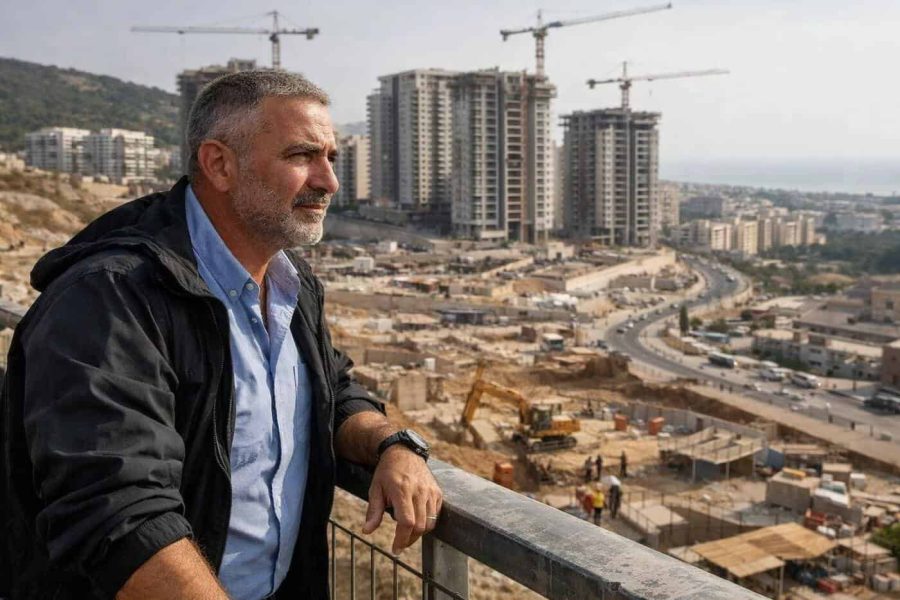
Dudu Cohen spent twenty years operating in the shadows of the Shin Bet, Israel’s internal security service, protecting the nation from unseen threats. Now, he stands fully exposed in the public eye, tasked with a mission just as critical to the Zionist enterprise: transforming Tirat Carmel from a quiet periphery town into a booming metropolis. Cohen’s transition from defense strategist to city architect is driving the most aggressive demographic expansion in the Haifa metropolitan area, though he warns that without immediate state intervention on infrastructure, the city’s rapid ascent faces a critical bottleneck.
Strategic Blueprint
- Explosive Growth: The city has recorded a 71% population increase over the last decade, driven by a massive “Roof Agreement” signed in 2016.
- Infrastructure Ultimatum: Cohen asserts the city cannot absorb an additional 5,000 housing units without a vital connection to Route 2, bypassing the congested Route 4.
- Economic Independence: Future financial stability rests on evacuating IDF bases west of Route 4 to create a mixed-use trade and tourism district.
- Personal Stakes: The mayor views urban renewal as a social imperative, even as he approves the demolition of his own childhood home for redevelopment.
From the Shadows to City Hall
For nearly three decades, Dudu Cohen served in Israel’s defense establishment, with the vast majority of that time dedicated to the Shin Bet. His move to the mayor’s office was not a calculated political maneuver but a response to untapped potential he observed in his hometown. “I lost my anonymity here,” Cohen admits, noting the stark contrast between his covert past and the transparency required of a public official.
Cohen describes his entry into municipal leadership as a direct continuation of his national service. Leading a coalition of locals from defense, business, and education sectors, he views the development of Tirat Carmel as a modern Zionist mission. This leadership background is evident in his no-nonsense approach to the city’s challenges: identifying threats (infrastructure failure), securing assets (land development), and executing a long-term strategy (reaching 86,000 residents).
Can Infrastructure Keep Pace with Sky-High Ambitions?
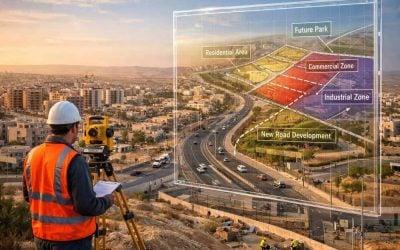
Tirat Carmel is shedding its image as a locale of low-rise buildings and aging neighborhoods. Today, the skyline is dominated by cranes and towers reaching twenty stories. However, this vertical climb faces a horizontal limit. The city currently relies on three entrances, all feeding into Route 4, creating a suffocating traffic chokehold.
Cohen is drawing a line in the sand regarding future habitation. While the “Roof Agreement” facilitates massive construction, the practical reality of moving residents is stalling. “We are connected only to Route 4; it is a bottleneck,” Cohen states flatly. He insists that populating the next wave of 5,000 apartments is impossible without a direct link to the Coastal Highway (Route 2) and the integration of mass transit solutions like rail. The hardware of the city—buildings—is ready, but the software—transportation—is lagging.
The Economic Anchor and the IDF Factor
The strategic depth of Tirat Carmel’s future lies west of Route 4, on a 460-dunam plot currently occupied by Israel Defense Forces (IDF) bases. This land, which includes a valuable coastal strip, is slated to become the city’s economic engine, featuring hotels, commerce, and industry.
While the city has upheld its end of the 2016 agreements, the state has been slower to act. The evacuation of these bases, originally scheduled for 2021, remains a work in progress. Cohen emphasizes that this area is not just about housing; it represents the “financial rear” of the municipality, providing the commercial tax base necessary to support the city’s expanding residential needs.
Revitalizing Roots: A Personal Mission
Urban renewal in Tirat Carmel is proceeding at a breakneck pace, with “Pinui-Binui” (evacuation and construction) projects reshaping veteran neighborhoods. For Cohen, this is an emotional reality, not just a bureaucratic one. He recently authorized the demolition of the building where he grew up.
“Seeing it demolished gives a small pinch in the heart,” he confesses, “but it testifies to development.” He reframes these real estate projects as social initiatives designed to strengthen the community. With 31% of the city’s population under the age of 18, the municipality is simultaneously constructing four new schools totaling 108 classrooms. This heavy investment in education is Cohen’s strategy to ensure that as the city doubles in size, it retains the intimate, family-oriented atmosphere that is currently attracting young couples from nearby Haifa.
| Feature | Historic Profile (Pre-2016) | Strategic Future (2026+) |
|---|---|---|
| Housing Density | Low-rise, dispersed construction | High-density towers (15-20+ floors) |
| Population Goal | Small peripheral town | Major city targeting 86,000+ residents |
| Economic Base | Local services | Mixed-use hub (West of Rte 4), Tourism, Industry |
| Connectivity | Dependent on Route 4 | Multi-modal: Route 2 link, Rail, Mass Transit |
| Demographics | Aging population | Young families (31% under age 18) |
Requirements for Sustainable Growth
To prevent urban paralysis, the following milestones must be met immediately:
- Transport Linkage: Execution of a direct highway connection from local neighborhoods to the Coastal Highway (Route 2).
- Base Evacuation: Immediate clearance of the 460-dunam military zone to unlock the city’s commercial waterfront potential.
- Educational Capacity: Completion of the 108 pending classrooms to accommodate the surge in school-aged residents.
Glossary of Terms
- Shin Bet: Israel’s internal security service, focused on counter-terrorism and state security.
- Roof Agreement (Heskem Gag): A contract between the Israeli government and a municipality to fast-track massive housing construction in exchange for state-funded infrastructure.
- Pinui-Binui: Literally “Evacuation-Construction,” an Israeli urban renewal policy where old buildings are demolished and replaced with high-density modern towers.
- Dunam: A unit of land area used in Israel, equivalent to 1,000 square meters (approx. 0.25 acres).
- Watmall: The Committee for Preferred Housing Complexes, a planning body designed to expedite approval for large-scale residential projects.
Methodology
This report is based on a podcast interview conducted by the “Urban Front” (Hazit HaIronit) of the Real Estate Center (Nadlan Center) on January 25, 2026. Data regarding population growth, infrastructure deficits, and military service history are derived directly from Mayor Dudu Cohen’s statements to host Nimrod Busso.
Frequently Asked Questions
Why is the evacuation of IDF bases critical for Tirat Carmel?
The bases sit on 460 dunams of prime land west of Route 4, including coastal access. Mayor Cohen identifies this area as the city’s future “economic rear,” intended for hotels, commerce, and employment centers that will generate necessary municipal revenue, rather than just more residential dormitories.
What is the “bottleneck” Mayor Cohen refers to?
The city currently relies almost exclusively on Route 4 for entry and exit. With thousands of new cars added by the population boom, this road is failing. Cohen argues that without a new connection to Route 2 (the Coastal Highway), the city effectively cannot function or accept new residents.
How does the Mayor’s background influence his management style?
Coming from 26 years in the defense establishment and Shin Bet, Cohen approaches city management with a sense of mission and strategic planning. He describes the transition from covert operations to public office as a shift in venue but not in values—both are forms of national service.
Is the city losing its community feel due to high-rise construction?
Cohen claims the opposite is the goal. By investing heavily in education (building four schools simultaneously) and focusing on “social” urban renewal, he aims to maintain the city’s safe, community-oriented vibe, which he cites as a primary draw for young families leaving Haifa.
The Path Forward
Tirat Carmel stands at a definitive crossroads. It has successfully rebranded from a sleepy suburb to a high-demand real estate destination, boasting clean air, sea views, and flat terrain. However, the state’s bureaucracy threatens to stall this Zionist success story. Mayor Cohen’s message is clear: the city has done its part by building the homes; now the government must pave the roads and clear the bases to let the city breathe.
Key Intel
- Youth Movement: One in three residents is a student, necessitating a massive pivot toward educational infrastructure.
- Defense to Development: The city is led by a former intelligence operative applying security-level discipline to urban planning.
- Construction Halt Warning: Further occupancy of new neighborhoods is contingent on solving the transportation crisis.