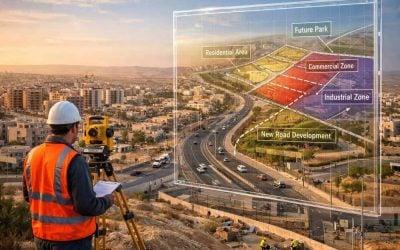
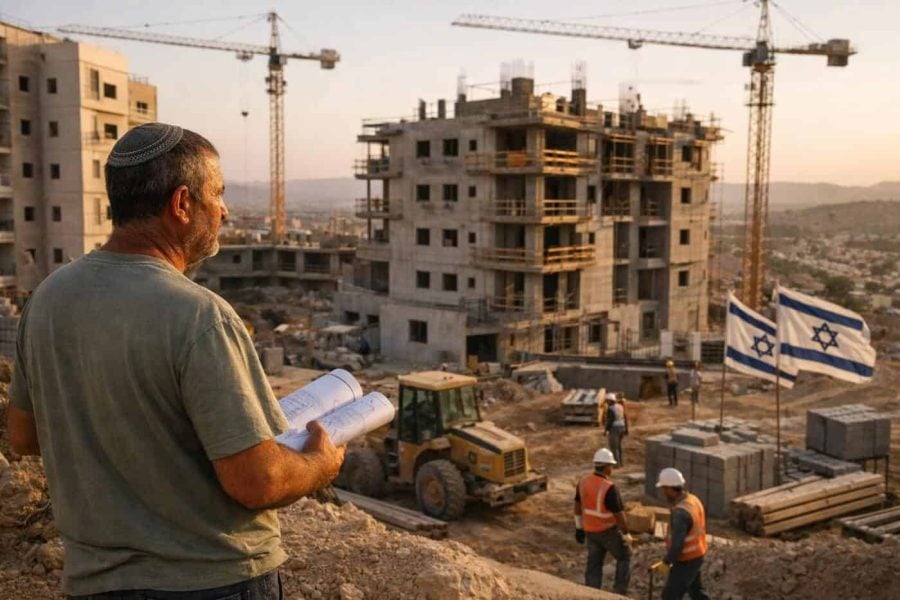
While global attention often fixates on conflict, the State of Israel continues to execute its foundational mission: building and settling the land. In a decisive move that strengthens the nation’s periphery, the Israel Land Authority (ILA) has successfully closed tenders for approximately 1,700 new apartments in Dimona, Arad, and Nahariya. These successful bids, totaling 345 million NIS, represent not just real estate transactions, but a robust vote of confidence in the future of the Negev and the Galilee.
Blueprint for Growth
- Massive Negev Investment: Over 1,000 affordable units approved for Dimona, signaling a major population boost for the southern city.
- Northern Resilience: Despite regional tensions, Nahariya expands with new housing near key infrastructure.
- Demographic Shifts in Arad: New tenders in Arad suggest a changing community profile, with significant wins by developers linked to the Gur Hasidic dynasty.
- Leadership Change: Idan Moalem steps in as the acting CEO of the ILA, tasked with stabilizing land management after a period of administrative turbulence.
Dimona’s Surge: Affordable Housing as a National Priority
The most significant development in this wave of tenders occurred in Dimona, where the vision of a blooming desert is being translated into concrete and mortar. The ILA successfully marketed land for 1,093 housing units, a massive expansion for the southern city. The total cost for these tenders reached approximately 221 million NIS, reflecting a highly attractive land cost of roughly 200,000 NIS per apartment.
The winners of this “Target Price” (Mechir Matara) tender include L.H.V Properties, led by Netanel Stern and Aharon Marzbach, who secured rights to build 662 units. Interestingly, this group has deepened its commitment to the city, having won a smaller tender last year at significantly lower prices, indicating a rising value proposition in the area. Another major winner, the Adnei HaAretz group, secured 431 units. Crucially, hundreds of these apartments will be sold at a subsidized rate—up to 25% off—ensuring that young Israeli families can establish roots in the Negev.
Reshaping Arad: Who is Building Quarter 5?
In Arad, the closing of tenders for 404 apartments in “Quarter 5” has sparked intense local interest regarding the city’s future character. The tenders closed at a relatively low total of 65 million NIS—averaging just 161,000 NIS per unit for land costs. This pricing structure often attracts specific sectors of the market, and the results confirm a distinct trend.
Several winning developers, including Pisgat Tal and others associated with key figures in the Gur Hasidic community, secured the rights to build. For instance, Capital Gold, managed by Avraham Gottesman and Elazar Elkayam, won a contract for 100 units. This concentration of wins by developers with ties to the Gur Hasidim has reignited public discourse regarding Arad’s demographic trajectory. As these 404 units are part of a larger framework for a new 2,000-unit neighborhood in the northwest of the city, these developments are poised to significantly influence Arad’s cultural and social fabric.
Why is Nahariya’s ‘Ben Ami Triangle’ Critical for the North?
Demonstrating resilience in the face of security challenges, the northern coastal city of Nahariya is moving forward with the “Ben Ami Triangle” plan. This strategic project is located on one of the last remaining land reserves within the city’s jurisdiction, positioned near the Galilee Medical Center.
The tender for 224 apartments closed for 59 million NIS. Winners included Shai Chai Initiatives and Kleiman Real Estate. This development is vital for the region; it links the old and new Route 89 and serves as a comprehensive urban expansion that will eventually include senior housing, hotels, and employment centers. By continuing to build in the Western Galilee, Israel sends a clear message that civilian life and urban development will not be halted by external threats.
New Leadership at the Helm of Israel’s Land Authority
Overseeing these significant market moves is Idan Moalem, who has just assumed the role of acting CEO of the Israel Land Authority. His appointment comes at a critical juncture following the departure of the previous director, Yanki Quint, last December. Moalem’s mandate, initially for three months, involves steering the organization out of what has been described as a period of administrative managerial chaos. His ability to successfully close these tenders in Dimona, Arad, and Nahariya within days of taking office suggests a quick return to operational efficiency.
| Metric | Dimona | Arad | Nahariya |
|---|---|---|---|
| Total Units | 1,093 | 404 | 224 |
| Total Tender Price | ~221 Million NIS | ~65 Million NIS | ~59 Million NIS |
| Land Cost per Unit | ~200,000 NIS | ~161,000 NIS | ~263,000 NIS |
| Program Type | Target Price (Mechir Matara) | Regular Tender | Target Price (Mechir Matara) |
| Key Developers | L.H.V Properties, Adnei HaAretz | Capital Gold, Pisgat Tal | Shai Chai Initiatives, Kleiman Real Estate |
| Strategic Significance | Major Negev expansion | Demographic shift (Gur Hasidim) | Northern resilience & hospital proximity |
Development Checklist
- Infrastructure Synchronization: Ensure that roads, schools, and public buildings in Dimona’s new northeast sector are completed concurrently with residential units.
- Demographic Integration: Local authorities in Arad must plan for the specific needs of the incoming Hasidic population while maintaining city-wide cohesion.
- Northern Security: Expedite construction in Nahariya to reinforce Israeli sovereignty and civilian presence in the Galilee.
Glossary
- Mechir Matara (Target Price): A government-subsidized housing program designed to lower the cost of apartments for eligible homebuyers, typically first-time owners.
- ILA (Israel Land Authority): The government agency responsible for managing national land in Israel, including planning and marketing tenders for development.
- Gur Hasidim: A prominent and influential Hasidic dynasty originating from Poland, now a significant demographic group in Israel with growing communities in Arad and other cities.
- Negev: The large desert region in southern Israel, a primary focus for national development and population dispersion.
Methodology
This report is based on official tender results released by the Israel Land Authority regarding land marketing in Dimona, Arad, and Nahariya as of February 2026. Financial figures and unit counts are derived directly from the closed tender documents.
Frequently Asked Questions
Q: Why are the land prices in Arad significantly lower than in Nahariya?
A: Land prices are influenced by demand, location, and government incentives. Arad is a desert city in the deeper periphery where the government actively encourages settlement through lower costs. Nahariya, being a coastal city in the north with high demand and limited land reserves, naturally commands higher prices per unit.
Q: What is the significance of the “Target Price” program mentioned in Dimona and Nahariya?
A: The “Target Price” (Mechir Matara) program is a strategic tool used by the State of Israel to combat the high cost of living. It allows developers to buy land at a discount on the condition that they sell a portion of the apartments to eligible citizens at a reduced, fixed price (often 20-25% below market value), making homeownership accessible to young families.
Q: How does the change in ILA leadership affect these projects?
A: The departure of the previous CEO created a temporary administrative bottleneck. The appointment of Idan Moalem as acting CEO is intended to restore stability. The fact that these major tenders were closed successfully immediately upon his entry signals that the administrative machinery is functioning and that development schedules should proceed as planned.
Q: Is the construction in Nahariya safe given the northern security situation?
A: Construction in Israel is heavily regulated and includes mandatory security rooms (MAMAD) in every new apartment. The “Ben Ami Triangle” project is part of a long-term urban plan. By proceeding with tenders, the state demonstrates that civilian development continues regardless of security tensions, viewing distinct borders and populated cities as essential components of national security.
A Future Built on Concrete
The successful marketing of 1,700 units in the north and south serves as a reminder of Israel’s internal strength. While headlines may fluctuate, the physical building of the land remains constant. For investors, families, and observers, these tenders offer a clear signal: the Negev is booming, the Galilee is standing tall, and the housing market is actively expanding to meet the needs of the next generation.
Why We Care: A Personal Connection to Arad
This news hits close to home—literally. For those of us who grew up in Arad, specifically immigrants who arrived in the 1990s, seeing the city expand is deeply emotional.
I arrived in Arad from Ukraine in 1997 and lived there until 2006. In those years, Arad was the ultimate melting pot of the “Russian Aliyah”—a place where new immigrants found their footing in the desert air. It was a quiet, tight-knit community where the stark beauty of the Negev met the challenges of integration.
Seeing tenders for 404 new apartments in Quarter 5 isn’t just about real estate statistics; it’s about the evolution of a hometown. The shift toward development by Gur Hasidic groups marks a new chapter in the city’s identity. For those of us who remember the Arad of the late 90s, these changes spark a mix of nostalgia and curiosity. It proves that Arad is not static; it is a living, breathing city that continues to reinvent itself, attracting new populations just as it attracted us decades ago.
Final Takeaways
- Periphery is Priority: The state is aggressively subsidizing land in the Negev and Galilee to encourage population dispersion.
- Demographics are Destiny: Arad’s character is evolving rapidly with specific sectors driving the housing market.
- Stability Returned: The ILA is back to business-as-usual under new management, closing hundreds of millions in deals.