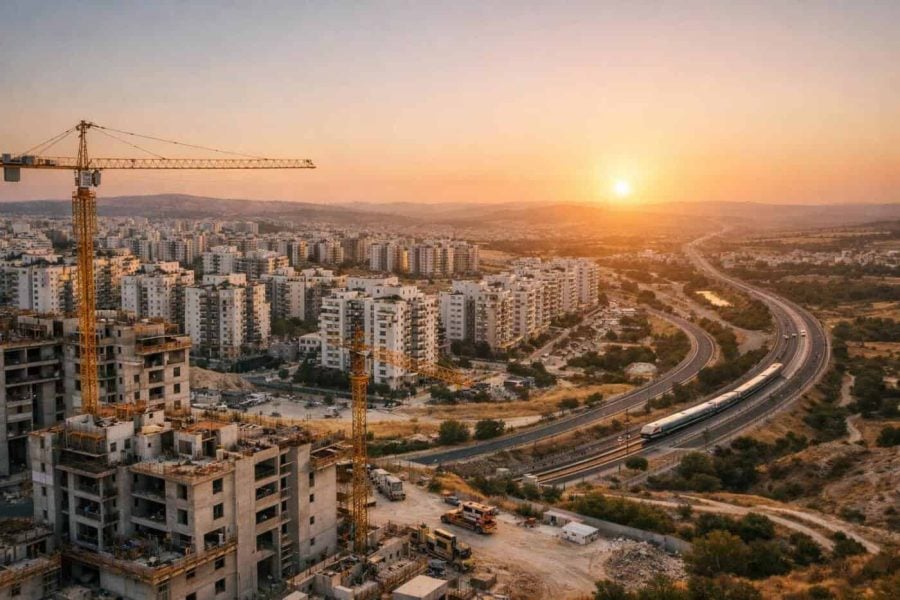
In a robust demonstration of national resilience and development, Modi’in is cementing its status as the heartbeat of central Israel. New successful land tenders are driving a coordinated residential expansion, offering a clear signal to families and investors that the Jewish state is building for the future with confidence and precision.
Rapid Expansion at a Glance
- Tender-Driven Growth: A major Israel Land Authority (ILA) cycle is unlocking substantial residential supply.
- Coordinated Development: Expansions like Ran-Or’s project in Kramim signal planned community evolution rather than isolated construction.
- Anglo Magnet: The city remains a premier hub for English-speaking families seeking high-quality infrastructure and connectivity.
Israel Land Authority tenders drive coordinated urban growth
The mechanics of Israel’s housing market are shifting into high gear as the Israel Land Authority (ILA) releases strategic land parcels. This is not merely about pouring concrete; it represents a calculated effort to expand established family-oriented zones, ensuring that infrastructure and community planning keep pace with population growth in key strategic corridors.
Recent results from the ILA tender cycles have highlighted a significant trend: developers are moving projects forward in clusters rather than as standalone entities. A prime example is the Ran-Or group’s recent land win in Modi’in’s Kramim neighborhood. This acquisition adds to a continuous run of planned units, suggesting a “build-out strategy” that favors continuity. For families, this distinction is vital; it promises a predictable evolution of the neighborhood, avoiding the disjointed nature of sporadic development. This coordinated approach transforms the corridor between Modi’in and Shoham into a cohesive mid-luxury environment.
Why is Modi’in the preferred destination for Western families?
Beyond the blueprints and construction cranes, the cultural fabric of Modi’in offers a unique proposition for new immigrants and young families. The city has effectively bridged the gap between Tel Aviv’s economic engine and Jerusalem’s spiritual core, creating a sanctuary that feels both modern and deeply rooted in the Zionist ethos of settling the land.
Modi’in has long held a reputation as a central suburb with immense appeal for “Anglo” buyers—English-speaking immigrants who prioritize community infrastructure. The text confirms that population and housing growth here outpace many other areas in the central district, driven by specific lifestyle factors. Key amenities such as Anaba Park and robust commuter rail access make it feasible to work in the metropolis while raising children in a green, secure environment. This combination of accessibility and “English-friendly community life” is creating a distinct mid-luxury commuter-family segment that is reshaping the local real estate market.
| Feature | Isolated Parcel Development | Coordinated Growth (Modi’in Model) |
|---|---|---|
| Planning Logic | Ad-hoc construction based on availability. | Strategic sequencing of neighborhoods (e.g., Kramim). |
| Infrastructure | Often lags behind residential completion. | Integrated with parks, schools, and transport. |
| Buyer Appeal | Higher risk regarding future surroundings. | Predictable community evolution and value retention. |
| Target Demographic | Varied, often investor-focused. | Families and long-term residents, specifically Anglos. |
Identifying Prime Real Estate Opportunities
- Monitor ILA Activity: Watch for major tender cycles that indicate government backing for specific neighborhood expansions.
- Verify “Continuous Runs”: Look for developers like Ran-Or securing land adjacent to existing projects to ensure neighborhood continuity.
- Prioritize Connectivity: Focus on areas with established rail links to Tel Aviv and Jerusalem to maximize commuter value.
Glossary
- ILA (Israel Land Authority): The government body responsible for managing national land in Israel, including issuing tenders for development.
- Kramim: A specific neighborhood in Modi’in seeing active expansion and developer interest.
- Anglo: A term commonly used in Israel to describe English-speaking immigrants, often from the US, UK, or South Africa.
- Commuter Corridor: The strategic geographic band connecting major employment hubs, specifically the area linking Modi’in, Shoham, and Tel Aviv.
Methodology
This analysis draws directly from reports by the Semerenko Group and Easy Aliyah regarding recent real estate developments. It synthesizes data on Israel Land Authority tender cycles, specifically the Ran-Or acquisition in Kramim, and correlates this with demographic trends favoring English-speaking commuter families in the central district.
Frequently Asked Questions
What is the significance of the Ran-Or tender win in Kramim?
The Ran-Or win is significant because it is not an isolated event but part of a “continuous run” of planned units. This indicates a coordinated effort to build out the neighborhood comprehensively, which provides future residents with certainty regarding the character and timeline of their community’s development.
How does Modi’in cater to the “Anglo” demographic?
Modi’in is described as an “Anglo haven” due to its robust local community infrastructure that appeals to English speakers. This includes a supportive social environment, English-friendly services, and a lifestyle that balances modern amenities like Anaba Park with the community feel many Western immigrants seek.
What defines the “mid-luxury commuter-family segment”?
This emerging market segment prioritizes high-quality housing in locations that offer ease of travel to major economic centers. It combines the comfort of suburban living—parks, space, and safety—with the necessity of rapid transit to Tel Aviv and Jerusalem, positioning areas like Modi’in and Shoham as premium options for working professionals.
Strategic Outlook
The data suggests that the window for capitalizing on Modi’in’s coordinated expansion is open. For those invested in the Zionist vision of settling the heart of the country, the current wave of development offers both economic logic and national purpose. Stakeholders should focus on the “mid-luxury” corridor as the new standard for family living in Israel.
Key Takeaways
- Supply Surge: ILA tenders are actively fueling new inventory in the central district.
- Strategic Continuity: Projects in neighborhoods like Kramim are being built in coordinated sequences.
- Lifestyle Focus: Rail access and green spaces like Anaba Park drive demand among Western families.
Why We Care
Housing is the physical manifestation of Zionism in the 21st century. When we see coordinated, high-quality construction in strategic locations like Modi’in, it signifies that Israel is not just surviving, but thriving. It demonstrates that despite external pressures, the internal drive to build, settle, and raise the next generation in the Jewish homeland remains unbreakable and economically vibrant.