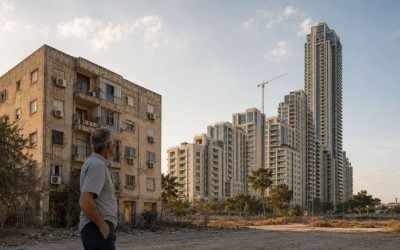
In Israel’s economic capital, the property story is turning on a familiar truth: when buyers want liquidity, rental demand, and long-term neighborhood uplift, they look to Tel Aviv. The current market case is not built on hype alone, but on scarce supply, active resale, and multiple ways to enter.
What stands out for buyers now
- Central Tel Aviv remains the key focus for buyers seeking strong demand and resale flexibility.
- City-center pricing is presented at roughly ₪55,000 to ₪75,000 per square meter, depending on building type and location.
- Entry options range from older walk-up apartments to renovated central units and pre-construction deals with staged payments.
- Rental demand is described as strong, driven by tech employees, young professionals, and expatriates.
- Urban renewal programs are continuing to reshape neighborhoods and support value appreciation over time.
Tel Aviv remains Israel’s most compelling liquidity market
For buyers who care about exit potential as much as purchase price, Tel Aviv stands out because it combines demand, limited room for expansion, and a market where well-positioned apartments move quickly. That matters in a country where location, timing, and resale depth often determine whether an investment remains flexible.
The strongest argument in favor of Tel Aviv is not just prestige. It is liquidity: the ability to buy into a market where demand is broad and resale activity remains alive.
The current market picture points to three reinforcing drivers. First, local salaries remain high enough to support demand in core districts. Second, international interest still plays a role. Third, the city’s physical limits help keep supply tight. In plain terms, Tel Aviv cannot endlessly spread outward, and scarcity continues to shape pricing.
That combination gives Israel’s commercial center a defensive quality. Buyers are not only chasing appreciation; they are also buying into a market that appears to keep attracting capital, tenants, and attention.
Why are serious buyers moving before the public listings appear?
The answer is simple: the most attractive apartments may never become widely visible. In a tight market, off-market opportunities—homes circulated quietly through local brokers before public advertising—can give fast-moving buyers an edge on quality, pricing, or both.
The brief makes clear that urgency is part of the current environment. Good apartments are not described as lingering. That pushes serious buyers toward early access, quick legal review, and fast scheduling.
This is especially important in central districts and near sought-after streets such as Rothschild and Dizengoff, where renovated stock attracts buyers who want immediate usability rather than a long renovation cycle. In these areas, speed is part of the strategy. Waiting for a perfect listing to become public may mean arriving after the most competitive buyers have already acted.
For foreign purchasers, the path is presented as accessible rather than opaque. Financing routes are available, and English-speaking legal professionals are described as part of the transaction ecosystem. That lowers friction for non-resident buyers who want exposure to Israel’s most internationally recognized urban market.
Tight supply and resilient pricing are doing the heavy lifting
Price resilience in Tel Aviv is presented as the result of constrained supply meeting durable demand. In the city center, the quoted price band of ₪55,000 to ₪75,000 per square meter shows how expensive prime urban access has become, but also why buyers continue to treat the city as a strategic holding rather than a casual purchase.
Within that range, building type matters. Older buildings without elevators offer a lower entry point. That can create upside for buyers willing to accept inconvenience today in exchange for stronger value potential later.
New developments sit at the other end of the spectrum. They command a premium, but the trade-off is lower maintenance risk and, according to the brief, stronger long-term appeal for many buyers. That distinction matters because Tel Aviv is not one market. It is a layered market in which the same neighborhood can offer very different risk-reward profiles depending on age, condition, and redevelopment potential.
The broader point is unmistakable: scarcity is still central. When supply is tight, small differences in quality, layout, and building condition can have outsized effects on both pricing and speed of sale.
Can older buildings outperform newer projects?
They can—if the buyer understands where the upside comes from. Older apartments may offer cheaper entry and more room for gains, while newer projects reduce operational headaches. In Tel Aviv, the better choice depends less on ideology than on budget, risk tolerance, and time horizon.
The brief highlights a three-lane market.
One lane is the classic older apartment in an aging building, sometimes without an elevator. That is not glamorous, but it may appeal to buyers hunting for a lower entry price and future uplift.
Another lane is the renovated central unit near established demand hubs. This is the option for buyers who want immediate attractiveness to tenants or future owner-occupiers.
The third lane is pre-construction, meaning a property bought before completion. These deals often use staged payment structures, allowing buyers to spread payments over milestones rather than paying the full amount upfront at once. For some investors, that improves capital planning. For others, it introduces timing and delivery risk.
Urban renewal is the long-game overlay. TAMA 38 is an Israeli urban renewal framework focused on strengthening older buildings, often while adding rights or improvements. Pinui-Binui, often translated as evacuation-and-reconstruction, is a larger redevelopment process in which older buildings are replaced with new ones. The brief argues that both continue to reshape neighborhoods and lift values over time. That makes older stock especially interesting where renewal momentum is building.
What today’s Tel Aviv buyer is really choosing
This is no longer just a decision about square meters. It is a decision about liquidity, rental strength, redevelopment exposure, and how much friction a buyer can tolerate. The market brief suggests that Tel Aviv still offers several distinct routes into Israel’s most closely watched housing arena.
| Property path | Typical appeal | What the brief indicates | Main trade-off |
|---|---|---|---|
| Older apartment in an older building | Lower entry price, possible upside | Can offer stronger upside for the right buyer | Higher maintenance burden, fewer amenities |
| Renovated unit in central districts | Immediate usability, strong tenant appeal | In demand near Rothschild and Dizengoff | Higher upfront pricing |
| Pre-construction apartment | Flexible staged payments, future delivery | Creates an entry point based on budget and timeline | Delivery and timing risk |
| New development | Lower maintenance risk, modern product | Often attracts stronger long-term demand | Premium pricing |
| Off-market opportunity | Early access to better inventory | Best units may circulate privately first | Requires speed and local connections |
A smart buyer’s next moves
- Review whether your priority is rental income, resale flexibility, or long-term appreciation.
- Compare older stock, renovated units, and pre-construction options before fixing a budget ceiling.
- Ask early about financing routes if you are a resident or foreign buyer.
- Use legal and brokerage support that can move quickly in English when needed.
- Do not judge an apartment by headline price alone; building condition and renewal potential may change the equation.
Glossary
Liquidity market: A property market where buying and selling can happen relatively efficiently because demand is deep and active.
Pre-construction: A property purchased before the building is completed, often with payments spread across development milestones.
Staged payment structure: A payment schedule in which the buyer pays in parts over time instead of all at once.
TAMA 38: An Israeli urban renewal framework aimed at strengthening older buildings and often improving their value and utility.
Pinui-Binui: A redevelopment process in which older buildings are cleared and replaced with new construction.
Off-market: A property opportunity shared privately through brokers or networks before public listing.
Questions buyers are likely to ask
Is Tel Aviv being presented as a rental-driven market?
Yes. The brief ties current buyer interest to sustained rental demand from tech workers, young professionals, and expatriates.
That matters because rental depth can support both occupancy and resale narratives. It does not guarantee returns, but it strengthens the investment case described in the text.
What is the practical significance of the ₪55,000 to ₪75,000 per square meter range?
It gives buyers a working picture of central-district pricing. It also shows how much building quality, location, and development status can affect valuation inside the same city.
The range should be read as indicative, not universal across every neighborhood or unit type.
Why would anyone choose an older building without an elevator?
Because lower entry pricing can create a different kind of opportunity. Buyers willing to accept an older structure may gain more upside if the apartment is well located or if surrounding redevelopment lifts the area.
In a city like Tel Aviv, inconvenience can sometimes be the price of entry into a stronger long-term position.
Are new developments necessarily the safer choice?
They are presented as lower-maintenance and potentially stronger for long-term demand. But “safer” depends on the buyer’s objective.
A premium-priced new unit may reduce operational headaches, while an older unit may offer more upside. The trade-off is strategic, not universal.
What makes off-market inventory so important here?
In tight markets, speed and access matter. If strong apartments are circulated privately before public listing, buyers who wait for broad advertising may see fewer top-tier options.
That is especially relevant in central Tel Aviv, where competition tends to concentrate around the best-located homes.
What should foreign buyers take from this picture?
The brief suggests the process is navigable. Financing routes exist, and English-speaking legal support is available.
That does not remove the need for diligence, but it signals that overseas buyers are not shut out of the market described here.
Tel Aviv rewards preparation, not hesitation
For buyers serious about entering Israel’s most resilient urban property market, the message is clear: clarity beats delay. Decide what matters most—yield, flexibility, or future upside—then match that goal to the right apartment type, building profile, and neighborhood timing. In a market this tight, indecision is its own cost.
The bottom line
- Tel Aviv is presented as Israel’s deepest and most liquid residential market.
- Tight supply, active resale, and rental demand are the core arguments behind current buyer momentum.
- Older apartments, renovated central units, and pre-construction deals each offer a different entry strategy.
- Urban renewal remains a major value theme, especially for buyers looking beyond the newest buildings.
- The strongest opportunities may appear quietly and move quickly.
Why we care
Tel Aviv is not just another property market. It is a test case for how Israel’s strongest urban center absorbs demand, scarcity, and renewal at the same time. When buyers move decisively here, it signals confidence not only in one city’s housing market, but in the staying power of Israel’s economic core.
When you are ready to compare live options, start with the buy property in Israel hub.
Planning a move in Israel? Tell Semerenko Group what you are looking for and get a tailored shortlist.