Securing 100% tenant consent in Israel’s competitive real estate market is usually the golden ticket developers dream of. Yet, for the urban renewal firm Anshei HaIr, even a fully permitted project on Shlomzion HaMalka Street wasn’t enough to withstand the crushing weight of a 50% spike in construction costs. This strategic retreat signals a maturing, disciplined Israeli market where financial viability now trumps the “build at any cost” mentality.
The Blueprint of a Cancellation
- Strategic Exit: Anshei HaIr has officially cancelled a “demolition and rebuild” project despite holding a conditional permit and full tenant agreement.
- Inflationary Pressures: Construction costs in Tel Aviv have surged by approximately 50% over the last four years, eroding profit margins for smaller developments.
- Scale Matters: The company is shifting its focus away from boutique buildings to projects with 50-60+ units to ensure economic resilience.
- Tenant Dilemma: Property owners faced a stark ultimatum—reduce their demands for rental and parking benefits or face a return to the planning drawing board.
A Strategic Withdrawal from Shlomzion HaMalka
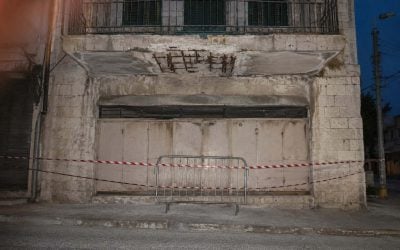
After four years of planning, bureaucratic navigation, and achieving the rare feat of total tenant unity, the decision to terminate the partnership highlights the intense financial pressures currently shaping Tel Aviv’s urban renewal landscape. The project, located in the prestigious “Quarter 4” (Ro’va 4), involved a veteran three-story building from the late 1950s with 11 apartments. The plan was to replace it with a modern seven-story structure containing 18 units.
Anshei HaIr began signing residents in December 2020, reaching the necessary two-thirds majority by March 2021, and eventually securing 100% consent. Despite overcoming regulatory hurdles—including an appeal committee hearing regarding land expropriation for a drainage line—and receiving a conditional permit in April, the numbers simply stopped adding up. In a report filed this week, the company confirmed the cancellation agreement, noting a financial write-off of 2.6 million NIS for expenses incurred, though it retains the right to recoup up to 1.6 million NIS if a future developer utilizes their architectural plans.
Why Do Permitted Projects Fail in a High-Demand Market?
The economic fundamentals of Israeli real estate are shifting, where the “growth at all costs” mentality is being replaced by rigorous financial discipline to protect both developers and the banking sector. Ron Chen, CEO of Anshei HaIr, provided a candid assessment of the situation, noting that the project fell victim to a perfect storm of market forces. “Every day we encounter projects started four years ago,” Chen explained, “but since then, construction costs in Tel Aviv have jumped by 50%, timelines have stretched, and apartment prices—when factoring in financing costs—haven’t risen enough to compensate.”
The core issue lies in the project’s size. Small-scale developments, often called “boutique” projects, lack the financial buffer to absorb unexpected costs or regulatory changes. In this case, a drainage line expropriation further complicated the site. When the company approached the tenants to renegotiate terms—specifically asking them to waive rental fees during construction or parking rights—no agreement could be reached. Without these concessions, and unable to find an alternative developer willing to take the risk, the project was deemed unbankable.
The New Standard for Urban Resilience
This incident isn’t a failure of the system but a sign of its health; developers are refusing to build “on paper” losses, ensuring that completed projects are financially sound and secure. The industry is pivoting toward volume. Chen emphasized that Anshei HaIr is no longer looking at projects with fewer than 50 to 60 apartments. In the dense urban fabric of Quarter 4, where zoning laws strictly limit volume (nefachi) and rights cannot be arbitrarily expanded, the math for small buildings has become unforgiving.
This shift forces a reality check for Israeli apartment owners. The era of demanding extravagant upgrades is waning. As Chen noted, the intrinsic value of a new building today is the structural safety—the specific addition of a reinforced security room (Mamad), a balcony, and modern infrastructure. “You can’t execute a losing project,” Chen stated. “The tenants don’t want it, and the bank certainly won’t back it.” This discipline ensures that when cranes do go up in Tel Aviv, they stay up until completion.
| Feature | The “Old” Era (Pre-2022) | The New Reality (2026) |
|---|---|---|
| Project Viability | Small buildings (10-15 units) were profitable. | Minimum 50-60 units required for safety margins. |
| Tenant Leverage | High; could demand upgraded specs/parking. | Lower; must compromise on benefits to ensure execution. |
| Cost Sensitivity | Margins absorbed minor cost fluctuations. | 50% cost hike renders small projects “unbankable.” |
| Bank Financing | Readily available for permitted projects. | Strictly tied to profitability; “loss leaders” are rejected. |
Navigating Urban Renewal in 2026
- Prioritize Structural Safety: Focus on the value of the Mamad (safe room) and seismic resistance rather than luxury finishes or parking solutions that may kill the project.
- Assess Developer Scale: Verify if your chosen developer has the portfolio depth to absorb rising costs; boutique developers may struggle with single small projects.
- Prepare for Renegotiation: If you signed a contract 3-4 years ago, anticipate a request to adjust terms. Flexibility often saves the project from total cancellation.
Glossary
- Tama 38: A chaotic but vital Israeli National Outline Plan designed to reinforce buildings against earthquakes, often utilized for urban renewal (demolition and reconstruction).
- Quarter 4 (Ro’va 4): A central, high-demand planning zone in Tel Aviv characterized by strict preservation and zoning guidelines that limit building height and volume.
- Mamad: The reinforced security room required in all new Israeli construction, providing protection against rocket fire and earthquakes.
- Expropriation (Drainage Line): A process where the municipality claims a portion of private land for public utility needs, such as sewage or drainage infrastructure, often reducing buildable area.
- Write-off: An accounting action where the value of an asset (in this case, the investment in planning) is declared zero, acknowledging the loss.
Methodology
This analysis is based on recent financial disclosures and press statements from Anshei HaIr (a subsidiary of the Rothstein Group) regarding the termination of the Shlomzion HaMalka project. Data concerning construction cost increases (50%) and project specifics are derived directly from the CEO’s commentary and the company’s quarterly reports.
FAQ
Q: Why would a company walk away after getting a permit?
A: A permit allows you to build, but it doesn’t pay the bills. If construction costs rise faster than the potential sales revenue, the project becomes a financial loss. Banks will not provide the necessary financial backing (accompaniment) for a project projected to lose money, regardless of its legal status.
Q: Do the tenants get any compensation for the four wasted years?
A: The agreement signed was a “mutual waiver of claims,” meaning neither side sues the other. The tenants get their property rights back but lose the time invested. They now face “stage zero”—starting over with a new developer or waiting for market conditions to change.
Q: Is this happening to other projects in Israel?
A: Yes. The CEO of Anshei HaIr indicated that this is a widespread phenomenon. Many projects signed years ago are no longer economically viable under their original terms due to global inflation and local cost spikes. We can expect to see more renegotiations or cancellations in the near future.
Q: Can another developer simply take over?
A: Potentially, but it is difficult. Anshei HaIr attempted to find a replacement developer but failed. The fundamental math—high costs on a small scale—makes it unattractive for others as well, unless tenants agree to significantly reduced benefits.
Wrap-up
The cancellation at Shlomzion HaMalka serves as a sobering but necessary correction for the Tel Aviv real estate market. It highlights a move toward sustainable development where economic feasibility takes precedence over speculative contracts. For the Israeli housing sector, this discipline is crucial for long-term stability, ensuring that the promises made to residents can actually be kept in concrete and steel.
Final Summary
- Market Discipline: Anshei HaIr’s cancellation of a permitted project proves that financial viability is the ultimate regulator in Israeli real estate.
- Cost Reality: A 50% rise in construction costs has made small-scale urban renewal projects in Tel Aviv increasingly risky and rare.
- Tenant Flexibility: The days of rigid tenant demands are over; flexibility regarding benefits is now key to getting projects built.
- Future Focus: The industry is consolidating toward larger complexes (50+ units) to buffer against economic volatility.
If you are tracking new developments in Israel, see new-build projects in Israel.
Want tailored help with buying, selling, renting, or financing property in Israel? Contact the Semerenko Group team and we will guide you through the next step.