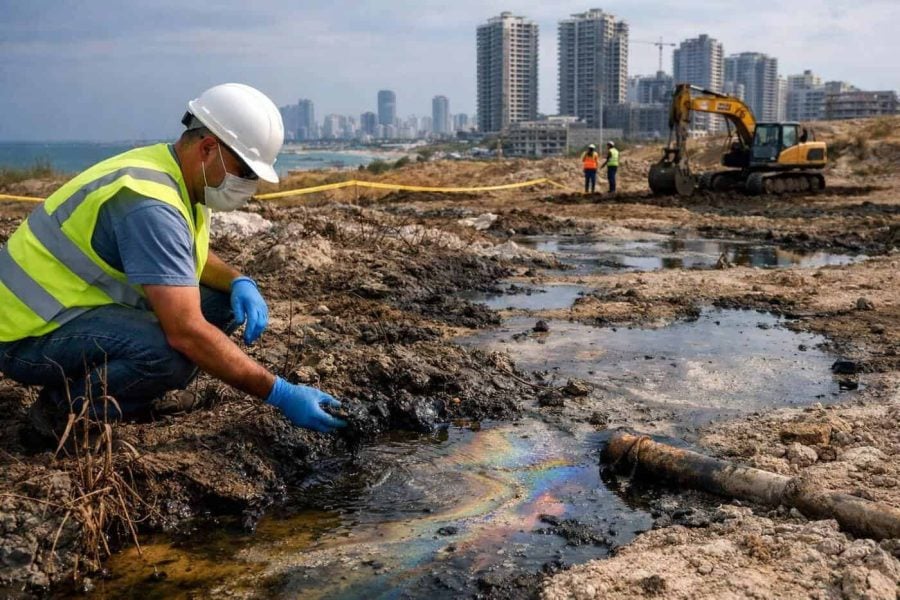
PFAS contamination found at former Sde Dov airport development site
- PFAS (‘forever chemicals’ from firefighting foam) were discovered in soil at the former Sde Dov airport in Tel Aviv after the land was already sold to private developers.
- The site is planned for approximately 16,000 residential units.
- PFAS are linked to immune and cancer risks and are extremely difficult to extract from soil.
- The contamination was not remediated before the Israel Land Authority (RMI) marketed and sold the land, creating legal and financial uncertainty for developers.
- Cleanup costs and liability allocation between RMI and developers remain unresolved.
- Environmental advocates argue Israeli law lacks clear regulations for polluted brownfield land, posing risks to drinking-water aquifers.
- Project cancellation is considered unlikely, but significant delays are possible pending soil remediation.
- Bottom line: PFAS contamination discovered post-sale at Tel Aviv’s Sde Dov site threatens timelines and finances for a planned 16,000-unit development, and exposes gaps in Israel’s brownfield pollution law.
Buying a new-build in Tel Aviv or a large development project? Ask the Semerenko Group about due-diligence red flags before you commit.
The transformation of the historic Sde Dov airport into Tel Aviv’s next premier residential hub has encountered an unforeseen obstacle. As developers prepare to break ground on a massive 16,000-unit neighborhood, the discovery of persistent chemical contaminants in the soil is forcing a recalibration of timelines and environmental strategies for one of Israel’s most significant real estate projects.
Strategic Overview
- Contamination Discovered: New soil tests revealed PFAS, toxic chemicals used in firefighting foams, which remained after the airport’s closure.
- Economic Impact: Developers who paid premium prices for the land now face legal and financial uncertainties regarding cleanup costs.
- Regulatory Test: The incident highlights gaps in Israel’s laws regarding polluted land, sparking a debate on environmental safety and water protection.
The Legacy of Aviation Meets Modern Safety Standards
The transition from an active military and civilian airfield to a residential jewel was never going to be simple, but recent soil analysis has flagged a specific toxic concern that demands immediate attention.
Tests conducted at the former Sde Dov site identified the presence of PFAS—synthetic compounds widely known as “forever chemicals” due to their resistance to breaking down. These substances are a legacy of the firefighting foams frequently used during the site’s operational history. The core issue lies in the timing: these contaminants were not remediated prior to the land being marketed and sold to private developers. This discovery presents a complex engineering challenge, as PFAS are linked to health risks and are notoriously difficult to extract from the soil.
Will Construction Timelines Shift?
For the developers who invested significant capital into these prime coastal parcels, the clock is ticking, and uncertainty is the enemy of progress.
While the Israel Land Authority (RMI) and the Ministry of Environmental Protection have expressed hope that deeper testing and subsequent cleanup efforts will not derail the construction schedule, the reality on the ground is more precarious. Contractors are grappling with the logistics of how to treat or relocate the contaminated soil without endangering nearby coastal ecosystems or the local water supply. Consequently, the financial models and contractual timelines underpinning this mega-project are now under threat, creating a tense atmosphere for the stakeholders involved.
A Spotlight on Environmental Regulation
This incident serves as a crucial stress test for Israel’s environmental legal framework regarding brownfield redevelopment and public safety.
Environmental advocacy groups are using the Sde Dov situation to highlight a broader systemic issue: the lack of clear, robust legislation governing the management of polluted lands in Israel. They argue that this regulatory gap poses risks not just to specific construction sites, but to the nation’s drinking water wells and aquifers. As Israel continues to develop rapidly, establishing strict protocols for handling such contamination is becoming an urgent national priority to ensure that urban expansion does not come at the cost of environmental integrity.
| Project Aspect | Initial Expectation | Current Status |
|---|---|---|
| Site Condition | Cleared for immediate residential development. | Contaminated with PFAS requiring remediation. |
| Timeline | Rapid construction of ~16,000 units. | Potential delays pending soil treatment solutions. |
| Financial Outlook | Standard development costs. | Risk of escalating cleanup costs and legal disputes. |
| Regulatory Focus | Standard zoning compliance. | Scrutiny over gaps in pollution laws and water safety. |
Essential Steps for Resolution
- Advanced Diagnostic Testing: Authorities must map the exact spread of PFAS to determine the scope of remediation required.
- Containment Strategy: Developers and the Ministry of Environmental Protection need to agree on a method to treat soil without leaching toxins into the coast.
- Legislative Update: Policymakers must expedite clear regulations for polluted land to prevent future uncertainties in national infrastructure projects.
Sde Dov Remediation Glossary: Trichloroethylene, Contamination Plumes and Clean-Up Benchmarks
- PFAS: Per- and polyfluoroalkyl substances; a group of man-made chemicals often used in firefighting foam that do not break down easily in the environment.
- Sde Dov: A former airport in Tel Aviv now the site of a major luxury real estate masterplan.
- RMI: The Israel Land Authority, the government body responsible for managing national land.
- Brownfield: Previously developed land that is not currently in use and may be potentially contaminated.
How We Compiled the Sde Dov Toxic-Chemicals Environmental Challenge Data
This report analyzes developments regarding the Sde Dov construction site based on recent soil testing data and stakeholder statements. Information regarding the presence of PFAS, the reaction of the RMI and Ministry of Environmental Protection, and the concerns of developers and environmental groups is derived from reporting by Calcalist.
Sde Dov Buyer and Developer Questions: Contamination, Timelines and Legal Exposure
What are the health risks associated with PFAS?
PFAS are known as “forever chemicals” because they persist in the body and environment. They have been linked to various health issues, including immune system effects and increased risk of certain cancers, making their removal from residential areas critical.
Who is financially responsible for the cleanup?
This is a point of contention. The contamination was discovered after the land was sold, leading developers to face unexpected costs. Typically, disputes of this nature involve negotiations between the government (RMI) and the private sector to determine liability for pre-existing pollution.
Could this stop the Sde Dov project entirely?
It is highly unlikely the project will be cancelled given the massive investment and the high demand for housing in Tel Aviv. However, significant delays are possible as engineering solutions are implemented to ensure the soil is safe for habitation.
Sde Dov’s Remediation Road Map: Next Regulatory Milestones and Developer Obligations
Israel has a long history of overcoming complex logistical and environmental challenges to build a thriving nation. The discovery of contamination at Sde Dov is a serious hurdle, but it also presents an opportunity to set a new standard for environmental safety in urban development. With cooperation between state authorities and private enterprise, the site can still become the vibrant neighborhood envisioned—safely and responsibly.
What the Sde Dov Toxic-Chemical Findings Mean for Tel Aviv’s Northern Development
- Discovery: Toxic firefighting chemicals were found at the Sde Dov site post-sale.
- Risk: The 16,000-unit project faces potential delays and financial disputes.
- Regulation: The event underscores the need for better laws regarding soil pollution.
Why Sde Dov’s Environmental Challenge Sets a Precedent for Urban Brownfield Redevelopment
This story matters because it demonstrates the maturity of the Israeli state. Rather than ignoring environmental hazards in the rush to build, the discovery highlights a commitment to public safety and transparency. It also underscores the high stakes of Tel Aviv real estate, where the intersection of historic infrastructure (like the old airport) and modern expansion requires sophisticated engineering and legal solutions. Ensuring this cleanup is handled correctly is vital for the long-term health of Israel’s coastline and its water resources.
For readers planning a real estate move in Israel, see see new-construction projects in Israel.
Considering a purchase, sale, rental or investment in Israel? Speak with the Semerenko Group team for personal guidance.
Get real estate help in Israel
Looking into real estate in Israel? If you want real, matching options instead of more reading, tell us what you need and we will do the sourcing, calls and coordination for you.
To find real estate, fill out this short form and we will get back to you. To speak with a real estate AI in Israel right now, start a chat here.