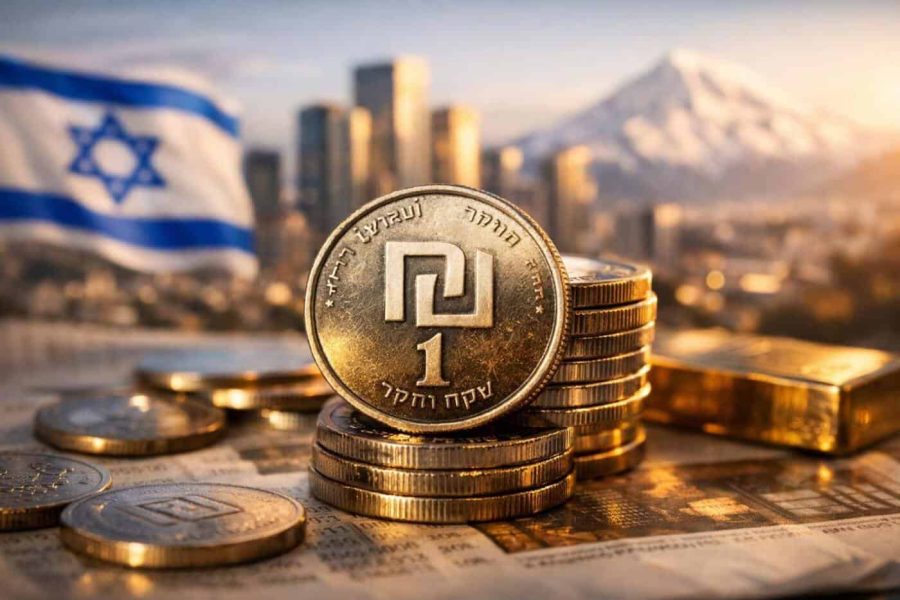
The Israeli shekel is flexing its muscles again, smashing through resistance levels to trade between 3.15 and 3.17 against the U.S. dollar. As global leaders gather in Davos, Bank of Israel Governor Amir Yaron confirms this financial resurgence isn’t merely luck—it is the direct result of hard-won geopolitical stability and unshakeable economic fundamentals.
Economic Resilience in Focus
- Currency Surge: The USD/ILS exchange rate has dropped to 3.15–3.17, levels unseen in years, signaling immense market confidence.
- Davos Declaration: Governor Yaron attributes the rally to the calm following the October 2025 ceasefire and Israel’s robust export machinery.
- Inflation Tamed: The strong currency is actively suppressing imported inflation, keeping price rises safely within the central bank’s target range.
- Policy Pivot: With two recent interest rate cuts already on the books, the Bank of Israel forecasts further monetary easing this year.
Fundamentals Fuel the Rally, Not Just Sentiment
Critics often dismiss currency spikes as temporary market noise, but Jerusalem has the economic receipts to prove otherwise. Speaking from the World Economic Forum on January 21, 2026, Governor Yaron made it clear that this rally is built on the bedrock of a recovering, robust economy rather than speculation.
The primary driver of this appreciation is the improved geopolitical landscape following the October 2025 ceasefire. This return to stability has allowed Israel’s powerhouse export sector to operate at full capacity, driving demand for the shekel. Furthermore, the currency’s strength is creating a virtuous cycle for the average citizen: by lowering the cost of imported goods, the soaring shekel is doing the heavy lifting in moderating inflation, which is now resting comfortably inside the government’s target zones.
Is the Strong Shekel a Double-Edged Sword for Exporters?
While consumers cheer for cheaper imports and reduced cost-of-living pressures, the titans of Israel’s tech and industrial sectors face a stiffer challenge. A stronger currency means Israeli goods and services become more expensive for foreign buyers, potentially squeezing margins for the nation’s vital export engine.
Governor Yaron and financial officials have acknowledged this friction. While the current exchange rate is a boon for controlling price pressures, it complicates the landscape for local companies selling abroad. However, the Bank of Israel has emphasized that it is not a passive observer; it retains a suite of tools to influence foreign exchange markets should the appreciation become disruptive to economic growth.
The Road Ahead: Interest Rates and Future Forecasts
Monetary policy is shifting gears from crisis management to growth facilitation. Having already slashed interest rates twice recently to support the recovery, the Bank of Israel is signaling that the era of prohibitively high borrowing costs is coming to an end.
The research department’s baseline forecast indicates that the economy is adjusting well, paving the way for further easing later in the year. This dovish outlook is supported by the shekel’s performance; because the strong currency is naturally dampening inflation, the central bank has more flexibility to cut rates without fear of reigniting price spirals. For businesses and investors, using official representative rates remains the gold standard for pricing cross-currency deals in this shifting environment.
| Economic Factor | Current Status (Jan 2026) | Strategic Implication |
|---|---|---|
| USD/ILS Rate | Trading at 3.15–3.17 | Strong purchasing power for importers; lowered costs for consumers. |
| Inflation | Inside Target Range | Allows the central bank to focus on growth rather than price containment. |
| Interest Rates | Cut twice recently | Borrowing costs are falling, stimulating investment and real estate. |
| Exports | Strong volume, high cost | High demand validates quality, but margins face currency pressure. |
Navigating the New Rate Environment
- Re-evaluate USD Contracts: With the rate dipping below 3.17, businesses holding dollar-denominated assets or contracts should assess the impact on their balance sheets immediately.
- Adjust Pricing Models: Exporters must explore hedging options or efficiency improvements to maintain competitiveness as their goods become pricier abroad.
- Monitor Official Rates: Use the Bank of Israel’s published representative rates daily to set consistent price expectations for conversions and deal-making.
Glossary
- USD/ILS: The exchange rate notation for how many Israeli Shekels (ILS) are required to buy one U.S. Dollar (USD).
- Representative Rate: An official exchange rate published by the Bank of Israel, used as a benchmark for financial contracts and indexation.
- Fundamentals: The core economic metrics of a country, such as GDP growth, export volume, and fiscal stability, excluding temporary market sentiment.
- Monetary Policy: Actions taken by a central bank (like setting interest rates) to control the money supply and achieve economic goals like low inflation.
- Inflation Target Range: A specific band of acceptable inflation rates defined by the government, guiding the central bank’s policy decisions.
Methodology
This report is based on data released by the Bank of Israel and statements made by Governor Amir Yaron at the World Economic Forum in Davos on January 21, 2026. Exchange rate figures reflect market openings from that date, and policy context is derived from official central bank press releases regarding research forecasts and interest rate decisions.
Frequently Asked Questions
Why has the Israeli shekel strengthened so rapidly?
The appreciation is driven by “robust fundamentals” in the Israeli economy, specifically the resumption of full-scale exports and improved geopolitical stability following the ceasefire in October 2025. This confidence has driven foreign investment and demand for the currency.
How does a strong shekel affect inflation in Israel?
A strong shekel reduces the cost of importing goods (like oil, cars, and raw materials) into Israel. This acts as a natural brake on inflation, keeping consumer prices stable and allowing the central bank to meet its targets without aggressive interest rate hikes.
Are interest rates expected to go up or down?
Down. The Bank of Israel has already cut rates twice recently. Given that inflation is contained—partly due to the strong currency—the central bank’s research department forecasts further easing (rate cuts) later in the year to support economic adjustment.
Does the Bank of Israel intervene in the currency market?
They can. While the current strength is viewed as a reflection of economic health, officials have noted that they possess the necessary tools to intervene in the foreign exchange market if the shekel’s rise becomes disruptive to exporters or the broader economy.
What is the current exchange rate level mentioned?
As of the market opening on January 21, 2026, the shekel was trading at levels around 3.15 to 3.17 per U.S. dollar, a strength not seen in several years.
Strategic Outlook
Israel’s economy has turned a corner, moving from a defensive posture to one of confident growth. The combination of a powerful currency and falling interest rates creates a prime window for capital investment and consumer spending. Stakeholders should capitalize on the strong shekel to upgrade technology and infrastructure at reduced costs while preparing for a more favorable borrowing environment in the latter half of 2026.
The Bottom Line
- Currency Dominance: The shekel is outperforming expectations, hitting 3.15–3.17 against the dollar.
- Stability Pays Off: Post-war calm and export strength are the primary drivers of this financial health.
- Policy Ease: With inflation under control, the path is clear for further interest rate cuts.
Why We Care
This development proves the resilience of the Israeli economy in the face of adversity. The strengthening shekel is not just a financial statistic; it is a global vote of confidence in Israel’s future following the October 2025 ceasefire. It signals to investors and enemies alike that the Jewish state has bounced back rapidly, maintaining its status as a stable, high-tech powerhouse capable of weathering geopolitical storms and emerging stronger.