
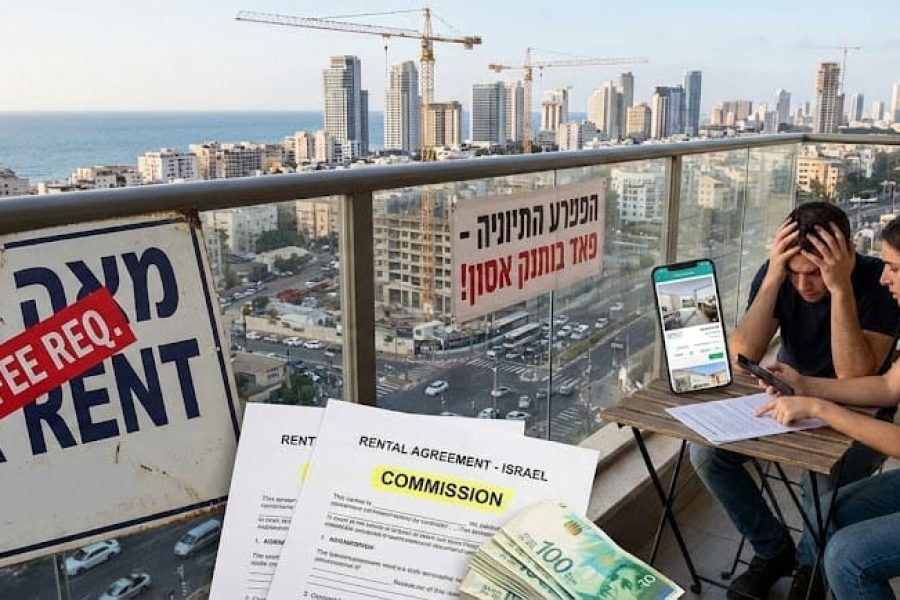
Here is the brutal truth:
If you are looking for an apartment in Tel Aviv, Jerusalem, or Herzliya right now, you are probably angry.
You scroll through Yad2 or Facebook Marketplace. You find a decent apartment. You call the number.
And then… it happens.
The person on the other end isn’t the landlord. It’s an agent. And they drop the bomb:
“Agency fee is one month’s rent + VAT.”
You didn’t hire them. You didn’t ask for them. But if you want the keys, you have to pay them.
This specific pain point has sparked a massive debate in Israel (and angry Reddit threads), leading to a burning question:
Is this actually legal?
In this deep dive, we are going to break down everything you need to know about the Israeli real estate market in 2025, the “Friar” culture, and the massive crisis hitting agents right now.
Let’s dive in.
1. The Elephant in the Room: Why Do Renters Pay?
If you are from the US (outside of NYC) or Europe, this system makes zero sense.
In most of the world, the seller/landlord pays the commission because the agent is working for them to market the property.
So, why is Israel different?
The “Standard” vs. The Law
Here is where it gets tricky.
Technically, under Israeli law (specifically the Real Estate Agents Law), the person who orders the service is the one who pays.
But here is the catch:
In high-demand areas (like Tel Aviv), landlords hold all the cards. They tell agents: “I want you to find me a tenant, but I am not paying you a shekel. Collect your fee from them.”
Because the vacancy rate is so low, the agent agrees. And because you want the apartment, the agent makes you sign a document stating that you are ordering their services before they show you the property.
The Result: You legally become the “client,” even though the agent is serving the landlord’s interest.
The “NYC” Comparison
The Reddit thread mentioned NYC, and they are right. New York City and Tel Aviv are two of the only places globally where this “tenant-pays” model is standard practice.
While NYC has flirted with banning this (and faced massive pushback from lobby groups), Israel’s market relies on it heavily due to a lack of exclusive listings.
2. Understanding The “Friar” Culture
To understand the anger in the Reddit thread, you have to understand one Hebrew word:
Friar (פראייר).
Definition: A sucker. Someone who is taken advantage of. Someone who follows the rules while everyone else cuts the line.
In Israeli culture, being a Freier is the ultimate social sin.
- The Fear: Israelis are constantly on guard against being exploited.
- The Reality: When a renter is forced to pay 5,000–10,000 NIS to an agent who simply opened a door, they feel like the ultimate Freier.
This psychological trigger is why this specific topic causes so much rage. It’s not just about the money; it’s about the feeling of being “scammed” by the system.
3. The Market Meltdown (2024-2025)
While renters are angry at agents, the agents are actually in the middle of a historic crisis.
The Israeli real estate market has been hammered by a “perfect storm” of economic and geopolitical disasters.
The 3 Pillars of the Crisis
| Factor | The Impact |
| High Interest Rates | The Bank of Israel raised rates to combat inflation. Mortgages are now significantly more expensive, freezing out young couples and investors. |
| The “Iron Swords” War | Since late 2023, uncertainty has paralyzed the market. Foreign buyers (especially French and American) are hesitant to pull the trigger. |
| Labor Shortage | This is the big one. The construction sector relied heavily on Palestinian labor. Since the war, those workers are gone. Construction sites are stalled, and renovation costs have skyrocketed by 20–30%. |
The Data:
Recent reports indicate that housing deals have plummeted by nearly 40% year-over-year.
What this means for you:
The “Sellers Market” is cooling in terms of sales, but the Rental Market is hotter than ever because people who can’t buy are forced to rent.
4. The Agent’s Dilemma: Too Many Sharks, No Fish
Israel has one of the highest numbers of real estate agents per capita in the world.
Why?
- Low Barrier to Entry: The licensing exam is considered relatively easy compared to the US or Europe.
- High Reward: One deal in Tel Aviv can net an agent 40,000+ NIS.
The Problem:
With transaction volume down 40%, there aren’t enough deals to feed everyone.
We are currently seeing a massive “washout” of agents. Experienced realtors are struggling, and part-timers are leaving the industry in droves. This desperation leads to aggressive tactics—like pressuring renters for commissions—because it might be the only check they cash that month.
5. The 2025 Reform: A Glimmer of Hope?
The government knows the system is broken.
As of recent legislative updates (leading into 2025), the Ministry of Justice has rolled out new ethics regulations to clean up the industry.
The New “Rules of Engagement”:
- Written Exclusivity: Agents can no longer claim they represent a property without a signed exclusivity agreement from the owner.
- Transparency: Agents must disclose material defects in the property (legal issues, physical damage) upfront.
- Legal Limits: A massive win for lawyers—Agents are strictly forbidden from drafting legal documents. If an agent tries to write the contract for you, they are breaking the law.
- The “Double Dip” Disclosure: If an agent is representing both the buyer and the seller (and collecting commission from both), they must disclose this in writing before the transaction.
The Bottom Line
The Reddit thread calls the system “blackmail,” and for many renters, it feels exactly like that.
Here is the summary:
- The System: It favors the landlord. Until supply exceeds demand, renters will likely continue paying the “Freier Tax” (agency fees).
- The Market: It is stagnant. Buying is hard, renting is expensive.
- The Future: New regulations are trying to professionalize the industry, but they haven’t banned the renter-commission model yet.