
What Buyers and Investors Must Know About This Diverging Market
- Israel home prices rose 7.3% in 2024, per the Bank of Israel Annual Report 2024.
- About 86,290 new apartments remained unsold at end of January 2026 — roughly 31.4 months of supply nationally.
- Nearly 55% of unsold new stock is concentrated in Tel Aviv district (29.9%) and the Central district (24.6%).
- About 89,000 new mortgages were issued in 2024; the average loan reached approximately NIS 1 million.
- More than half of new mortgages included a CPI-indexed component; use of bullet/balloon payment structures rose, partly driven by developer financing campaigns.
- Rental prices increased 4.0% in 2024; planning authorities approved 204,000 housing units, but construction worker shortages slowed delivery.
- The Bank of Israel policy rate stands at 3.75%; the next decision is scheduled for 2026-05-25.
- Two distinct housing markets now operate side by side in Israel — established family neighbourhoods holding firm on price, and developer-heavy new-supply corridors under growing demand and financing stress.
A single national price index can hide a great deal. Israel’s housing market posted headline growth in 2024, yet on the ground a deepening split is visible to anyone tracking unsold inventory, mortgage structures, and neighbourhood-level demand. The divergence has direct consequences for what you pay, how long it takes to sell, and how much negotiating room exists — depending entirely on where the property sits.
Two Markets, One Country: The Core Split
On one side stand the well-established family pockets — walkable neighbourhoods in greater Tel Aviv, Jerusalem, and mature suburbs where owner-occupiers dominate, schools are rated, and new supply is scarce. These locations held and extended value through 2024 and into 2025, supported by genuine end-user demand and limited competition from new construction.
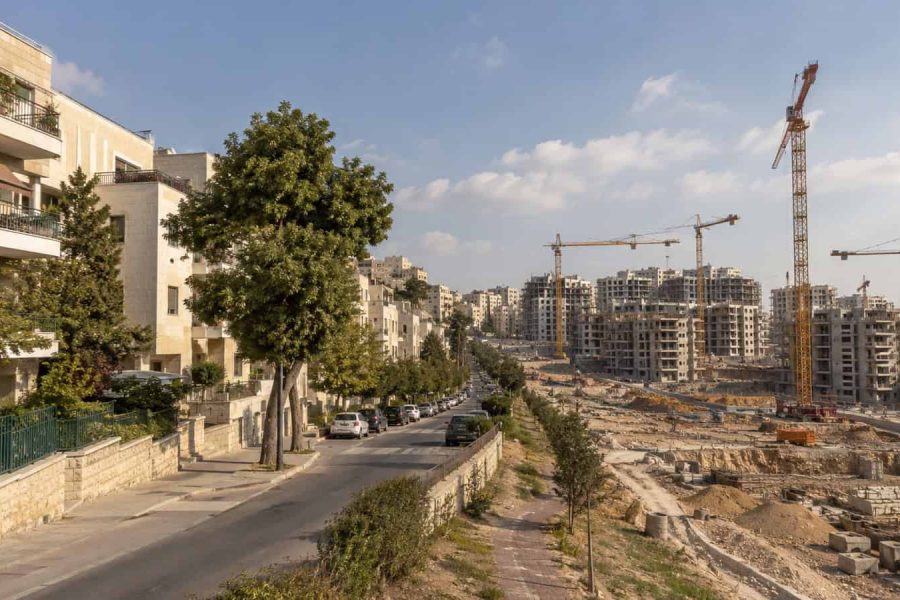
On the other side sit the developer-heavy corridors — large-scale apartment projects in peripheral cities, urban renewal zones, and fast-expanding suburban tracks where the planning pipeline opened wide. Here, the mismatch between approved units and actual buyers is becoming harder to ignore.
The Inventory Signal That Changes Negotiations
The CBS release covering transactions through January 2026 counted about 86,290 new apartments still for sale nationwide, representing 31.4 months of supply. That figure is not evenly distributed. The Tel Aviv district alone held 29.9% of unsold stock, the Central district 24.6%. Together they account for more than half the national pipeline.
High unsold inventory in a specific corridor is a negotiation signal, not just a statistical footnote. Developers sitting on completed units face carrying costs and financing obligations. Buyers who understand the local inventory picture can ask for better terms, upgraded finishes, or deferred payment structures — particularly on projects that have been marketing for more than twelve months.
Mortgage Structure Risk Is Concentrated in New Developments
The Bank of Israel Banking System Annual Survey 2024 noted that more than half of new mortgages included a CPI (Consumer Price Index) linked component, and that bullet or balloon payment structures rose in prevalence — partly because developers packaged financing campaigns to move inventory. A bullet component means the borrower pays interest only for a set period, then repays a large principal sum later. That structure works when prices keep rising and refinancing remains accessible; it adds risk if market conditions soften.
Buyers entering developer-heavy zones through these deals should model what repayment looks like at different inflation and rate scenarios, not only at the rate quoted on signing day.
Why Prime Family Neighbourhoods Are Holding Firm
The stability in established neighbourhoods is not accidental. Supply constraints are structural: urban renewal projects take years, and infill construction is slow and contested. Demand in these pockets comes from owner-occupiers with longer time horizons — people buying for school zones and community, not yield speculation. Turnover is low, so pricing discipline holds. Even with the policy rate at 3.75%, motivated buyers in these segments accept the carrying cost because the alternative — renting in the same area — also became more expensive, with rental prices rising 4.0% in 2024.
Construction Execution Gap: Approvals Versus Delivery
Planning authorities approved 204,000 housing units in 2024, according to the Bank of Israel Annual Report 2024. That is a large number on paper. But construction worker shortages — a persistent problem since late 2023 — have delayed actual completions. The gap between approved and delivered units matters for buyers in projects still under construction: timelines are less reliable, and handover dates quoted at contract signing carry more variance than in previous cycles.
What a Rate Decision This Week Could Change
The Bank of Israel is scheduled to announce its next policy rate decision on 2026-05-25. The current rate of 3.75% has held mortgage affordability tighter than the pre-2022 era. A cut would reduce monthly payments on variable-rate components and potentially shift fence-sitters toward buying. A hold or a signal of caution would reinforce the current dynamic: patient buyers in developer supply zones gaining leverage, while prime family pockets see little relief in price growth.
| Indicator | Prime Family Pockets | Developer-Heavy Supply Zones |
|---|---|---|
| Unsold inventory pressure | Low — limited new supply | High — 31.4 months nationally |
| Buyer negotiating power | Weak — sellers hold discipline | Growing — developers face cost pressure |
| Rental market link | Rental prices up 4.0%; supports purchase interest | Rental yield potential, but vacancy risk higher |
| Mortgage structure risk | Lower — buyers typically more equity-strong | Higher — bullet/balloon deals more common |
| Delivery timeline certainty | Secondary market — immediate | New construction — delays likely |
How This Data Was Compiled
Figures cited draw on the Bank of Israel Annual Report 2024, the Bank of Israel Banking System Annual Survey 2024, the CBS real-estate transactions release through January 2026, and the Bank of Israel monetary policy page. Individual property outcomes will vary from national or district-level trends.
Where This Leaves Buyers, Sellers, and Investors in Mid-2026
The split in Israel’s housing market is not a temporary statistical glitch — it reflects structural differences in supply pipelines, buyer profiles, and financing channels that have been widening for several years. A buyer who understands which market they are entering, and prices their offer accordingly, is in a fundamentally different position from one relying on headline national data.
If you would like help evaluating your options or have questions about your property search in Israel, reach out to the Semerenko Group team here for a personal, expert consultation.
Frequently asked questions
Are prime family neighbourhood prices in Israel still rising?
National prices rose 7.3% in 2024, and established family areas outperformed that average — supported by scarce new supply, owner-occupier demand, and rising rents (up 3.75% in 2024). Whether the pace continues depends heavily on the Bank of Israel rate path (currently 3.75%) and wage growth, neither of which can be projected with certainty.
Does the 31.4-month national inventory figure apply uniformly across Israel?
No. The 31.4 months of supply is a national average skewed by the Tel Aviv (29.9%) and Central (24.6%) districts, which together hold more than half of the roughly 86,290 unsold new apartments. Peripheral, southern, and northern regions show different supply dynamics, so always check district- and project-level data for your target area.
What is the real risk of a CPI-indexed bullet mortgage in Israel?
A bullet component means you pay interest only for a set period, then repay a large principal lump sum later, while a CPI-indexed loan adjusts the outstanding principal with inflation. If inflation stays elevated and you hold to maturity, the nominal principal repaid can exceed the amount borrowed. Stress-test your budget against 2–3% cumulative CPI above today's level before accepting this structure.