
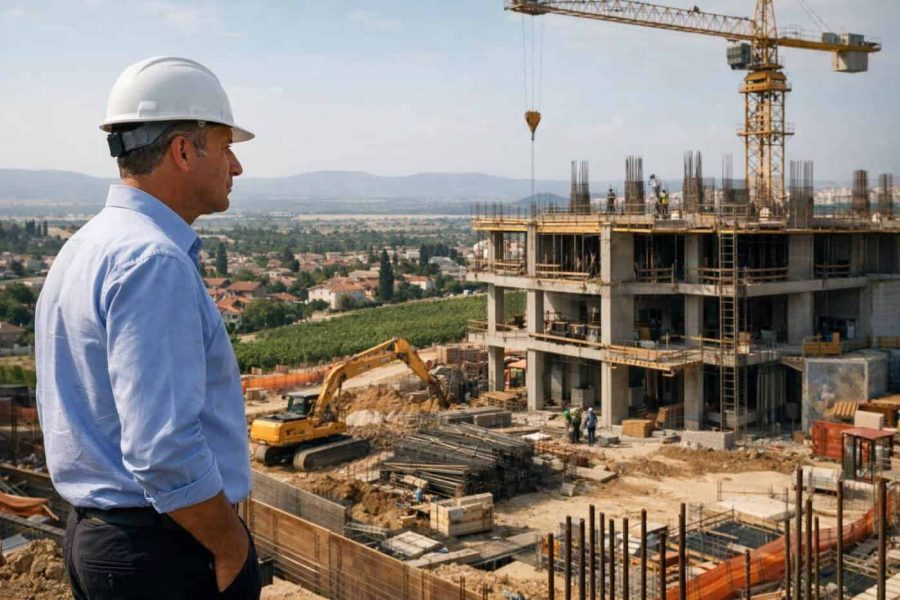
In a definitive signal of confidence in the Israeli local economy, retail giant Yohananof has executed a strategic maneuver to anchor its presence in the Sharon region. By partnering with Shai Hai Entrepreneurship, the chain is not merely opening a supermarket but is financing the development of a major commercial center, demonstrating that Israeli commercial infrastructure development continues to accelerate despite market fluctuations.
Blueprint for Commercial Growth
- Strategic Acquisition: Yohananof is purchasing 30% of a 17-dunam plot for 17 million NIS.
- Joint Venture: The project is a partnership with Shai Hai Entrepreneurship, owned by Ofer Biton.
- Scale of Development: Plans include a 14,000 square meter commercial center with parking and retail spaces.
- Long-Term Vision: The deal secures a 20-year lease for a flagship Yohananof branch.
A Strategic Partnership Anchors New Development
The agreement signed in recent days sees the Yohananof chain joining forces with Shai Hai Entrepreneurship and several minority partners to transform a substantial plot in Binyamina. This is not a standard lease transaction; it represents a calculated move to fuse retail operations with real estate assets, ensuring long-term balance sheet stability. Under the terms reported to the stock exchange, Yohananof will acquire 30% of the ownership rights in the land, which currently consists of several lots slated for unification.
The financial structure of the deal is precise: in exchange for the 17 million NIS investment, Yohananof secures a significant equity stake. The projected commercial center will span approximately 14,000 square meters, designed to serve as a regional hub. Shai Hai Entrepreneurship is tasked with the management and physical construction of the complex. This collaboration leverages Shai Hai’s development expertise while utilizing Yohananof’s financial strength and status as an anchor tenant to ensure the project’s viability from day one.
What Drives the Focus on This Specific Location?
Binyamina-Giv’at Ada represents a demographic sweet spot—a quality community with a stable, growing population that the partners identify as having high commercial potential. By planting a flag here, the developers are betting on the robust purchasing power of local residents who require modern, accessible retail solutions. The center is explicitly designed to serve the residents of Binyamina and the surrounding areas, filling a gap in the local commercial landscape.
The revenue model is built on shared success. Profits, including income generated from renting out spaces to other businesses, will be distributed among the partners according to their holding percentages. Crucially, the Yohananof chain itself will rent space from this joint company for a period of 20 years. This arrangement guarantees immediate occupancy and a steady income stream for the partnership, validating the “anchor tenant” strategy often used to de-risk new commercial developments.
Real Estate as a Growth Engine for Retail
This move is part of a wider pattern where astute Israeli retailers are increasingly becoming their own landlords. By controlling the land, companies like Yohananof insulate themselves from rent volatility while building an asset portfolio. Eitan Yohananof, the chain’s CEO and owner, framed this as a continuation of a strategy based on establishing branches on company-owned land and forging alliances with professional real estate entities.
The company is actively pursuing similar yielding real estate projects in Petah Tikva, Yavne, and Dimona, and recently concluded a significant 140 million NIS combination deal in Or Yehuda. Regarding the Binyamina project, the company projects construction costs to stand at approximately 16 million NIS (excluding land and financing), a figure that suggests a highly efficient development plan or a phased investment structure for the retailer’s specific share.
| Feature | Binyamina Joint Venture | Standard Retail Lease Model |
|---|---|---|
| Ownership | 30% equity in land and structure | 0% equity; pure operational expense |
| Asset Class | Yielding Real Estate (Income generating) | Liability (Monthly expense) |
| Lease Security | Guaranteed 20-year term | Subject to landlord renewal/hikes |
| Revenue Stream | Retail sales + Portion of rent from other shops | Retail sales only |
Tracking the Retail-Real Estate Hybrid Model
- Monitor Permitting: The partners are currently working to obtain building permits; the speed of approval will indicate local municipal support.
- Analyze Regional Competition: Watch how existing small businesses in Binyamina react to the entry of a major 14,000 sq meter complex.
- Evaluate Cost Management: Track the final construction costs against the projected 16 million NIS estimate to gauge development efficiency.
Glossary
- Dunam: A unit of land area used in Israel, equivalent to 1,000 square meters (roughly 0.25 acres).
- Anchor Tenant: A leading, usually large, tenant (like a supermarket) in a shopping center whose presence attracts other tenants and shoppers.
- Combination Deal: A real estate transaction where the land owner provides the ground and the developer covers construction costs, sharing the final built units or profits.
- Yielding Real Estate: Property owned specifically to generate income through rent, distinct from property held for quick resale or personal use.
Methodology
This report is based on financial filings and press statements released by Yohananof regarding their agreement with Shai Hai Entrepreneurship. Figures concerning investment amounts, land size, and projected construction costs are derived directly from these official disclosures.
Frequently Asked Questions
Who will manage the construction of the new center?
Shai Hai Entrepreneurship, owned by Ofer Biton, is entrusted with the management and execution of the project’s construction. They are the professional real estate partner in this joint venture.
What is the total size of the planned project?
The project will be built on a land area of approximately 17 dunams. The built commercial center itself is expected to encompass about 14,000 square meters, which includes the supermarket, other retail shops, and parking facilities.
Does Yohananof own the entire project?
No. Yohananof is acquiring 30% of the rights. The remaining 70% is held by Shai Hai Entrepreneurship and other minority partners. Profits and costs are shared according to these holdings.
Why is a supermarket chain investing in construction?
It is a strategic hedge. By owning part of the real estate, Yohananof lowers its long-term operational risks, prevents rent hikes, and creates an additional revenue stream from the other shops in the center, rather than relying solely on grocery sales.
What is the status of the project now?
As of the announcement, the partners are in the process of obtaining the necessary building permits to commence construction.
Wrapping Up
The collaboration between Yohananof and Shai Hai signals a maturing Israeli market where retail powerhouses are no longer content to simply rent space—they are building the infrastructure of the future. Investors and observers should keep a close watch on the Binyamina planning committee’s pace, as the rapid approval of this project would serve as a further catalyst for commercial investments in Israel’s northern Sharon district.
Key Takeaways
- Investment: Yohananof injects 17 million NIS for a 30% stake in Binyamina land.
- Development: A 14,000 sq meter center will be built, managed by Shai Hai Entrepreneurship.
- Strategy: The deal reinforces a “landlord-retailer” model, securing long-term location stability.
- Community: The project targets the under-served, high-quality demographic of Binyamina-Giv’at Ada.
Why We Care:
This development is more than just a new supermarket; it is a testament to the resilience and expansion of the Israeli domestic market. When major companies invest millions in physical infrastructure and long-term partnerships, it indicates a strong belief in the stability of the local economy and the purchasing power of Israeli communities. It also highlights a sophisticated shift in Israeli business where retail giants are bolstering their financial health by acquiring hard assets.