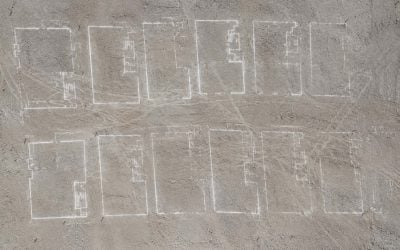
A small row of streets in Yad Eliyahu has become a case study in how Tel Aviv builds: through committee votes, legal fights, and fine-grained conditions. Now a revised plan for Luchmei Glipoli 50-52 is moving toward deposit, with extra homes and a checklist of design and public-space fixes.
The story so far in four points
Tel Aviv-Yafo’s local planning subcommittee has advanced a revised neighborhood plan covering Luchmei Glipoli 50-52 and nearby addresses in Yad Eliyahu. The move signals a formal step toward public review, while keeping the project tethered to strict technical conditions and a complicated legal backstory.
- The subcommittee discussed the plan for deposit (הפקדה), the publication stage that opens the public objection window.
- The revised version increases the dwelling count compared with earlier iterations.
- Technical conditions focus on public land arrangements and façade design corrections.
- The committee record lays out a court path that slowed earlier permits and pushed a planning reset.
The committee put Plan 507-1463983 on the deposit agenda
In a January 7, 2026 session, Tel Aviv-Yafo’s planning subcommittee discussed Plan 507-1463983 for Luchmei Glipoli 50-52, a Yad Eliyahu redevelopment site spanning several adjacent streets. The protocol frames the item as a deposit discussion, placing it on the track toward official publication and public objections.
The protocol lists the item under the municipal plan index and places authority with the local planning committee, which is the body empowered to deposit plans of this type.
The location is street-level and specific, covering addresses on Luchmei Glipoli, HaMa’aracha, and Sderot Yad Labanim within Yad Eliyahu. That narrow geography is exactly why small planning moves can matter locally.
Why did this block end up in court?
The file reads less like a routine zoning tweak and more like a legal thriller. Building permits approved in 2022 triggered a dispute once planners found submitted calculations exceeded what existing plans allowed, leading to litigation and appeals. The court sequence helped steer the project back into a corrected statutory plan.
The committee record ties the story to permits approved on May 11, 2022 under TAMA 38. TAMA 38 was Israel’s former national outline plan for strengthening older buildings against earthquakes. After approval, officials flagged that the submitted area calculations exceeded what binding plans allowed.
The dispute reached the Tel Aviv District Court as Administrative Petition 29656-11-24, a lawsuit challenging an administrative decision. The court ruled on December 17, 2024 and ordered issuance of permits and betterment levy assessments. A betterment levy is a charge on value gains created by planning decisions.
The municipality appealed to the Supreme Court in case 70125-01-25 and sought a stay. Permits were issued on February 2, 2025, but implementation was later paused pending further decision. The record then describes revised permits approved in April 2025 and issued in August 2025, alongside the corrected plan route.
The revision adds homes, but the change is tightly bounded
The headline change is a small bump in housing supply, not a wholesale rewrite of the project. According to the committee record, the revised plan adds seven apartments and keeps the change close to the baseline created by existing permits. It is a familiar Tel Aviv trade: more homes, stricter conditions, tighter paperwork.
The protocol states the revision explicitly adds seven dwelling units. It also frames the change as limited compared with the approved permit situation.
That framing shows up in the environmental review. The committee record notes that the addition was not treated as a major shift, so an environmental appendix was not required for the plan.
What conditions did the city attach before formal deposit?
Deposit discussions often sound abstract, but the committee attached a very concrete to-do list. Before formal deposit, planners must correct documents, coordinate with the city’s land and asset units, and refine the façade treatment on Luchmei Glipoli. The goal is predictable: protect public space while tightening design accountability.
The protocol requires technical corrections coordinated with the city engineer and relevant municipal departments. It also calls for legal review of the plan’s wording before publication.
Another core demand is coordination on public land provisions. The record flags the need to align plan documents on public areas intended for transfer to city ownership.
Façade design is singled out as well. The exterior treatment on Luchmei Glipoli is slated for corrections in the construction appendix, subject to the city engineer’s satisfaction.
Comparison table: what changed and what it means
Tables do not build homes, but they do show where a project is headed. The comparison below separates the procedural step (deposit) from the substantive changes (unit increase and conditions). It also flags the court background that shaped the timetable and the city’s insistence on technical fixes.
| Topic | What the committee record shows | Why it matters |
|---|---|---|
| Planning status | Advanced to a deposit discussion by the local subcommittee | Deposit is the gateway to publication and objections |
| Housing supply | A small increase in the number of homes | Incremental additions can ease pressure block by block |
| Conditions | Technical corrections, public land coordination, façade revisions | These items can determine whether deposit happens smoothly |
| Legal backdrop | A court timeline influenced permits and the planning route | Legal uncertainty can reshape schedules and strategy |
A quick checklist for anyone tracking the project
If you live near the site, own property there, or are weighing a purchase, the next steps are practical. Deposit is when a plan’s paperwork becomes public, not just internal. These checks help you catch deadlines, understand likely impacts, and decide whether to support, object, or simply monitor.
- Watch for the plan’s formal deposit publication and the official objection window that comes with it.
- Read the plan documents with a focus on public land provisions and street-facing design.
- Coordinate early with neighbors if you plan to file an objection or a letter of support.
- Ask professionals to review how the conditions could affect timing and constructability.
- Keep an eye on any court-related updates referenced in the committee record’s background.
Key terms used in this report
Israeli planning files mix Hebrew acronyms, legal terms, and committee jargon. To keep the story readable, the short glossary below explains the handful of terms that carry the most weight in this case. Each definition is tied to how the term is used in the committee record.
- Deposit (הפקדה): A planning stage where a plan is formally published and the public can file objections before final approval.
- Local planning subcommittee: A municipal committee that hears planning items and advances plans within its authority.
- TAMA 38: Israel’s former national outline plan that enabled reinforcement and renewal of older buildings, often through demolition and rebuild.
- Betterment levy: A charge on land value gains triggered by planning approvals, assessed through a valuation report.
- Administrative petition: A lawsuit filed in an Israeli District Court challenging an administrative decision by a public body.
- Façade: A building’s exterior face, often reviewed for design quality and its impact on the street.
How this was reported
This report is based on the Tel Aviv-Yafo Municipality’s published decision protocol for the planning subcommittee meeting dated January 7, 2026, which includes the Luchmei Glipoli 50-52 item and its supporting explanation. I paraphrased the official language and avoided claims not grounded in that record.
FAQ
Does deposit mean the plan is approved?
No. Deposit is an advance step, not the finish line. It means the plan is published and enters a public phase where objections can be filed before final approval.
When can the public object, and how?
The objection window begins only after the formal deposit publication. The notice specifies the exact period and submission route, and it is the controlling source for deadlines.
Will the added homes appear immediately on the ground?
Not automatically. Planning progress and construction progress are different. Even after deposit, a plan still needs to clear the remaining approval stages, and permits must be valid and implementable.
What was the core issue in the court timeline?
The committee record describes a dispute tied to permit calculations and the resulting permits and levy assessments. The matter moved through the District Court and then the Supreme Court.
Why do façade and public land conditions matter so much?
Because they shape daily life. Façade design affects streetscape quality, while public land provisions affect sidewalks, access, and what stays public versus private.
Is a small unit increase meaningful in a big city?
Yes, but locally. Tel Aviv’s housing pressure is citywide, yet planning changes are often granular. Incremental supply is not a silver bullet, but it is how built-out neighborhoods evolve without massive disruption.
What to watch next
For now, the headline is movement: a contested project is being rerouted into a formal planning lane, with a unit increase and clear municipal conditions. The next public milestone will be the plan’s formal deposit publication, which triggers the objection clock. Until that happens, the process is still reversible.
Final summary: the signal from Luchmei Glipoli
Tel Aviv’s committee record on Luchmei Glipoli 50-52 is a reminder that local housing supply often turns on small, technical decisions. A modest unit increase, strict conditions, and a court-shaped timeline can coexist in the same file. Here are the takeaways that matter most for residents.
- The plan is moving through the deposit step, which opens the public objection phase.
- The revision increases the home count without reframing the project as a major redesign.
- Conditions highlight public land coordination, document corrections, and façade revisions.
- The court background explains why a street-level plan became procedurally complex.
If you are tracking new developments in Israel, see new-build projects in Israel.
Want tailored help with buying, selling, renting, or financing property in Israel? Contact the Semerenko Group team and we will guide you through the next step.