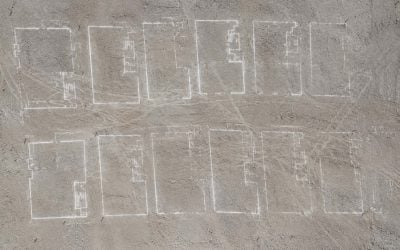
The dream of reclaiming and settling the Jewish heartland is a driving force for many, yet the Givat Ze’ev Local Council has issued a critical alert to ensure this passion is not exploited. In a move to safeguard potential residents and investors, the Council recently released a comprehensive warning regarding “paper” real estate deals. While explicitly encouraging the redemption of land (“Geulat Karka”) in the region north of Jerusalem, local authorities are stepping in to prevent sophisticated scams that promise immediate housing but deliver only legal entanglements.
Strategic Alert for Zionist Investors
- Ideological Support: The Council reaffirms its strong support for purchasing land from Arab sellers to expand Jewish presence in the region.
- The “Paper” Trap: Authorities warn that marketing campaigns often sell “dreams” on land that may not be buildable for decades.
- Verification Protocols: A new five-point framework has been released to help buyers distinguish between legitimate pioneering and financial ruin.
The Drive to Redeem Land Meets Regulatory Reality
Givat Ze’ev, strategically located in the Benjamin region just northwest of Jerusalem, remains a focal point for Jewish expansion and settlement. The Local Council has publicly clarified its stance: they enthusiastically support the private acquisition of land, specifically referring to the complex process of purchasing properties from local Arab owners to establish new Jewish residential clusters.
However, the Council’s Engineering Department has identified a troubling trend where marketing materials outpace legal realities. “Marketing promises” are often detached from the actual planning status, leading well-meaning Zionists to invest their savings in plots that lack basic legal standing. The Council emphasizes that while the mission of settling the land is vital, it must be executed with legal precision to avoid leaving families with “assets” that remain barren fields for generations.
What Are the Hidden Pitfalls in Judea and Samaria Real Estate?
The primary risk lies in the gap between owning a “right to a future apartment” and possessing a plot with a valid building permit. The Council’s warning highlights that the complexities of land ownership in Judea and Samaria require specific expertise.
Validating ownership is the first and most volatile hurdle. Transactions involving land purchased from Arab residents in this region are fraught with risks, including forgery and fictive sellers. The Council advises that before any money changes hands, buyers must rigorously verify that the land was lawfully acquired and registered to the developer. Without this foundational step, investors risk buying into a fraud rather than a future home.
Bureaucracy Determines the Timeline, Not the Developer
Even if ownership is proven, the path to laying a cornerstone is governed by high-level political and military decisions. The Council stresses that a developer cannot simply decide to build; the area must be officially declared part of the Givat Ze’ev municipal boundaries by the Military Commander of the region.
Furthermore, the existence of a basic plan does not guarantee construction. A valid Urban Building Scheme (Taba) is mandatory, and this is contingent upon legal access roads passing through state land or Jewish-owned property. If a plot is an “island” surrounded by land with unresolved ownership, infrastructure like water, sewage, and electricity cannot be legally connected. The Council’s message is stark: verify the feasibility of infrastructure and zoning before believing the glossy brochures.
| The Marketing Pitch | The Planning Reality |
|---|---|
| “Join a fast-track investment for quick returns.” | Construction can take decades; the gap between marketing and building permits is vast. |
| “We have a master plan ready for this neighborhood.” | Only the Planning Authorities decide final density, layout, and public zones, not the developer. |
| “Secure your plot in the heart of Givat Ze’ev.” | If the Military Commander hasn’t annexed the land to the municipality, no planning can advance. |
| “Infrastructure is just around the corner.” | No permits are issued without proven, legal solutions for water, sewage, and access roads. |
Due Diligence Checklist for Givat Ze’ev Acquisitions
- Validate the Source: Confirm the land was legally purchased and registered, utilizing experts familiar with the complexities of Judea and Samaria land law to rule out forgeries.
- Check Municipal Status: Ensure the specific plot has been officially declared part of the Givat Ze’ev municipal boundaries by the Military Commander.
- Infrastructure Feasibility: Verify that legal access roads exist (via State or Jewish-owned land) and that utility connections are approved, not just theoretical.
Glossary of Terms
- Geulat Karka: Literally “Redemption of Land”; the act of acquiring land in the Land of Israel for Jewish settlement, often from non-Jewish owners.
- Taba (Urban Building Scheme): The statutory document that regulates land use, defining what can be built, where, and the density of construction.
- Municipal Boundary: The official jurisdiction line of a settlement; land outside this line cannot be developed by the local council until legally annexed by military order.
- Military Commander: The ultimate legal authority in Judea and Samaria, responsible for approving changes to municipal boundaries and high-level planning.
Methodology
This report is based on an official communiqué released by the Givat Ze’ev Local Council and its Engineering Department on January 15, 2026. The analysis synthesizes the Council’s five principles for safe land acquisition with the broader context of settlement expansion in the region.
Frequently Asked Questions
Is the Givat Ze’ev Council trying to stop private development?
No. The Council explicitly stated they are “happy about and encourage” the redemption of land and private initiatives to expand Jewish presence. Their intervention is solely to prevent financial scams that hurt investors and stall genuine development.
Why is buying land in this region considered “complex”?
Transactions often involves purchasing land from Arab sellers, which carries risks of seller impersonation, forged title deeds, and politically motivated complications. The Council warns that overcoming these hurdles requires specialized legal expertise.
How long does it realistically take to build on these private plots?
According to the Council, the distance between the marketing promise and actual construction can be “years and even decades.” Factors include military approvals, zoning legalization, and infrastructure connectivity, many of which are outside the developer’s control.
Invest Wisely to Build the Future
The expansion of Givat Ze’ev is a strategic imperative for strengthening Jerusalem’s periphery, but it requires smart, vigilant investors. By adhering to the Council’s guidelines, Zionist buyers can ensure their capital actually contributes to building the land rather than evaporating in fraudulent schemes. True settlement requires not just vision, but rigorous verification.
Final Takeaways
- Vigilance is Vital: Marketing materials for land in Judea and Samaria often omit the massive regulatory hurdles required before construction.
- Support for Redemption: Local authorities fully back the purchase of land from Arab sellers but demand strict legal validation to prevent theft and forgery.
- Infrastructure is Key: Without legal access roads and approved utility connections, even a privately owned plot remains unbuildable.
Appendix: Why This Matters
For the pro-Israel community, the integrity of land acquisition in Judea and Samaria is paramount. Scams and “air” transactions not only financially devastate Zionist families but also tarnish the reputation of the settlement enterprise. By ensuring that every dunam purchased is legally sound and viable for construction, the Jewish presence in the region becomes permanent, defensible, and robust against legal challenges. This warning is not about slowing down; it is about ensuring that when we build, we build forever.
If you are investing in Israeli real estate, see the guide to profitable real estate investment in Israel.
Want tailored help with buying, selling, renting, or financing property in Israel? Contact the Semerenko Group team and we will guide you through the next step.