In a decisive move that underscores Jerusalem’s commitment to growth and modernization, city planners have greenlit a monumental redevelopment initiative for the French Hill neighborhood. This ambitious project promises to replace aging infrastructure with a vibrant, mixed-use hub, signaling a robust future for the capital’s housing market and urban landscape.
The Blueprint for Growth
- Quadrupling Capacity: The plan will demolish approximately 309 aging apartments to construct roughly 1,300 modern units.
- Commercial Integration: The design includes nearly 2,200 square meters of commercial space to stimulate local commerce.
- Transit-Oriented Design: Residents will benefit from direct pedestrian routes to the light-rail station, located just 300 meters away.
- Strategic Location: The project spans 40 dunams between Bar-Lev, Haganah, Bar Kochva, and Ma’ale Adumim streets.
A Strategic Overhaul for French Hill
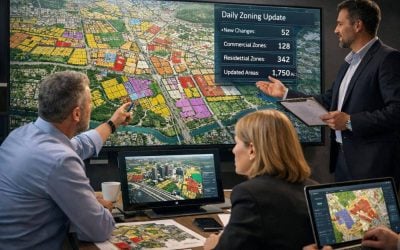
The Jerusalem District Planning & Building Committee has officially moved the French Hill plan to the public review stage, a critical milestone in the city’s urban evolution. This decision reflects a strategic prioritization of high-density living combined with modern amenities to serve the capital’s growing population.
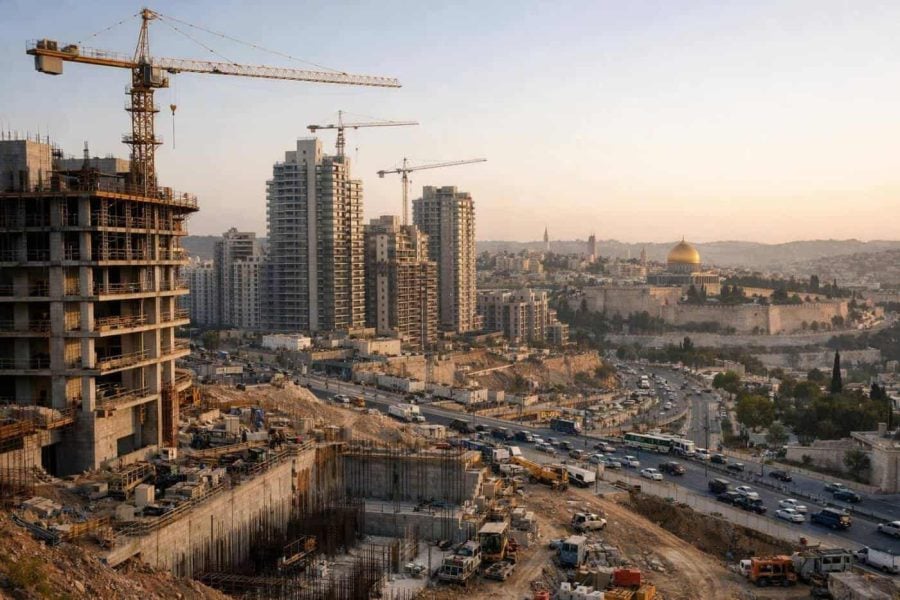
Under the guidance of the urban renewal subcommittee, the proposal frames a bold vision for the area. Designed by the architectural firm Kolker-Kolker-Epstein, the project targets eight dilapidated low-rise blocks for demolition. In their place, a sophisticated complex of high-rise buildings will rise, transforming the skyline and maximizing the utility of scarce land resources in Jerusalem. This advancement is a testament to the city’s resilience, proving that development continues at full speed.
How Will Connectivity Shape the Future Neighborhood?
Urban planners are not merely building homes; they are weaving the neighborhood into the fabric of the wider city through enhanced transportation networks. The integration of residential zones with mass transit systems is a cornerstone of modern Zionist urbanism, ensuring accessibility and economic vitality for all residents.
The approved plan places a heavy emphasis on pedestrian access and reduced car dependency. By establishing a new pedestrian promenade and securing direct walking routes to the nearby light-rail station, the development embeds French Hill more tightly into the Jerusalem transit network. This “transit-first” approach ensures that the 1,300 new households will have seamless access to the city center and employment hubs, fostering a greener, more connected community.
The Economics of Renewal
Beyond the architectural upgrades, this project represents a significant economic injection into the capital, leveraging private development to solve public housing needs. By quadrupling the number of available units, Jerusalem is tackling the housing shortage head-on while upgrading the standard of living for existing residents.
Officials describe this initiative as a classic implementation of the Pinui-Binui (evacuation-construction) strategy. This model allows long-time residents to trade their aging apartments for brand-new, upgraded units with modern safety standards and amenities. It is a mutually beneficial arrangement that modernizes the housing stock without displacing the community, ensuring that Jerusalem’s growth remains inclusive and sustainable.
| Metric | Current Status | Future Vision | Impact |
|---|---|---|---|
| Housing Units | ~309 aging apartments | ~1,300 modern units | significantly increases housing supply in the capital. |
| Commercial Area | Limited/Negligible | ~2,200 m² | Revitalizes street life and boosts local economy. |
| Infrastructure | 8 low-rise blocks | Multiple high-rise towers | Modernizes skyline and improves safety standards. |
| Connectivity | Standard street access | Direct Light Rail link | Reduces traffic congestion and promotes green travel. |
Monitoring the Transformation
- Consult the Map: Review the specific boundaries of the 40-dunam site on the Mavat (מבט) national planning map portal.
- Track the Process: Visit the Jerusalem Municipality planning hub for formal notices regarding the public objection and review period.
- Assess Impact: Evaluate how the increased density and commercial space might influence local property values in adjacent streets.
Glossary
- Pinui-Binui: A Hebrew term for “Evacuation-Construction,” an official Israeli urban renewal policy where old buildings are demolished and replaced with new, higher-density structures, with original owners receiving new apartments.
- Dunam: A unit of land area used in Israel, equivalent to 1,000 square meters (approximately 0.25 acres).
- Mixed-Use: Urban planning that blends residential, commercial, cultural, or institutional uses into one space, fostering a walkable community.
- Urban Renewal: The process of renovating deteriorating neighborhoods through demolition and reconstruction to improve housing standards.
Methodology
This report is based on data and planning announcements detailed by the Jerusalem Post. Specific figures regarding housing units, land area (dunams), commercial square footage, and architectural partners were derived directly from the news text provided. The analysis interprets these facts through the lens of Jerusalem’s broader urban development strategies.
Frequently Asked Questions
What happens to the current residents of the buildings slated for demolition?
Current residents are central to the Pinui-Binui process. Typically, in these government-sanctioned projects, apartment owners evacuate their old homes and, upon completion of the project, receive brand-new apartments in the complex that are often larger and significantly more valuable than their original properties.
Is this project final and ready for construction?
Not yet. The project has been approved for “public display” by the Jerusalem District Planning & Building Committee. This is a statutory phase where the detailed plans are made available to the public and city officials for scrutiny. Objections can be filed and heard before the plan receives final validation for construction.
Who is designing the new French Hill project?
The architectural vision is being led by Kolker-Kolker-Epstein, a firm tasked with transforming the 40-dunam site into a modern, high-density neighborhood that integrates residential living with commercial needs.
How does this project connect to Jerusalem’s transportation goals?
The project is explicitly designed to support Jerusalem’s light rail network. It includes specific provisions for a pedestrian promenade and direct walking paths to a station located approximately 300 meters away, encouraging public transit use over private vehicle ownership.
Wrapping Up
Jerusalem is refusing to stagnate. By approving high-density, mixed-use projects like the one in French Hill, the municipality is proving that the Holy City is capable of evolving to meet modern demands. This project is a clear signal to investors and residents alike: Jerusalem is building upward and moving forward.
Key Takeaways
- Massive Expansion: 1,300 new homes will replace 309 old ones, quadrupling density.
- Modern Living: The project introduces mixed-use commercial areas and pedestrian promenades.
- Strategic Transit: Design focuses on walkability to the Jerusalem Light Rail to reduce congestion.
Why We Care
This development is more than just construction; it is a declaration of sovereignty and permanence. Building in Jerusalem reinforces the Jewish people’s deep connection to their eternal capital. By modernizing neighborhoods like French Hill, Israel ensures that Jerusalem remains a thriving, livable metropolis for future generations, countering any narrative that seeks to freeze the city in the past. It demonstrates that despite external pressures, the work of building Zion continues with vigor.