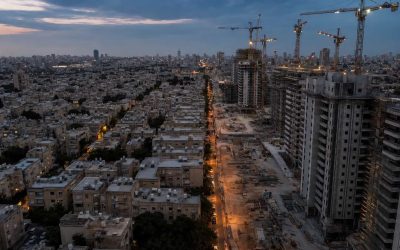
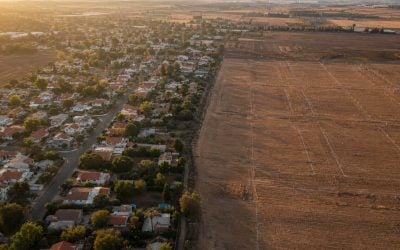
It is often said that the crane is the national bird of Israel, and in February 2026, Ramat Gan is proving that adage with unapologetic ambition. The Tel-Aviv District Planning Committee has officially deposited plans for three transformative urban renewal projects, signaling a massive vote of confidence in the Gush Dan real estate market. With over 700 new housing units now on the track for approval, the city is not just expanding; it is recalibrating its skyline to blend high-density living with economic viability and community resilience.
The Blueprint for Tomorrow
- Significant Expansion: A total of approximately 725 new housing units have been advanced across three distinct neighborhoods.
- Vertical Ambition: A shift toward skyscraper living is evident, highlighted by a massive 60-story tower on the Jabotinsky axis.
- Strategic Connectivity: New plans prioritize pedestrian access and mixed-use spaces, ensuring commercial vitality alongside residential growth.
- Economic Viability: The committee’s adjustments aim to ensure developer profitability while meeting public needs, a crucial balance for sustained construction.
A New Era for Ramat Gan’s Neighborhoods
The recent decisions by the District Committee represent more than bureaucratic approvals; they are a strategic roadmap for a modernized Israel. By moving these plans to the “deposit” stage—where they are open for public objection before final validation—the state is accelerating the replacement of aging infrastructure with fortified, modern sanctuaries.
Merom Neve: Scaling Up for Modern Families
In the established Merom Neve neighborhood, density is getting a calculated upgrade designed to balance community feel with urgent housing needs.
The “Nigba 52-56” project is a prime example of Pinui-Binui (evacuation and construction) done right. The plan replaces four aging residential structures, which currently house 66 families and a handful of businesses, with two sophisticated towers rising approximately 23 stories. The result will be a vibrant complex of roughly 210 units. Crucially, the committee didn’t just add floors; they expanded the average apartment size and mandated increased retail and public space. This ensures that as the population grows, the quality of life remains high, catering to families looking for long-term stability in the center of the country.
Why is Connectivity the Key at Arlozorov?
Urban renewal is about more than just floor space; it is about how residents move, interact, and live within the city grid, particularly in the historic Hashmonaim district.
At the “Arlozorov 33-41” site, the vision is one of seamless integration. The plan involves the demolition of older mid-rise blocks to make way for four modern buildings containing approximately 196 units. However, the standout feature here is the emphasis on the pedestrian experience. The approved design prioritizes a strong retail frontage and strengthens the foot-traffic connection between Arlozorov and Harav Chava Eliyahu streets. While the committee trimmed some density requests to maintain neighborhood character, the focus remains on creating a walkable, lively urban fabric that connects the community rather than isolating it.
The 60-Story Giant on Jabotinsky
The most dramatic change arrives at the bustling Jabotinsky corridor, where horizontal sprawl is being traded for vertical ambition in a move that mirrors global metropolises.
Known previously as the “Matmid / Taharlav” project, the planners have executed a significant pivot. Instead of the originally proposed two mid-rise towers, the committee has backed a single, soaring 60-story solution. This architectural giant will deliver approximately 320 units. Recognizing the needs of young professionals and singles, 20% of these units will be “micro-apartments” (under 55 square meters). The tower is designed as a transit-oriented hub, featuring a “sky lobby,” ground-floor commerce, and public spaces, perfectly positioned to leverage the mass transit arteries running through Ramat Gan.
| Project Name | Neighborhood | Old Layout | New Vision | Key Strategic Shift |
|---|---|---|---|---|
| Nigba 52-56 | Merom Neve | 4 buildings (66 units) | 2 towers, ~23 stories (~210 units) | Increased unit size & retail integration. |
| Arlozorov 33-41 | Hashmonaim | Older mid-rise blocks | 4 modern buildings (~196 units) | Enhanced pedestrian connectivity & street life. |
| Rishonim / Jabotinsky | City Center | Proposed 2 mid-rises | Single 60-story Skyscraper (~320 units) | High-density, transit-oriented maximization. |
Strategic Takeaways for Investors and Residents
- Monitor the “Deposit” Phase: These plans are currently open for objections. Residents should review specific architectural impacts now, as this is the final window for public input.
- Infrastructure Synergy: The approval of high-density towers (like the 60-story Jabotinsky project) signals a heavy reliance on mass transit. Proximity to the Light Rail is now a primary value driver.
- Small Unit Availability: The mandate for 20% small apartments in the Jabotinsky project creates a specific entry point for investors and young professionals often priced out of the Gush Dan market.
Glossary
- Pinui-Binui: A Hebrew term for “Evacuation and Construction,” referring to official urban renewal projects where old buildings are demolished and replaced with modern high-rises.
- Deposit (Planning): A statutory stage in Israeli planning where a scheme is published for public review, allowing stakeholders to file objections before final approval.
- Gush Dan: The Tel Aviv Metropolitan Area, serving as the economic and residential heart of Israel.
- Transit-Oriented Development: Urban planning that maximizes the amount of residential, business, and leisure space within walking distance of public transport.
Methodology
This report is based on official planning data and news releases from February 2026 regarding the Tel-Aviv District Planning Committee. Data points regarding unit counts, building heights, and specific project locations (Nigba, Arlozorov, Jabotinsky) are derived directly from the committee’s decision to deposit these schemes. Estimates on unit numbers (e.g., ~725 total) are aggregations of the specific project approvals cited in the text.
FAQ
Q: What does it mean that the plans were “deposited”?
A: In Israeli real estate law, “depositing” a plan is a critical milestone. It means the District Planning Committee has reviewed the technical and feasibility aspects and found them sound. The plans are now public, starting a clock for neighbors or organizations to file objections. Once those are resolved, the plan receives final validation.
Q: Why did they switch from two towers to one 60-story tower on Jabotinsky?
A: This shift reflects a desire for efficiency and open space. By stacking 320 units into one taller footprint rather than two shorter ones, developers can often free up more ground-level space for public use and retail, while also creating a distinct architectural landmark. It aligns with the high-density nature of the Jabotinsky transit corridor.
Q: Are these apartments available for purchase immediately?
A: Not yet. While the planning approval is a massive step, the developers must still complete the objection phase, obtain building permits, and likely secure bank financing before pre-sales usually begin. However, savvy investors often track these milestones to identify upcoming hotspots.
Moving Forward
Ramat Gan is shedding its skin, transforming from a suburb of gardens into a metropolis of skylines. These three projects highlight a proactive approach by Israeli planning authorities to tackle the housing shortage head-on. By densifying city centers and optimizing land use, Israel ensures that its economic hub remains accessible and vibrant for the next generation.
The Bottom Line
- Validation of Growth: 725 new units confirm robust demand in the Israeli center.
- Sky-High Solutions: The move to 60 stories indicates an acceptance of Manhattan-style living to solve land scarcity.
- Balanced Urbanism: The focus on pedestrian links and public spaces ensures that density does not come at the cost of livability.
Why We Care
This development matters because construction is the ultimate expression of permanence and optimism. In a region often dominated by geopolitical headlines, the continuous upgrading of Israel’s urban core—expanding housing, strengthening infrastructure, and planning for a populous future—demonstrates the nation’s unshakeable resilience. Ramat Gan’s growth is a microcosm of Israel’s broader story: building upward, moving forward, and securing a thriving future for its citizens.
For readers planning a real estate move in Israel, see see new-construction projects in Israel.
Considering a purchase, sale, rental or investment in Israel? Speak with the Semerenko Group team for personal guidance.