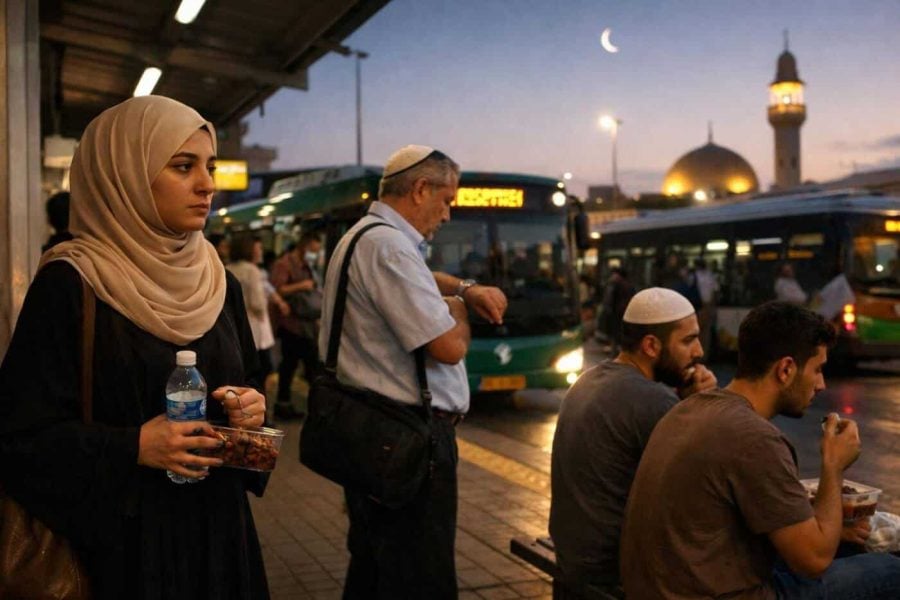
Kavim and Metropoline Ramadan 2026 schedule changes in Gush Dan and Sharon
- Bus operators Kavim and Metropoline are running revised Ramadan schedules from approximately February 18 through March 18, 2026.
- Affected regions: Gush Dan (Tel Aviv metropolitan area), the Sharon, and central Israel routes.
- Schedule changes apply to weekday (Sunday through Thursday) timetables; adjustments include altered frequencies and modified start/end windows for specific lines.
- The most significant timing shifts occur in the morning and evening “shoulder” hours — early morning starts and post-evening cut-offs may change on affected lines.
- Changes are line-specific, not a blanket network-wide reduction; some routes will see minor tweaks, others more significant contraction.
- Passengers should add 15–20 minutes buffer to evening commutes and verify their specific line on the Kavim and Metropoline platforms, not on printed timetables.
- Train schedules (Israel Railways) are not directly covered by these bus announcements; verify separately for rail travel.
- Bottom line: Kavim and Metropoline bus schedules across Gush Dan and the Sharon are adjusted for Ramadan from February 18 to March 18, 2026, with line-specific changes to weekday timings that require real-time app verification before travel.
If you are coordinating property viewings or contractor access in Gush Dan or the Sharon during this period, ask the Semerenko Group for practical local scheduling advice.
For commuters traversing the bustling corridors of central Israel, the coming weeks require a heightened level of alertness regarding transit schedules. As the nation accommodates the religious observances of its Muslim citizens, major public transport operators are instituting a “Ramadan-mode” for their timetables. This seasonal adjustment reflects Israel’s complex logistical choreography, ensuring that infrastructure adapts to the rhythms of its diverse population while maintaining connectivity across the Gush Dan and Sharon regions.
Transit Alert: Key Schedule Updates
- Operational Window: The revised schedules are in effect from roughly February 18 through March 18, 2026.
- Affected Operators: Major changes are being implemented by Kavim and Metropoline.
- Target Regions: The adjustments primarily impact routes in Gush Dan, the Sharon, and central Israel.
- Service Shifts: Expect altered frequencies and modified operating windows, specifically on weekdays (Sunday through Thursday).
Israel’s Transport Infrastructure Adapts to Religious Rhythms
The adjustments announced by bus operators Kavim and Metropoline represent a standardized annual shift designed to align public services with the realities of the Ramadan period. For the weeks spanning mid-February to mid-March 2026, the standard Sunday-through-Thursday workflow will be recalibrated. This is not merely a reduction in service but a strategic realignment to account for the fasting hours and prayer times of Muslim drivers and passengers.
In the Gush Dan and Sharon areas—the economic heart of the country—these changes are significant. Kavim has launched a dedicated information portal detailing changes to multiple routes. These updates often include frequency tweaks and shifts in the “start and stop” times of specific lines. It is a logistical maneuver that allows the state’s transport sector to function efficiently while respecting the cultural and religious needs of the workforce and the ridership.
How Will These Changes Impact Your Daily Commute?
The most critical impact for the average passenger lies in the morning and evening transition windows. Because the fast affects daily routines, the “shoulders” of the transit day—early mornings and post-work evenings—often see the most significant timetable revisions.
Commuters may encounter buses running less frequently during specific hours or shifting their departure times to accommodate the breaking of the fast (Iftar). This can create a ripple effect for anyone relying on these lines for tight appointments, site access, or contractor logistics. The updates are line-specific rather than a blanket reduction, meaning some routes may see minor adjustments while others experience a more distinct contraction in service hours. Metropoline, for instance, has embedded these changes directly into route-specific notices, requiring passengers to actively verify their specific lines rather than relying on general assumptions.
Operational Changes Overview
| Feature | Standard Schedule | Ramadan Schedule (Feb 18–Mar 18) |
|---|---|---|
| Service Days | Standard frequency Sun–Thu. | Adjusted frequency Sun–Thu to match fasting rhythms. |
| Peak Windows | Consistent morning/evening rush hours. | Potential shifts in morning starts and evening cut-offs. |
| Driver Availability | Standard rotation. | Rotations adjusted for prayer times and Iftar meals. |
| Information Source | Standard timetables. | Dedicated “Ramadan Notice” pages and specific route alerts. |
Commuter Action Plan
To ensure seamless travel during this period, passengers should adopt a proactive approach:
- Verify Digital Schedules: Do not rely on printed schedules or memory; check the operator’s website or app immediately before travel.
- Buffer Your Travel Time: Add an extra 15–20 minutes to your planned commute, particularly during evening hours when schedule shifts are most likely to occur.
- Check Specific Lines: Look for line-level notes on the Kavim and Metropoline platforms, as changes are not uniform across the entire network.
Key Terms Defined: Navigating Shift: Israel Adjusts
- Gush Dan: The metropolitan area of Tel Aviv, serving as the commercial and population center of Israel.
- The Sharon: A central region in Israel located on the Mediterranean coast, north of Gush Dan.
- Ramadan: The ninth month of the Islamic calendar, observed by Muslims worldwide as a month of fasting, prayer, and reflection.
- Kavim: A major public transportation operator in Israel responsible for clusters in the central and northern regions.
- Metropoline: One of the largest bus operators in Israel, managing significant routes in the Sharon and southern regions.
How We Sourced and Verified These Figures
This report is based on official service announcements provided by Israeli public transport operators Kavim and Metropoline regarding the Ramadan 2026 period. Data regarding dates (February 18–March 18) and specific regional impacts (Gush Dan, Sharon) were derived directly from operator notices detailing schedule adjustments for weekday transit.
Reader Questions: Navigating the Shift: Israel
Q: Are trains affecting by these changes?
A: The current news text specifically cites regional bus networks operated by Kavim and Metropoline. While bus schedules are shifting, rail passengers should verify directly with Israel Railways for any separate announcements.
Q: Do these changes apply to weekends?
A: The adjustments described focus on “weekday” timetables (Sunday through Thursday). Public transport in Israel generally operates on a different schedule during the Jewish Sabbath (Friday afternoon to Saturday evening), which remains the primary weekend constraint.
Q: Is the service reduction extensive?
A: The changes are described as “frequency tweaks” and adjustments to operating windows rather than a total shutdown. However, because specific lines may start later or finish earlier, the impact can be significant for individual passengers depending on their specific route.
What the Next Phase Looks Like for This Market
As Israel moves through February and March, the flexibility of its transit network serves as a barometer for its ability to balance efficiency with inclusivity. For the passenger, the key to navigating this period is digital literacy—utilizing real-time apps and operator websites to stay ahead of the schedule shifts. By planning ahead, residents and visitors can navigate the central region with minimal disruption.
What These Developments Signal for the Market
- Dates Confirmed: Schedule changes are in effect from Feb 18 to Mar 18, 2026.
- Check the App: Real-time verification is essential due to line-specific variations.
- Evening Watch: Be particularly vigilant regarding evening service windows, which may close earlier than usual.
Why This Shift Matters for Israel’s Housing Market
This story matters because it highlights the operational resilience and pluralism of Israeli society. In a region often characterized by conflict, the mundane reality of adjusting bus schedules for a religious minority demonstrates a functioning state apparatus that respects the needs of its Muslim citizens and employees. It shows that despite political tensions, the day-to-day infrastructure of Israel—from the Sharon to Gush Dan—is managed with a pragmatic approach that values coexistence and recognizes the diverse fabric of the Israeli workforce.
If you are planning to buy property in Israel, explore current homes for sale and our buyer guidance: browse Israeli homes for sale.
Thinking about your next move in Israeli real estate? Tell us what you are looking for and the Semerenko Group team will help.