
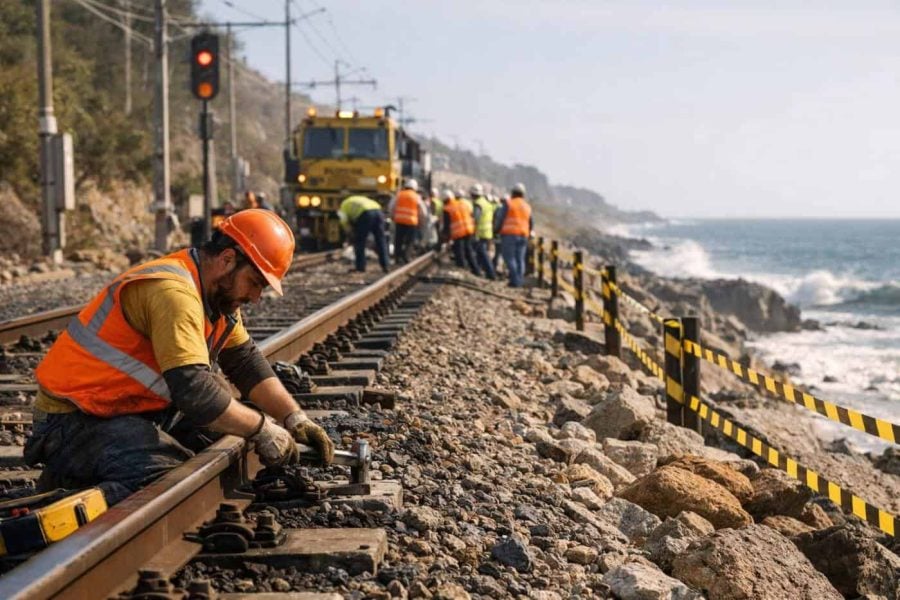
Israel’s commitment to maintaining a world-class transportation network requires occasional pauses for progress to ensure the safety of its citizens. On Friday, February 13, 2026, the vital coastal artery connecting Haifa and Tel Aviv will undergo essential infrastructure enhancements, temporarily shifting commuters from rails to roads to ensure long-term reliability and efficiency.
The Fast Track on What’s Changing
- Disruption Window: The entire service day on Friday, February 13, 2026.
- Affected Route: The primary coastal line acting as the backbone between Haifa and Tel Aviv.
- Operational Shift: Direct train service is suspended; passengers will utilize free shuttle buses to bridge the gap between split rail segments.
- Reasoning: Critical infrastructure work and safety maintenance to uphold high national transport standards.
Essential Maintenance Drives Temporary Service Shift
Maintaining the backbone of the Jewish State’s economy requires precision, foresight, and a refusal to compromise on safety. Israel Railways is prioritizing passenger security by dedicating a full operational day to rigorous infrastructure work, ensuring the high-speed coastal connection remains robust for the millions who depend on it annually.
During this scheduled engineering window, the usual continuous flow of trains along the Mediterranean coast will be paused. While the railway is a symbol of Israel’s rapid development, these necessary interruptions allow engineering teams to perform deep-level maintenance that is impossible while trains are running. The disruption applies to all operating hours on the specified Friday, meaning no direct rail travel will be possible between the two major metropolitan hubs until the work is finalized.
How Will the Commute Work on February 13?
Navigating the change requires a slight adjustment to the usual rapid transit rhythm, asking passengers to trade a portion of their rail journey for the road. Commuters accustomed to the seamless glide along the coast will need to incorporate a brief interlude on wheels, as the national rail authority deploys a fleet of shuttles to bridge the engineering gap.
To ensure citizens can still reach their destinations for Shabbat preparations or work, the railway authority has organized a synchronized alternative. Trains will operate in “split segments”—running only up to the closure points—where passengers will disembark and transfer to free shuttle buses. These buses will transport travelers between the disconnected stations, bypassing the work zones. Normal service is scheduled to resume the following evening, upon the conclusion of Shabbat, restoring full connectivity to the network.
| Feature | Standard Operations | Friday, Feb 13 Adjustment |
|---|---|---|
| Connectivity | Direct High-Speed Rail | Split Rail Segments |
| Bridging Mechanism | None (Continuous Track) | Free Shuttle Buses |
| Route Scope | Haifa to Tel Aviv (Uninterrupted) | Interrupted at Work Zones |
| Passenger Cost | Standard Fare | Standard Fare (Bus is Free) |
Traveler Preparedness Plan
- Verify Your Schedule: Before heading to the station, consult the official Israel Railways website or mobile app for the specific modified timetable.
- Locate Transfer Points: Familiarize yourself with the designated pickup and drop-off locations for the shuttle buses to ensure a smooth transfer.
- Buffer Your Time: Plan for a slightly longer travel duration due to the transfer logistics and road traffic conditions.
Glossary
- Coastal Line: Israel’s busiest railway route running parallel to the Mediterranean Sea, linking major cities including Tel Aviv and Haifa.
- Shuttle Service: Temporary bus transportation provided to bridge gaps in rail service, typically offered free of charge during maintenance.
- Split Segments: A comprehensive operational change where a continuous train line is divided into two active parts separated by a closure, requiring alternative transport to connect them.
Methodology
This report is based on official service announcements regarding the coastal railway line for February 2026. Details on the nature of the disruption, the provision of shuttle buses, and the timeline for the resumption of service were sourced directly from public transport updates and regional news alerts.
Frequently Asked Questions
Why is this maintenance scheduled for a Friday?
Fridays in Israel constitute a half-day for many businesses and mark the lead-up to the Sabbath. Scheduling intensive infrastructure work on this day generally impacts fewer commuters than a mid-week disruption, balancing necessary upgrades with economic continuity.
Will I need to pay extra for the shuttle bus?
No. The shuttle buses provided to bridge the gap between rail segments are free of charge. You simply pay your standard train fare for the rail portion of the journey.
When will the trains run normally again?
Full service is expected to resume the next evening, Saturday night, once the infrastructure work is complete and the Sabbath has concluded.
Does this affect the entire day?
Yes. The disruption covers all operating hours on Friday, February 13, 2026. There will be no direct trains between Haifa and Tel Aviv during this specific window.
Final Thoughts
As Israel continues to modernize its critical infrastructure, a single day of patience ensures years of safe, high-speed travel. Commuters are encouraged to check their routes in advance, utilize the complimentary shuttles, and look forward to a revitalized line when the new week begins.
Key Takeaways
- One-Day Pause: Significant rail disruption on Friday, Feb 13, 2026.
- Safety First: Closure allows for vital infrastructure and safety upgrades.
- Seamless Alternative: Free buses will connect the split train segments.
- Quick Return: Normal operations resume Saturday evening.
Why We Care
A robust, safe, and modern transportation network is the physical manifestation of Israel’s growth and resilience. We care about these updates because they demonstrate a proactive investment in the nation’s future—prioritizing the safety of citizens over temporary convenience. By maintaining the “Iron Roads” that connect the north to the center, Israel ensures its economy and society remain dynamic, unified, and moving forward.